




When accessing the website of a company, institution or store, have you ever come across a customer service button, usually in the bottom corner? Even with a photo of someone, that is usually the shortcut that takes you to live the future and talk to an intelligent robot.
A little different from what is presented in Hollywood films, Artificial Intelligence is already part of our routine and is available to thousands of companies.
Do you have any doubts? Think of the Google Assistant (Ok Google), Siri, Alexa and many other voice command-activated devices that surround us and perform natural language processing to understand what we ask for.
But why invest in this technology? What are these bots capable of doing to optimize service? Is machine learning a real thing?
If these questions arose for you, we have the answers and also 5 types of Chatbot, in addition to the services and functions that can be performed by these intelligent systems.
Continue reading this post and find out everything that awaits you in an increasingly efficient world with the use of this technology. Check out!
In this post, you will see:
Are you in doubt whether your company needs a Chatbot?
When is the right time to invest in a Chatbot for your institutional website? If you've already started asking yourself this question, you've probably already reached this stage. To clarify this decision, it is important to understand what functions can be performed by bots and how this implementation will be useful.
One of the main benefits is optimizing team and customer time, enabling faster and more direct contacts. But calm down! This is not synonymous with impersonality. An interesting feature of chatbots is their ability to adapt to the medium and audience.
The main developer is the human being, so you can adjust all the points so that the conversation can flow in a similar way to customer service previously done by employees.
It is even possible to define the persona, tone of voice and approach to be used, all linked to messaging applications and social networks. Did you see how this process can add even more value to your service?
Today, the most practical classification distinguishes between rule-based chatbots, which follow predefined flows, and AI assistants (LLMs), capable of generating responses in natural language and handling varied requests.
Understanding this difference facilitates the choice of architecture and scope of service, as each approach has distinct strengths in complexity, control, and maintenance costs.
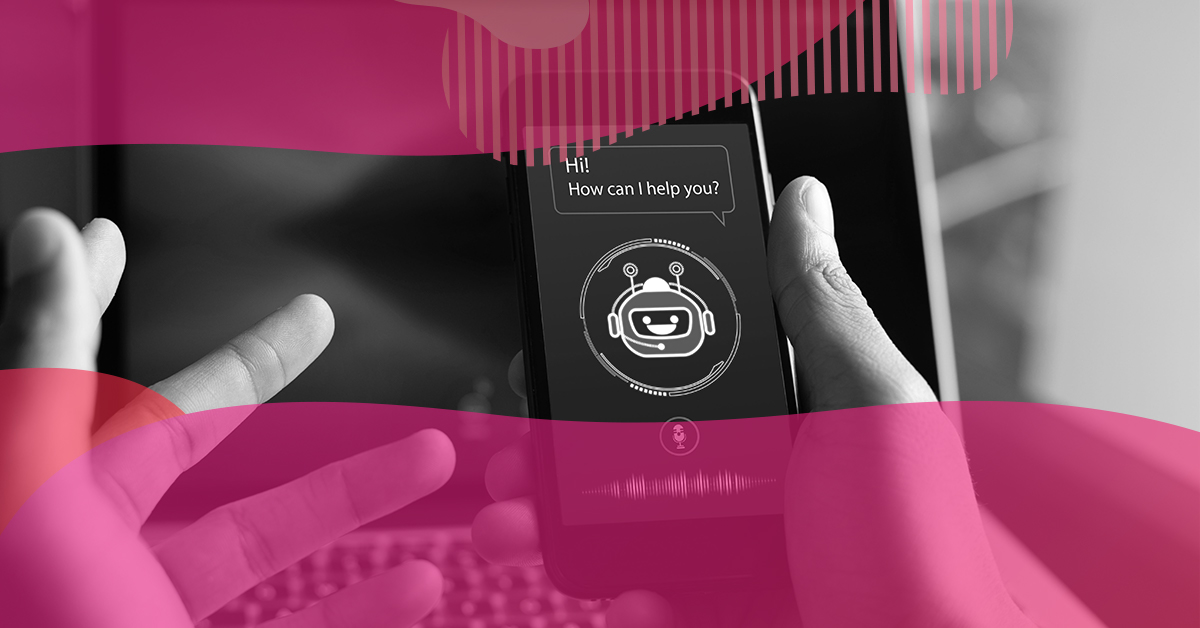
Image: Types of chatbots: how to choose the best model for your business
More like this
- 5 reasons to invest in AI chatbot in your capture and retention
- WhatsApp marketing and online: how to create a successful campaign
- Find out how the AI chatbot can help your educational institution
5 different types of chatbots!
The technology used in systems such as the IBM Watson assistant chatbot
A hubspot chatbot can create countless possibilities for providing practical and complete service, optimizing the company's time and being efficient for the customer, who does not need to wait for human assistance. Being a two-way street, bots are versatile and easily applicable.
In Brazil, WhatsApp is a strategic channel for conversational operations and customer service. The country is among the largest markets for the application, which makes bots in this environment especially relevant for discovery, screening, and conversion.
This scenario reinforces the importance of defining specific journeys for mobile messaging.
Before looking at the use cases, it's worth framing the types: rule-based/menu-driven flows work very well for repetitive tasks with high control, while LLMs expand the coverage of intentions and reduce the effort of dialogue design.
In many projects, the best solution is a hybrid one, combining well-defined scripts with natural language generation for open-ended questions.
Below, check out 5 common types of activities performed by these intelligent systems and learn how to create a chatbot that meets your needs!
1- Informative chatbot
One of the most classic features is the provision of information. Even so, it is worth highlighting the relevance and efficiency of this system.
All other bot functions and even virtual assistants were created with the aim of being useful to the user. Thus, the chatbot sends relevant messages and information.
2- Enrollment chatbot
Being a great ally of educational institutions, bots are capable of collecting data for registration in events, experimental classes and even enrollment in higher education courses.
With this function, the company's routine is made easier, after all, all data is automatically directed to the system, eliminating the need to open paperwork and face-to-face consultations that could take hours.
Furthermore, documents can be sent using the chatbot itself, making the company more practical.
3- Question chatbot
Chatbot and artificial intelligence are almost synonymous. With the correct optimizations and bots built through Machine Learning, it is possible to create systems capable of creating their own lines of reasoning, serving as information for users who seek it with the aim of clarifying doubts about some issue. subject.
It is one of the most common types to be found. In addition to being efficient in serving the user, it is also capable of storing data so that, in subsequent services, there are more variations and responses to be explored, this is because, with each service, the bot uses the information and contact as a everything to update and optimize the system itself.
To increase accuracy and reduce hallucinations, it is recommended to use RAG (Retrieval-Augmented Generation), which makes the assistant search for reliable content (knowledge base, policies, FAQs, catalogs) before responding.
This way, the bot anchors the generation in verifiable sources and keeps the answers aligned with its institutional content, increasing trust and traceability.
4- Chatbot to capture leads
In addition to providing very useful services, bots can also be an effective way of capturing data to convert users into leads. And this can occur with the suggestion of materials or even, initially, requesting some data to continue the service.
Being fast and efficient, this tool means that an opportunity is not missed. For example: if the user is looking for information about the Medicine course, after clarifying doubts or even during the service, the bot can suggest that the student discover more about the course by downloading an ebook. Simple, right?
In this way, the bot collects a set of data, such as email, phone numbers, user name, etc., according to what machine learning is programmed to do.
When collecting data, include clear consent and visible privacy policies. The Brazilian regulatory environment is active regarding the use of data in AI – just look at recent decisions affecting the use of AI features by large platforms.
When structuring forms and user journeys in the bot, align with the LGPD (Brazilian General Data Protection Law) and best practices for transparency.
5- Chatbot for applying surveys
With its advanced system, bots can carry out satisfaction surveys, collect data and even apply tests. Incredible, isn't it? Its data intelligence and high recording capacity make it possible to create paths for collecting multiple-choice answers or even essay questions.
Several educational institutions already invest in this type of element to facilitate the application of selection processes. Especially with the increase and need for remote contact, this proved to be an excellent option.
In addition to the convenience for the student, it also provides greater ease in collecting and analyzing data and correcting assessments and research.
Chatbot is an inevitable and promising future
Did you see the variety of features that can be achieved by implementing an efficient Bot? Now, think: what need on your website would be met with this technology?
These are just 5 examples, but with the Artificial Intelligence of these types of systems, there are an infinite number of possibilities and optimizations that can be applied.
In practice, the combination of rule-based workflows for critical transactions and LLMs with RAG for open-ended questions tends to deliver the best balance between control, coverage, and speed.
This design avoids fabricated answers and strengthens knowledge governance, points highlighted in market analyses on the role of RAG in enterprise AI adoption.
Key Learnings about Chatbots for Customer Service and Lead Generation — When to Adopt, How to Operate, and Where They Generate Results
Chatbots are already part of customer contact and work best when combining two modes: rule-based flows (high control for repetitive tasks) and AI assistants (LLMs) for open-ended questions.
They accelerate service, reduce queues, and capture qualified data on channels such as websites and, in Brazil, especially WhatsApp.
The most efficient use cases include informational bots (quick answers based on official content), registration/enrollment (document collection and verification), frequently asked questions with RAG (the bot consults a reliable database before answering), lead generation with contextual CTAs (always with consent and a privacy policy compliant with LGPD), and post-sales surveys/onboarding (NPS, satisfaction, initial guidance).
Effectiveness increases when you define the bot's persona and tone, integrate automation and CRM to personalize steps based on behavior, measure CSAT, resolution rate, and handoff to a human, and avoid "hallucinations" by anchoring responses in your knowledge base.
The recommended design is hybrid: critical transactions guided by scripts and open-ended answers anchored in RAG; this provides scale, governance, and consistency, increasing conversions and user experience.
If this content interests you, here we have a content tip that will add even more value to your search. Check out the post now “How to make a chatbot intelligent? The 5 best tips”.

Types of Chatbots: How to Choose the Best Model for Your Business — FAQ
What is a chatbot and why invest in one?
It's a system that converses with the user to provide information, answer questions, collect data, and perform tasks. It speeds up customer service, reduces queues, and maintains active contact on channels such as websites and messaging apps, without losing the human touch defined by the team.
Does my company need a chatbot?
If you're already thinking about scaling customer service, answering repetitive questions, and accelerating lead generation, the time has come. The bot optimizes time for both the team and the customer and can operate 24/7 with language aligned with your brand persona.
What are the types of chatbots?
Two main groups: rule-based/menu-driven flows (very high control over routines) and AI assistants (LLMs), which understand natural language and cover a variety of requests. In many cases, the best solution is a hybrid one.
How does an informational chatbot help?
It delivers quick answers based on official content from your website, policies, and FAQs, avoiding waiting for an agent and maintaining consistency of information.
How does an enrollment chatbot work?
It collects registration data, schedules trial classes, receives documents, and sends everything to the institution's system, reducing paperwork and in-person visits.
What does a question-answering chatbot do?
It answers frequently asked questions and guides the next steps. With the right adjustments, it maintains natural conversations and stores variations to improve coverage over time.
How to use a chatbot for lead generation?
Offer materials (e.g., e-book) and ask for essential data to continue the service. The bot can qualify interest while registering name, email, and phone number.
Can chatbots conduct surveys?
Yes. They conduct satisfaction surveys, NPS surveys, and even evaluations with multiple-choice or open-ended questions, facilitating data collection and analysis.
Rule-based flow vs. AI assistants (LLM): which one to use?
Use rules where there is a critical and repetitive process; use LLM for open-ended questions and natural language. Combine both to balance control, coverage, and cost.
What is RAG and why use it in a Q&A chatbot?
It's the search for reliable content (knowledge base/FAQ/URLs) before answering. Anchoring the answer in this base increases accuracy, traceability, and alignment with your institutional content.
Is WhatsApp a good channel for chatbots in Brazil?
Yes. It's one of the most relevant channels in the country for discovery, screening, and conversion, so it's worth designing specific journeys for mobile messaging.
Does machine learning "learn on its own" in production?
Practical evolution comes from annotated data and improvement cycles, not from "learning on its own" without control. The use of RAG and guided adjustments ensures security and governance.
Does a chatbot replace human customer service?
No. It handles standard issues and forwards complex ones to humans. The design should include a fluid handoff when necessary.
What are the practical benefits for the team and the customer?
Immediate answers, less rework, continuous data capture, and consistent experiences at scale—from the website to WhatsApp.
How to define the bot's persona and tone?
Map your audience, objectives, and channels. Adjust language and approach to the context (e.g., games ≠ legal) to maintain naturalness and relevance.
How to integrate with CRM and automation?
Synchronize contacts, events, and preferences to personalize messages by stage/behavior and measure impact on open rates, clicks, and conversions.
What precautions should be taken regarding LGPD (Brazilian General Data Protection Law) and consent?
Clearly state the purpose, privacy policy, and consent when collecting data. In messaging, keep opt-in and opt-out options visible.
What metrics should be tracked in the bot?
Automatic resolution rate, CSAT, response time, handoff to human, clicks/conversions, and quality of leads captured.
Is the chatbot the future of customer service?
It's an inevitable part of the present. The combination of well-designed flows with AI and RAG increases efficiency, governs knowledge, and improves the end-to-end experience.

.jpg)























 Portugal