


Chatbots were created and are used to provide increasingly faster and more efficient service, eliminating manual and sometimes time-consuming work. However, as it is a technology, it is possible to make implementations capable of making the chatbot intelligent and increasingly adapted to the interactions that occur.
In practice, modern chatbots don't "learn by themselves" in production with each response. The intelligence gain comes from offline training cycles with annotated data and reinforcement learning with human feedback (RLHF), as well as the use of Retrieval-Augmented Generation (RAG) to query updatable databases during the response. This design reduces hallucinations, provides traceability (response provenance), and allows content updates without retraining the main model —you evolve the bot safely and with governance.
But to do this, you need to be aware of some points that will make all the difference, facilitating the process and optimizing it. To help you understand the next step towards better performance, we've brought you 5 valuable tips on how to build a more resourceful and effective chatbot. Continue reading and check it out!
Why Improve Chatbot Human Interaction?
To this question, the answer is simple: the closer it is to human interaction, the better the users' reception of this system. To do this, it is necessary to train the bot so that it becomes increasingly intelligent and, consequently, capable of performing better actions for excellent results.
But what defines a bot as intelligent? It's simple: its ability to interact, understand and offer services according to the user's needs. Nothing more than becoming capable and specialized for better service and better communication, thus reducing noise and the distance between machines and humans.
What is the machine learning used by bots?
Machine learning is, loosely translated, machine learning. With this technology, the Chatbot can perform unsupervised learning, that is, it is capable of learning something new with each service provided. To do this, it is only necessary that the interactions stored as a set of data are directed to the system, which will carry out the analysis and, through this, begin self-improvement, optimizing your next contacts based on previous experiences.
In other words, Chatbots are already intelligent systems since their conception, so what we are looking for is simply to optimize this service so that human interventions are less and less necessary.or measuring results, giving the bot autonomy without losing control. To be part of this group that seeks to achieve excellent results by adding value and services to this software, check out the topic below and don't miss any tips!
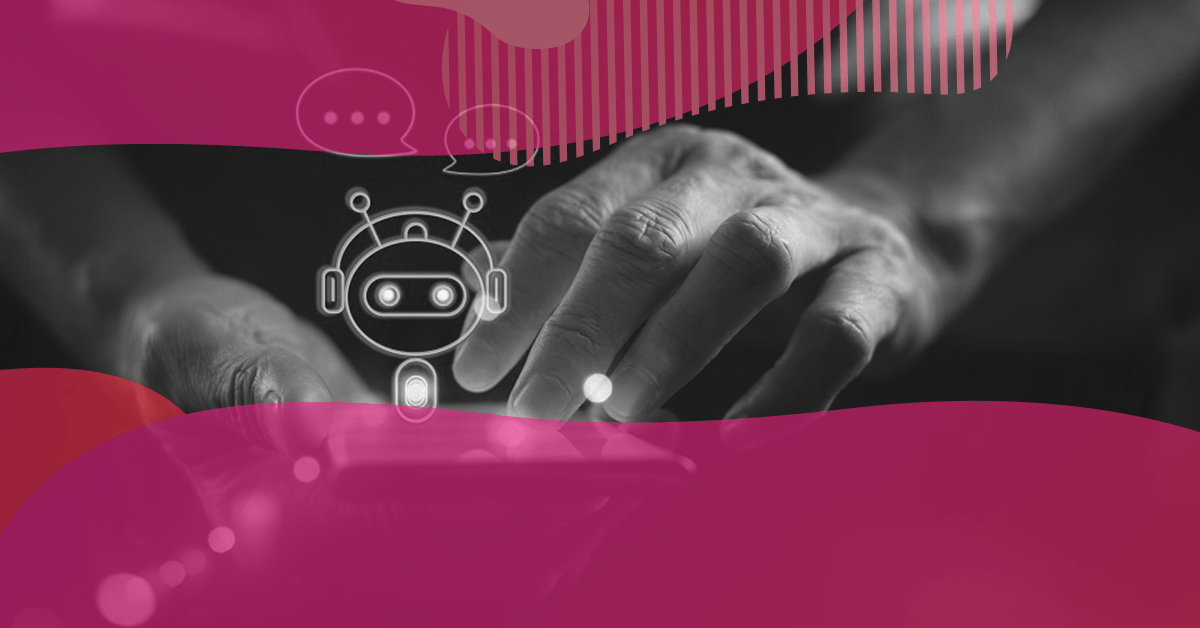
Image: Smart Chatbot: how to improve automated communication in digital service
5 tips to make your chatbot more efficient and intelligent!
Although important, making your Chatbot more intelligent is not such a complex task, it requires dedication and investment in systems that can improve the bot, but, without a doubt, it is something with a guaranteed return, as the Chatbot can increase conversion and nurture leads efficiently.
Check out 5 infallible tips to achieve your goals!
Create a persona to guide the creation of the Chatbot
Just like every marketing product created, in order to achieve results, such as creating an intelligent chatbot, it is essential to rely on existing data and information about the audience to understand the ideal profile and then have a suitable persona in hand.
Knowing this, collect as much relevant information as possible to adapt the robot's tone of voice. Thus, the language, terms and even communication will be created more clearly, according to the defined profile. For example: a chatbot for a gaming website cannot be the same one used to speak to professionals in the legal world. This happens because they are different behaviors and objectives.
Create personalized interactions with Natural Language Processing
Natural Language Processing (NPL) ou Natural Language Processing is the essential element for those looking for more fluid communication, because it is capable of merging Artificial Intelligence, Linguistics and Computer Science to create a tool capable of analyzing the spoken and written languages of humans and enabling the machine to understand the message, regardless of how it was said.
The correct term in Portuguese is Natural Language Processing (NLP). If you integrate with Google Cloud, note that Dialogflow CX (now Conversational Agents) has undergone console consolidation and gained features like playbooks and data stores. Combine deterministic NLU (intents/entities) with generative fallback and security policies to cover language variations without losing control over tone, scope, and fonts used in responses.
This functionality is achieved in bots mainly to improve communication, making it simpler and more intuitive for both sides.
To further optimize this type of feat, there are already applications and tools capable of complementing knowledge and making everything even more fluid and understandable for the user.
One way to perform efficient integration is to use NPL DialogueFlow in both developed to improve language and service.
More like this:
- Chatbot service: what is the best channel to use?
- 5 reasons to invest in AI chatbot in your capture and retention
- Innovation for Institutions: the power of Chatbot in Education
Make the FAQ your best friend!
To guide the construction of the bot according to the branch/service, pay attention to theFrequently Asked Questions (FAQ), known as frequently asked questions, in Portuguese. Despite being a simple tip, this can be an efficient way to align the type of conversations that the system can easily resolve.
In addition to mapping frequently asked questions, connect the bot to a live database. On Google Cloud, this is done with data stores — an index of documents/URLs (CSV FAQs or unstructured materials) that the agent queries in real time to respond based on their content and, when desired, displaying provenance (title/URL). This strategy is a type of RAG, which reduces outdated answers and facilitates governance: update the database content, and support follows suit.
Therefore, be careful to leave clear answers when building the communication flow for users. The objective of the Chatbot is to facilitate customer service, so there is nothing more intelligent than being able to anticipate your queries to the system.
Conduct A/B tests to understand bot performance
The best way to develop an operational and improved chatbot is to implement and carry out tests to measure its efficiency and performance. It's logical, but necessary to remember that reinforcement learning is always a safe way to mine data and understand the system from the public's perspective.
When making decisions, apply A/B tests to have the practical result of which of the two is working better.
Go beyond volume metrics. Use Experiments to run A/B tests with real traffic and track handoffs to humans, abandonment, and no-matches. To signal service quality, track CSAT and the distinction between deflection and automated resolution (containment rate). This way, you avoid "optimizing what doesn't matter" and measure whether the bot resolves (and not just deflects) requests.
Chatbot: Artificial Intelligence!
Even though it is an advanced system, for the Chatbot to function at its full potential, using software Artificial Intelligence (chatbot) that seeks to understand and simulate the human brain is essential. It is with this system that the bot will be able to make decisions without human intervention, in addition, it will be able to create an organized base and analyze data to be used by the team or even for feedback.
AI is here to stay and add even more value, so the chatbot can be increasingly assertive and intelligent.
The time has come to put everything into practice!
By following all the tips above, your Chatbot's machine learning will bring you the results you're looking for! For those who want to stand out in the environment in which they operate by offering a differentiated and quality service, it is essential that everything is put into practice with attention and quality.
Key takeaways on making your chatbot smarter
Great chatbots don’t “self-learn” live; they improve through training cycles (labeled data, RLHF) and Retrieval-Augmented Generation to pull from updated sources. To feel human while staying in control, define a clear persona, apply NLP/NLU (intents/entities) with generative fallback, and wire a living FAQ/knowledge base. Test and measure relentlessly (A/B, CSAT, containment/resolution rate, clean human handoff). Honor privacy/opt-in rules and disclose automated decisions when relevant. The payoff is faster, more helpful, and trustworthy support that lifts conversions and lowers costs.
Now that you understand the importance and know how to carry out these improvement actions, how about understanding more about connecting with your leads and website visitors? To do this, check out our post about "how to make chatbot optimize customer service” and dive deeper, until you fully master the subject! Access now!

Smart Chatbots: How to Improve Automated Communication in Digital Customer Service
Why enhance human interaction in chatbots?
The closer a chatbot’s interaction is to a natural human conversation, the better the user experience.
An intelligent chatbot understands context, provides appropriate answers, and performs tasks autonomously, reducing friction and bridging the gap between people and technology.
This results in greater satisfaction, loyalty, and overall efficiency in digital service.
What is the machine learning used by bots?
Machine learning is the foundation that enables chatbots to evolve over time.
By analyzing data and past interactions, the system identifies patterns and continuously improves its responses.
Modern chatbots learn through controlled training cycles — using human feedback and techniques like Retrieval-Augmented Generation (RAG) — which ensures security, constant updates, and consistent communication.
How to create a chatbot persona?
Before building your bot, define a persona based on your target audience.
Tone of voice, vocabulary, and communication style must reflect the user profile.
For instance, a chatbot for gamers may use a more casual tone, while one for the legal sector should sound more formal.
Personalization makes interactions more human and engaging.
How does NLP help create personalized interactions?
Natural Language Processing (NLP) allows chatbots to understand human language, even with variations or slang.
It interprets the intent behind sentences and provides natural, fluent answers.
Platforms like Dialogflow CX combine AI, linguistics, and computing power to refine understanding and generate accurate responses in real time.
Why is the FAQ essential for chatbots?
The FAQ (Frequently Asked Questions) is the chatbot’s main reference for quick and accurate responses.
By mapping common questions and linking them to a live knowledge base (data stores), the bot can consult up-to-date information automatically.
This keeps answers consistent, improves user experience, and reduces manual maintenance efforts.
How do A/B tests help improve chatbot performance?
A/B testing helps compare message versions, conversation flows, and response styles to identify what performs best.
Metrics should focus on resolution rate, satisfaction (CSAT), and conversion — not just message volume.
Regular testing ensures continuous improvement and better alignment with user expectations.
What is the role of Artificial Intelligence in chatbots?
AI allows the chatbot to analyze large volumes of data and make decisions without direct human intervention.
It helps the system interpret user intent, emotions, and behavior to deliver personalized interactions.
This automation improves efficiency, shortens response time, and enhances customer experience.
What are the 5 key tips to make your chatbot smarter and more efficient?
-
Create a persona aligned with your target audience.
-
Implement NLP for natural, contextual dialogue.
-
Build and maintain an updated FAQ connected to real-time data.
-
Run A/B tests to optimize flows and messages.
How to put improvements into practice?
Once the persona and language model are defined, integrate automation tools, monitor user interactions, and measure performance regularly.
With ongoing testing and refinement, the chatbot becomes more intelligent, efficient, and capable of generating real business value while delivering a human-like experience.


























 Portugal