






If you are an entrepreneur or work in sales, you probably already know how important it is to have effective sales strategies to capture leads and convert them into customers. But with so many tools available on the market, it can be difficult to choose which option is best for your company.
In this post, we'll explore how HubSpot can be a powerful tool for boosting your sales strategy, from lead capture to nurturing these leads and converting them into sales.
Plus, we'll show you how HubSpot can help you measure and analyze the performance of your marketing campaigns, allowing you to adjust your strategy and optimize your results.
What you will see in today’s content
- How HubSpot can support lead capture, nurturing, and conversion into sales.
- How to set up the account and customize the dashboard with sales objectives and goals.
- How to connect social media, email, and other channels to track interactions in one place.
- How to create contact segments with rules based on behavior, properties, and interactions.
- How to automate tasks with workflows and use sequences for outreach and follow-up cadences.
- How to create content with email templates, landing page templates, and creation tools.
- How to measure and optimize performance with reports, dashboards, funnel, and pipeline forecasting.
- HubSpot advantages for Inbound Sales, with integration across marketing, pre-sales, and sales.
- Benefits such as information centralization, automation, personalization, data analysis, relationship history, and scalability.
Let's go!
How HubSpot can boost your sales strategies
HubSpot can strengthen your sales strategies by supporting lead capture and nurturing, while making it easier to convert leads into customers. With features to organize contacts, automate tasks, and track interactions, the platform helps make the sales process more efficient and consistent. It also enables you to measure and analyze campaign performance in real time, tracking metrics such as conversion and user engagement. This makes it easier to adjust your strategy based on data and optimize results across the funnel.
- Set up the account and connect channels such as email and social media to monitor interactions in one place.
- Create segments with rules based on behavior, properties, and interactions to prioritize outreach.
- Automate activities with workflows and use sequences for outreach and follow-up cadences.
- Create content using email and landing page templates to personalize by funnel stage.
- Track reports and dashboards to adjust processes using metrics and evidence.
Getting started with Hubspot
If you are looking for effective ways to improve your sales strategies, the HubSpot platform is an excellent option to start. HubSpot offers a range of features and tools to help manage and automate your sales processes, making them more efficient and effective.
Below, we'll take you step by step on how to use the HubSpot platform to improve your sales strategies.
Initial setting
The first step to using the HubSpot platform is setting up your account. After creating an account, you can start customizing your dashboard with your sales objectives and goals, add information about your leads, customers and contacts.
It's also important to connect your social media accounts, email, and other sales channels to monitor your leads and customer interactions in one place.
List segments
HubSpot allows you to organize contacts and create segments with rules (behavior, properties, and interactions), keeping the database always up-to-date when the data changes. This helps prioritize approaches by profile and intent, as well as providing more clarity on who is ready for a sales conversation.
Marketing automation
One of HubSpot’s biggest advantages is automating repetitive sales steps with workflows, such as creating tasks, updating properties, and triggering communications. These advanced capabilities are generally available on Professional and Enterprise tiers, so it’s worth mapping your team’s needs before designing automation.
For outreach cadences and follow-ups, HubSpot also provides sequences, which send step-based emails and automatically create tasks so reps don’t miss the right timing. This is especially useful when a lead is not ready to buy yet, but has shown intent through content, pages, or proposals.
Content creation
HubSpot offers a number of features to help you create high-quality marketing and sales content, such as email templates, landing page templates, and content creation tools.
Use these tools to create personalized and attractive content for your leads and customers, with a focus on offering solutions to their needs and challenges.

Performance analysis
HubSpot offers advanced analytics features to help you measure and optimize the performance of your sales campaigns. Use these features to track the performance of your campaigns in real time, monitor key metrics like conversion rates and user engagement, and adjust your sales strategies based on the data.
HubSpot centralizes performance in reports and dashboards, including funnel visibility, team activities, and pipeline forecasting. With sales reports, it becomes easier to track stage-by-stage conversion, average sales cycle length, and opportunity sources, then improve your process based on evidence.
In short, the HubSpot platform offers a host of features and tools to help you improve your sales strategies.
With a well-done initial setup, proper segmentation, marketing and sales automation, content creation, and performance analysis, you can create more effective and personalized sales campaigns.
Get started today and see how the HubSpot platform can help you improve your sales strategies.
SEE TOO:
What are the advantages for your Inbound Sales strategies?
There are several advantages to using HubSpot for Inbound Sales, especially when you want your sales process to match the way people buy today. In practice, that means more context for reps, more personalized conversations, and a smoother handoff between marketing, SDRs, and sales.
Centralization of information
HubSpot is a complete platform that allows you to centralize all information about leads, business opportunities, contacts, marketing and sales campaigns in one place, facilitating data management and helping you make more accurate decisions.
Marketing and sales integration
Hubspot also offers a complete solution for your marketing and sales needs, from lead generation to customer conversion, enabling better collaboration between teams as all lead and customer information is shared in a single system.
Activity automation
The Hubspot platform allows, in addition to managing your activities, to automate various tasks, from managing emails to creating lead nurturing flows, which helps increase the efficiency and productivity of the sales team.
Customization
The platform allows you to create personalized content for each stage of the sales funnel, which helps improve the customer experience and increase the chances of conversion.
Data analysis
The platform offers several data analysis tools, allowing the marketing and sales team to monitor campaign performance in real time and make adjustments to improve the effectiveness of strategies.
Customer relationship
HubSpot lets you keep a complete history of every customer interaction, from first contact to sale, which helps you create a closer, longer-lasting relationship with your customer.
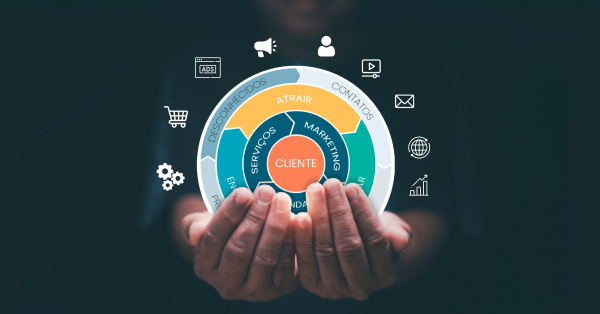 Image: A person holding a flywheel with some icons around it.
Scalability
The platform is scalable, allowing companies of different sizes to use it to manage their Inbound Sales and Digital Marketing strategies.
These are just some of the advantages that HubSpot can offer to companies looking to improve their Inbound Sales and Digital Marketing strategies. With the platform, it is possible to increase the team's efficiency and productivity, improve the customer experience and increase the chances of conversion.
Summary: The Hubspot platform offers a great differentiator for companies looking for innovative ways to centralize and optimize their sales processes and strategies. By implementing its tools, you can count on several benefits that directly impact your business results.
To learn more about Hubspot's tools and how to incorporate them into your sales and marketing digital, visit our website and learn about our solutions for your company.

Frequently asked questions about HubSpot for sales strategies and Inbound Sales
How does HubSpot help improve sales strategies?
HubSpot helps by supporting lead capture, nurturing, and conversion into sales, while offering features to manage and automate sales processes and track results through reports and dashboards.
What are the first steps to start using HubSpot?
The first steps are to create an account, customize the dashboard with objectives and goals, add information about leads, customers, and contacts, and connect channels such as social media and email to monitor interactions in one place.
What is contact segmentation for in HubSpot?
Segmentation is used to organize contacts with rules based on behavior, properties, and interactions, keeping the database updated and helping prioritize outreach by profile and intent.
What can workflow automation do in the sales process?
Workflows can automate repetitive steps, such as creating tasks, updating properties, and triggering communications, making the process more efficient and productive.
What are sequences in HubSpot and when should you use them?
Sequences are outreach and follow-up cadences that send emails in steps and create tasks automatically, helping the salesperson avoid losing timing when the lead is not ready to buy yet but has already shown interest.
How does HubSpot support content creation for marketing and sales?
HubSpot provides resources such as email templates, landing page templates, and content creation tools to produce personalized, attractive materials focused on solving leads’ and customers’ needs and challenges.
How does HubSpot help measure and optimize campaign performance?
HubSpot provides real-time analytics, monitors metrics such as conversion rates and user engagement, and consolidates results in reports and dashboards, including funnel, team activities, and pipeline forecasting.
What advantages does HubSpot offer for Inbound Sales?
HubSpot provides more context for the salesperson, more personalized conversations, and a smoother handoff between marketing, pre-sales, and sales, aligning the sales process with how people buy today.
How does HubSpot support information centralization and team integration?
HubSpot centralizes information about leads, opportunities, contacts, and campaigns in one place and shares data within a single system, improving management, decision-making, and collaboration between marketing and sales.
How does HubSpot contribute to customer relationships and scalability?
HubSpot keeps a complete history of interactions from the first contact to the sale, helping create a closer, longer-lasting customer relationship, and it is scalable for companies of different sizes.
























 Portugal