






Did you know that you can use digital technology developed for mobile devices in your marketing strategy?
Recent reports such as data.ai’s State of Mobile 2024 show that Brazilians spend slightly more than 5 hours per day using apps on their smartphones, keeping the country among the markets with the highest daily app usage.
The Digital 2024: Brazil report by DataReportal also highlights more than 210 million active mobile connections, which is close to one line per inhabitant. This reinforces how mobile devices have become the primary digital touchpoint along the customer journey.
These figures prove that cell phones and mobile devices have increasingly become part of consumers' daily lives (and not just modern consumers), and given this information, what can we, as companies, expect?
Well, this growth has given a lot of room for Mobile Marketing to "grow up and show up", and with that, it has been necessary to re-evaluate some actions that were already known, but which were seen in a different light to the objective we're going to present here.
Understand that much of what we've been doing in marketing can be adapted to new technologies and mobile marketing; we just need to bring a fresher, deconstructed look to them.
In this post, we're going to talk a bit about some trends for mobile devices that we can apply to our marketing strategy, both for attracting and attracting and retaining customers. But before we start, let's understand a little more about mobile marketing.
Practical mobile marketing for mobile devices
Mobile marketing is the set of marketing actions designed specifically for mobile devices such as smartphones, tablets, smartwatches and other operating system–based devices. It leverages the fact that Brazilians spend hours a day on their phones to create closer, more personalized and real-time experiences throughout the buying journey. By adapting well-known strategies to new mobile technologies, your company can attract, engage, convert and retain customers directly in the palm of their hands.
-
-
Focus on devices such as smartphones, tablets and smartwatches;
-
Adapting digital marketing actions to the mobile reality;
-
Using artificial intelligence to understand the mobile journey;
-
Applying it to all funnel stages, from attraction to retention;
-
Integrating SMS, apps, social media and RCS messaging.
-
What you will see in today’s content
-
The role of mobile devices in the consumer buying journey;
-
The concept of mobile marketing and its main goals;
-
How to use SMS actions strategically in the marketing funnel;
-
The impact of 5G technology on mobile experiences and campaigns;
-
The importance of omnichannel to integrate physical and digital channels;
-
What RCS is and how to create rich interactions via messaging;
-
How social networks enhance relationships through mobile devices;
-
LGPD and consent requirements in mobile marketing actions.
Happy reading!
What is mobile marketing?
Mobile marketing is the marketing actions we carry out with a focus on mobile devices. In Portuguese, mobile marketing is this "arm" of digital marketing that focuses solely on mobile devices.
One important thing is that when we talk about mobile devices, we're not just talking about cell phones, but also other types of devices, such as tablets, GPS devices, smart watches and others that have operating systems (IOS, Android and others) installed.
The idea within this type of marketing is to have targeted and optimized actions especially for these devices. In fact, the use of artificial intelligence can help us better understand our consumer's journey (from which devices they take certain actions, for example) and then draw specific actions from these insights.
Within this virtual reality universe, what are the trends or what has been done to adapt marketing actions to mobile? That's what we're going to see from now on!

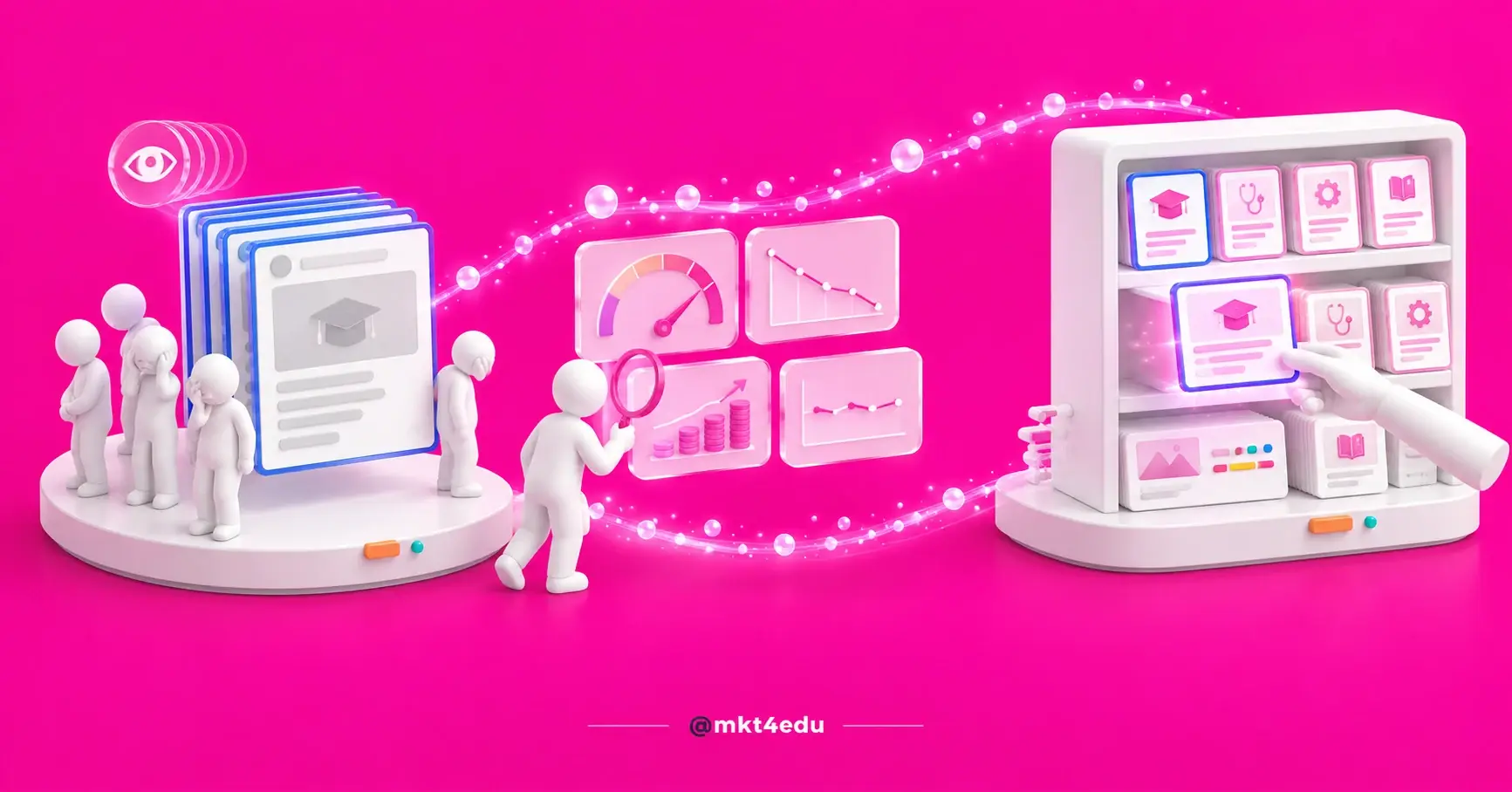
Image: Visual representation of the new possibilities and trends of mobile marketing in the digital environment.
1. SMS actions
If you thought SMS was out of the question, it's not! Sending very short and objective messages is one of the strategies to be used for people who are already in your funnel (preferably at the bottom) and is very useful for spreading news, discount coupons, news and even some newsletters.
One of the advantages of SMS is that it doesn't require internet or a data package (just an active phone line), so it tends to have high coverage, low sending costs and, generally, quick viewing.
When planning mobile marketing campaigns via SMS, it is crucial to consider Brazil’s data protection rules (LGPD) and Anatel’s telecom regulations. That means obtaining explicit user consent, explaining how data will be used, and always providing an easy opt-out link or instruction in every message.
For practical guidance, you can refer to Sebrae’s guide on how to align LGPD and digital marketing, which helps companies adapt lead generation, contact databases and communication flows to legal requirements without sacrificing performance in mobile marketing initiatives.
2. 5G technology
A job for your mobile programmer when designing an application or some action of a specific application.
In practice, this brings more stable, faster connections that enable mobile marketing experiences powered by data, IoT, augmented reality and real-time automation. 5G will expand big data usage and make it easier to build highly personalized, contextual campaigns integrated across multiple devices.
Within marketing, it will be possible to work with ever larger databases and generate more insights into the customer lifecycle as well as market behavior. If within marketing 5.0 we must be prepared for the "now", 5g will be an extremely important tool for this process.
Everything will be much faster and connectivity and integration will be even greater!
3. Omnichannel
If, on the one hand, 5G is going to impact our reality in terms of the speed with which things happen, Omnichannel (which is different from multi-channel) is here to help you use all the points of contact with your audience in a more strategic and direct way.
Omnichannel has been used for some time now and it won't be any different with mobile. The focus of this strategy is to ensure that the customer is connected to your company at all the points of contact available to them in the same system. After all, if the customer makes a purchase on the website and wants to pick it up in the store, the systems need to talk to each other, right? This is the essence of Omnichannel.
Within mobile, it's essential, especially for apps, which play a key role in this strategy. When your customer looks for your brand, they want to be served in the same way, regardless of the channel, so your strategy must be unified across all your available channels: website, store, app, chatbots etc.
4. RCS (Rich Communication Services)
RCS is a new messaging standard created by the GSMA (World Association of Mobile Operators) with the expertise of Google.
Unlike SMS messages, RCS is here to "push the boundaries". With this technology, you can send text, images, audio, videos, GIFs and location. It's very similar to WhatsApp or Imessage, the difference being that it's a Google standard (available for Android devices).
RCS is a trend, since you can create conversation flows according to the objective of your marketing campaign; in addition, you can create buttons with quick actions and one-click interactions.
RCS adoption has been accelerating thanks to GSMA standardization and the introduction of RCS support in recent iOS versions, which helps align the messaging experience between Android and iPhone users. This unlocks richer, more interactive and trackable campaigns in a single native channel.
The latest RCS Universal Profile specifications introduce rich media messages, carousels, action buttons, verified senders and stronger spam protection. For marketers, this means the ability to design conversational flows with embedded CTAs, run A/B tests on message journeys, and integrate messaging directly with chatbots and CRM automations in real time.
5. Social networks
Needless to say, social networks, which are no longer a novelty, play an important role in all stages of the sales funnel and the marketing funnel.
The social isolation we've experienced in 2020 and 2021 has further increased the power of social media, which is now essential to any marketing strategy.
The point is how we focus our mobile marketing strategies on social media. An example of this is optimizing your Google and Facebook campaigns by geographic location (available on smartphones) or, perhaps, targeting campaigns only to mobile devices.
The advantage of social networks is that they are very powerful for interacting with your audience and creating a closer relationship. It's almost like being close to someone, only in the palm of your hand and almost in real time (when we're talking about live content).
You can already see that mobile marketing has come a long way and that, if you really want to be "in the pocket" of your lead or client, you need to adapt your marketing. Don't you?
Well, if you have any doubts about how this marketing works on mobile devices, take the opportunity to check out a post here on the blog that talks about exactly that: How does marketing on mobile apps work?
Mobile changes how people read more than what they read, which is why device behaviour belongs in any content strategy discussion.

Frequently asked questions about mobile marketing on mobile devices
What is mobile marketing?
Mobile marketing is the set of marketing actions focused on mobile devices such as smartphones, tablets, smartwatches, GPS devices and other equipment with operating systems installed. It uses the specific features of these devices to create optimized experiences throughout the buying journey. This includes adapting campaigns, content formats and relationship channels to the mobile screen, considering usage time, context and user behavior. In this way, the brand gets closer to the consumer “in their pocket” at different funnel stages, from attraction to retention.
Which devices are considered in mobile marketing?
In mobile marketing, we are not talking only about cell phones. The text highlights that other mobile devices are included, such as tablets, GPS devices, smartwatches and any equipment that runs operating systems like iOS, Android and others. The idea is to design actions that take advantage of the specific characteristics of these devices, such as portability, constant connection, notifications and different interaction formats. This way, the strategy is not limited to the smartphone but follows the user across multiple mobile touchpoints.
Why are mobile devices so important in the buying journey?
Mobile devices are important because they have become the main digital touchpoint in the consumer buying journey. The content shows that Brazilians spend, on average, a little more than 5 hours a day in smartphone apps and that there are over 210 million active mobile connections in the country. This means the phone accompanies users throughout the day, influencing product discovery, offer comparison, decision-making and post-sale relationship. Ignoring this channel is essentially giving up a large share of the audience’s attention.
How can SMS be used strategically in mobile marketing?
SMS is presented as a valuable strategy for people who are already in the funnel, especially at the bottom. It works well to promote news, discount coupons, announcements and short, direct updates. The advantages include not depending on internet or data packages, having broad coverage, low sending costs and quick message viewing. However, it is essential to follow privacy rules, obtain clear user consent, inform how data will be used and offer a simple opt-out in every message, in line with LGPD and Anatel regulations.
What is the role of 5G technology in mobile marketing strategies?
5G technology is treated as strategic infrastructure for mobile marketing. It brings faster and more stable connections, enabling experiences based on data, internet of things, augmented reality and real-time automation. This makes it possible to work with larger databases, generate more insights about the customer lifecycle and better understand market behavior. Within the logic of marketing 5.0, where brands must be prepared for the “now”, 5G is a key tool to make actions faster, more connected and more integrated.
What is omnichannel and how does it connect to mobile?
Omnichannel is a strategy in which the customer is connected to the company through all touchpoints in a single integrated system. Unlike simple multichannel, here the channels need to “talk” to each other. An example mentioned is a customer who buys on the website and picks up in the store, which demands full integration. In mobile, omnichannel is essential because apps, websites, physical stores and chatbots must offer a consistent experience. Users expect the same level of service in every channel, so the app becomes central to this integrated journey.
What is RCS and how can it be used in marketing?
RCS (Rich Communication Services) is a messaging standard created by GSMA with Google’s expertise, designed to overcome the limitations of SMS. Unlike traditional SMS, RCS allows sending text, images, audio, video, GIFs and location, making it similar to apps such as WhatsApp or iMessage, but as a native standard on Android devices. In marketing, RCS makes it possible to build conversation flows based on campaign objectives, with quick-action buttons, one-click interactions and richer, more interactive messages in a single channel.
How do social networks fit into mobile marketing?
Social networks play an important role in all stages of both the sales funnel and the marketing funnel, especially after their increased use during social distancing. In the mobile context, the focus is on using features such as geolocation, device-based segmentation and campaigns designed for smartphone users. Social networks help brands interact with their audience, build a closer relationship and be “almost in real time” with people, especially through live content. All of this reinforces social media as one of the pillars of any mobile marketing strategy.
What LGPD and consent requirements should I consider in mobile marketing actions?
The text emphasizes the importance of following LGPD and Anatel rules when planning mobile marketing campaigns, especially via SMS. This includes obtaining clear authorization from users before sending messages, explaining how their data will be used and providing, in every communication, a simple way to opt out. These precautions also apply to lead collection, contact databases and communication flows. In this way, companies can maintain the performance of mobile actions while acting responsibly, transparently and in line with current privacy regulations.
See you next time!
























 Portugal