






In an area as results-oriented as marketing, making decisions based on guesswork is certainly not the best way to proceed with strategic planning.
However, with the digital revolution in full swing, new technologies have been increasingly punctual and efficient, especially in the fields of business intelligence and Data Science, which set out to do just that: use one way to raise, gather, and read data, so a company holds facts that truly change how a project turns out.
But before delving deeper into the importance of these areas, especially the second, let's make a brief differentiation between them.
Business Intelligence and Data Science: What's the Difference?
In theory, both areas are very similar, bringing many concepts aligned and whose main objective is to give insights obtained through raw data and deliver them to leaders, managers and decision makers, so that they can reach better results in their operations. positions.
The difference isn't just the time horizon. In practice, BI covers descriptive (what happened) and diagnostic (why) analytics, while Data Science expands to predictive and prescriptive (what will happen and what action to take), often with machine learning—choose the techniques based on the decision.
The subtle difference between the two fields, but, is due to the way the data is used, in which Business Intelligence makes use of tools that interpret past and current data to predict future episodes. within a short to medium term perspective, while Data Science is a way of working across many fields. It puts math or statistical models to work, to call what results will look like years down the road.
Like all science, Data Science puts a hypothesis on the table and runs a test, to see whether the facts back it or not. It also hands a business new ways to see the detail and the setting around everyone it deals with. What comes out holds together better, and it can turn an operation on its head.
If you can visualize Data Science as a strong ally in your marketing strategy, great, because it really can be. But if this subject is still not very clear to you, check out some of the reasons to start betting on this tool!
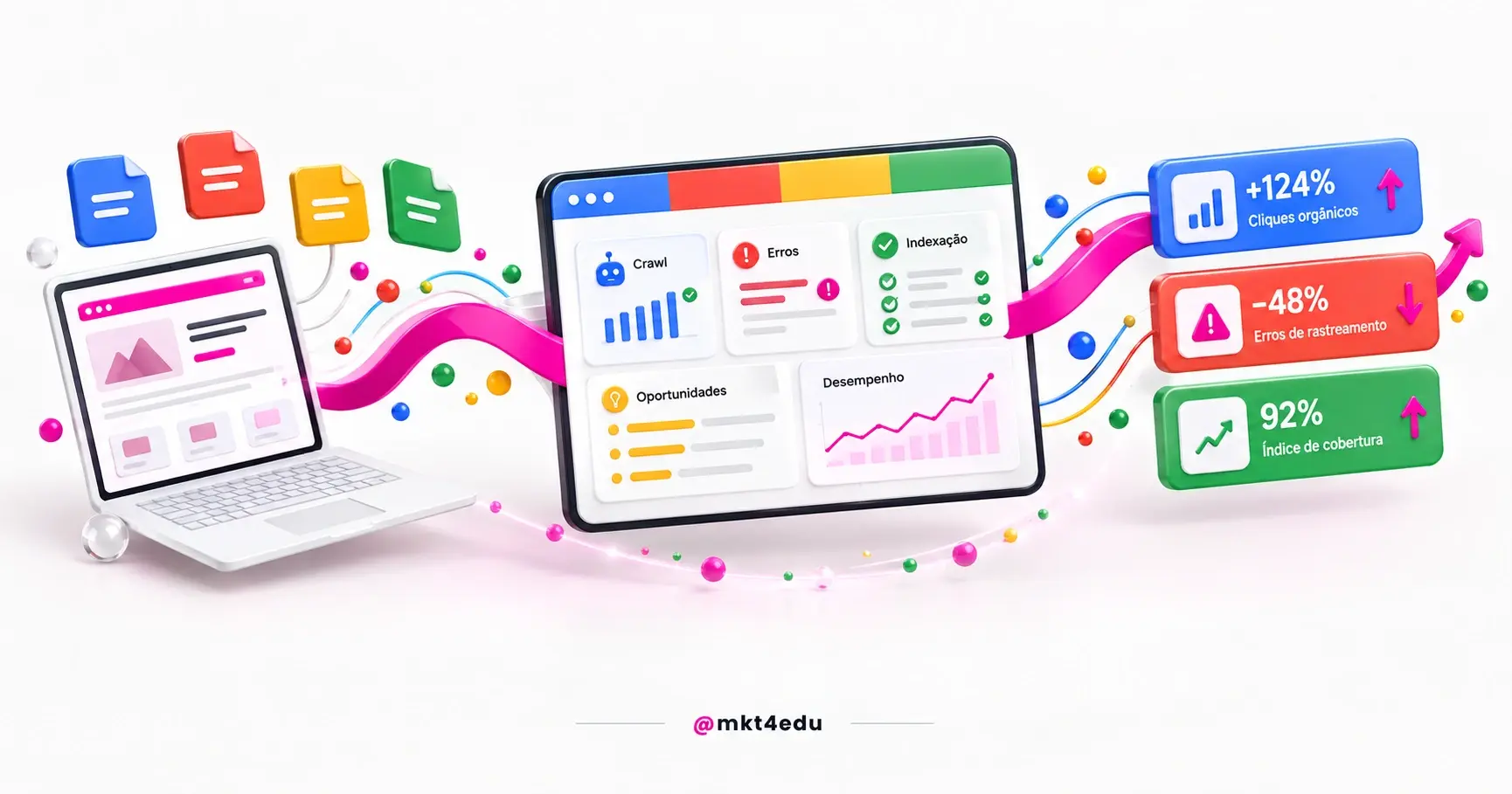
Image: Data Science Professional Analyzing Data for Marketing Strategies
The reasons to use Data Science in marketing
Companies have made progress in digital transformation, but they're still capturing only part of the promised value. Harvard Business Review reports that 89% of large firms already have digital or AI plans under way. Yet they have seen only 31% of the revenue they hoped for, and 25% of the savings. In short: without the analytics work, the data rules, and the change inside the company, the plan gives back less than it should.
Therefore, it is natural that within the marketing scenario in Brazil, the two areas are still not aligned.
To change this situation and add a little more to your understanding, now learn about some of the reasons to unite Data Science with marketing:
1. Improved customer acquisition
By using Data Science, it is possible to have a better understanding of how to direct efforts to the marketing strategies thanks to the construction of intelligent algorithms that give you with key content and direct the best action.
Thus, having the best resources and information, customer acquisition becomes much more optimized, focusing on the identification and conversion of qualified leads for purchase within the sales funnel.
Propensity and personalization models at scale increase acquisition when fueled by quality data and orchestrated by the right architecture. McKinsey highlights that enabling near-real-time personalization sustains consistent growth and ROI.
2. Agility in monitoring results
With Data Science, you gain speed in watching the dashboards, with results as they happen. Facts move faster and sit in plain view, and each call is sharper and lands closer.
Beyond dashboards, marketing teams are adopting real-time decision-making (next best action, offers, routing) supported by AI. Harvard Business Review highlights the shift from "reflexive" processes to reflexive decisions, driven by data and AI, without relinquishing human control and guardrails.
3. Better direction of actions
Not having agile and reliable data sources is, basically, navigating without a compass. Without the correct assumptions, decisions become slower and more inaccurate.
Without results panels, obtaining information remains dependent on a greater number of people to reach their destination.
In April 2025, Google confirmed that it will not eliminate third-party cookies in Chrome, opting to keep user choice. However, the market is moving toward first-party data and LGPD-compliant measurement. Prioritize explicit consent, modeling, and testing to cut reliance on third-party cookies.
4. Greater customer retention
Regardless of your business, having timely information about your customers and having the ability to convert them into specific actions can be a turning point for your business when it comes to keeping these customers happy. and promote their retention and loyalty.
For retention, avoid generic incentives. Evidence from the Harvard Business Review shows that churn models bring value when combined with controlled tests and offers designed for those at risk who respond to intervention, cutting discount costs and increasing margins.
5. Process Improvement
Professionals who work with Data Science, the data scientists, must have a holistic knowledge about the company's business and the scenarios that surround it. In this way, when performing tests through mathematical models, they can find opportunities and question methods and processes then used, aiming at their optimization.
What can Data Science do for your business?
In addition to understanding some of the reasons why Data Science has become key to marketing strategies, also check out everything it can do for it.
Calculation of goals
Reads the past to work out how many contacts you need to hit the goal you set. It weighs how long it takes a contact to turn into a customer, and does the conversion math between one stage and the next of the purchase journey.
Conversion calculation
It brings details of the conversion of contacts into customers and aligns which standards the leads follow, optimizing the budget and directing investments to assertive campaigns.
Production of numerical reports
It translates the results through the use of graphs and images, facilitating the understanding of the numbers and helping the focal points to quickly show the results to all stakeholders.
Combine experiments, marketing mix modeling (MMM), and first-party data to attribute impact with less bias in a privacy-enhanced environment. Google itself recommends cookie-resilient practices, using AI and modeling to preserve conversion signals and guide optimization.
Logic construction
Read how the numbers move, and how they sit against what else is going on. Then you can spend what you have with more care, and open up better ways to act and to redraw the picture.
Building Custom Dashboards
Dashboards are customized with key information for the business. Thus, you can have, in a centralized way, analyzes gathered for a better visualization of what was extracted from the data.
Conclusion
Having said that, you can already see that using Data Science as part of a Marketing strategy Digital proves to be a valuable option for obtaining better results, isn't it? Whether to better grasp a purchase journey, or to gain better insights into the user experience, this method promises to deliver improvements within a business's processes permanently.
If you are interested in relying on this technology, Mkt4edu is an expert in the rollout and execution of Data Science strategies. How about setting up a conversation about it?
Turning raw numbers into a campaign decision is what separates reporting from strategy in educational marketing.

Data Science and Marketing: How to Use Data for Strategic Decisions
What is the difference between Business Intelligence and Data Science?
Both fields run on what data shows, but they look at different things. Business Intelligence (BI) reads what happened and why it happened, over the short and middle term. Data Science leans on statistical models and machine learning to call what will happen and what to do about it, looking years ahead.
Why apply Data Science to digital marketing?
Data Science sharpens the calls you make with data. It brings the right customers in, watches the numbers live, aims a campaign better, makes the work leaner, and keeps more people. It strengthens the customer journey, lifts ROI, and makes each plan one that can last.
How does Data Science improve customer acquisition?
Through intelligent algorithms, Data Science finds qualified leads, personalizes offers, and guides actions that increase conversion rates at each stage of the sales funnel.
How does Data Science improve performance tracking?
Real-time dashboards and AI-supported analysis accelerate decision-making and improve transparency. This allows for quick adjustments in campaigns and strategies, ensuring accuracy and evidence-based actions.
How does Data Science support marketing actions?
Without reliable data, marketing loses precision. Data Science delivers fast and consistent insights, cuts reliance on third-party cookies, and strengthens the use of first-party data under privacy regulations such as GDPR and LGPD.
What is the impact of Data Science on customer retention?
With churn models and a read on how people behave, Data Science flags the customers you may lose. Then you can act on each one, so they stay happier and stay put. That drops what it costs to win a customer and lifts what you keep.
Which processes can be improved with Data Science?
Data scientists lean on math models to test a hypothesis, spot a chance, and make the work run leaner. Out of that come better goals, more conversions, clearer visual reports, dashboards built to order, and a way to call how a customer will behave.


























 Portugal