




O A company's success is directly related to the effectiveness of its sales methodology and marketing strategies. As technology continues to evolve and customer expectations change, it is essential for organizations to adapt to gain and maintain a solid customer base.
In this context, we have to talk about two approaches that can contribute to achieving better marketing performance, in this case, Inbound and CRM (Customer Relationship Management).
The combination of both can significantly enhance a company's results.
In today's post, we will explore the sales methodology, unveiling the particularities of Inbound and CRM, as well as understanding how the sum of their parts can lead a company to reach new levels of success.
What you will see in today’s content
- The relationship between sales methodology, marketing strategies, and adapting to technological and customer expectation changes.
- What Inbound is and how it attracts attention and interest organically.
- How creating and sharing valuable content helps engage and build trust.
- What inbound sales is and how it aligns with inbound marketing.
- Inbound sales principles: lead understanding, education and guidance, personalization, funnel alignment, qualification, and ongoing follow up.
- What CRM is and how a system records interactions, data, and history to support marketing, sales, and customer service.
- CRM features: contact and lead management, interaction tracking, sales automation, marketing campaign management, customer service, and analytics and reporting.
- How CRM centralization reduces rework and improves continuity across marketing, sales, and support.
- How combining Inbound and CRM improves customer view, segmentation, personalization, team communication, and funnel tracking from attraction to retention.
Good reading!
Inbound and CRM: how the combination improves marketing and sales
Inbound is a marketing strategy focused on attracting customers organically through valuable and relevant content, building a relationship before offering something in return. CRM is customer relationship management and also the software that centralizes data, history, and interactions to give context to marketing, sales, and service. When Inbound and CRM work together, the company gains a broader view of the customer, more precise segmentation, personalized campaigns and approaches, and better coordination between teams throughout the customer journey, from attraction to retention.
- Attract and nurture leads with useful and relevant content.
- Record and centralize data and interaction history in the CRM.
- Personalize marketing and sales approaches based on interests and needs.
- Segment the audience and target campaigns more precisely.
- Track lead progress in the funnel and improve conversion.
What is Inbound?
Inbound is a marketing strategy that focuses on attracting customers' attention and interest organically rather than interrupting them with intrusive ads.
This approach involves creating and sharing valuable and relevant content, with the aim of attracting, engaging and building trust with your target audience.
For example, an inbound marketing strategy is based on providing useful information and solutions to problems that potential customers face.
Instead of pushing products or services directly, the idea is to create a relationship with consumers, offering value before even asking for anything in return.
Within this concept, we also have the inbound sales, also known as inbound sales. A sales approach that aligns with the inbound marketing methodology.
This approach aims to approach leads in a more personalized, effective way that is aligned with their interests and needs.
Instead of adopting traditional sales tactics, which can be more aggressive, inbound sales focuses on meeting potential customer expectations by helping them along their purchasing journey.
Related content on CRM and the sales funnel:
- Performance indicators in inbound sales: which ones to measure
- Learn how to use the marketing funnel and the sales funnel
- How to capture qualified leads in a digital marketing campaign
The principles of inbound sales
Lead Understanding
Instead of starting the conversation with a direct sales approach, sales professionals begin to understand the lead's needs, challenges, and goals.
This is done through questions and active listening to identify how the solution offered can be beneficial to the lead.
Education and Guidance
Salespeople who follow the Inbound sales approach not only try to sell a product or service, but also educate the lead on how the solution can solve their problems.
They provide valuable information and relevant resources to help the lead make an informed decision.
Customization
Each lead is unique, and inbound sales professionals adjust their approach based on each lead's specific information and needs.
This helps create a more genuine and relevant connection.
Alignment with the Sales Funnel
The inbound sales approach takes into account which stage of the sales funnel the lead is at.
This allows sellers to offer information appropriate to the specific stage of the buyer's journey.
Focus on qualification
Inbound sales sellers focus on identifying qualified leads, that is, those who are most likely to benefit from the product or service offered. This optimizes the use of the sales team's time and resources.
Follow-up and ongoing relationship
Even after the sale, the inbound sales approach continues, with a focus on maintaining a positive relationship with the customer.
This includes post-sales follow-up, ongoing support and looking for upsell opportunities or cross-sell.
Understanding what a CRM is
CRM refers to both the customer relationship strategy and the software that supports it. In practice, a CRM system stores interactions, data, and history for each contact so marketing, sales, and service teams can act with more context and consistency.
A well structured platform like HubSpot CRM helps you collect, store, and manage customer and lead data such as contact details, interaction history, preferences, and support records. With everything centralized, teams get more continuity in conversations and less handoff friction across marketing, sales, and service.
This information is consolidated in a single place, accessible to different teams, such as sales, marketing and customer service.
When this centralization involves personal data, it helps to be explicit about privacy and governance. Brazil’s Law No. 13,709/2018 (LGPD) requires a lawful basis for processing and principles such as necessity and security, which reinforces the value of clear processes when using CRM and marketing automation.
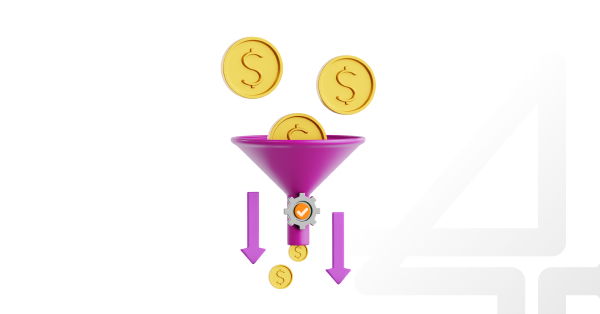
Image: Inbound attracts and nurtures leads; CRM centralizes data and helps improve conversion throughout the funnel.
The main features of a CRM
Contact and Lead Management
CRM allows you to record and track customer, lead and prospect contact information, facilitating segmentation and personalization of interactions.
Interaction Tracking
All customer interactions such as calls, emails, meetings and sales activities are recorded and tracked in the CRM, providing a complete view of the customer relationship.
Sales Automation
A good CRM helps optimize sales processes by automating tasks such as creating proposals, tracking opportunities, and managing the sales pipeline.
Marketing Campaign Management
With CRM, it is possible to plan, execute and monitor marketing campaigns, segmenting the target audience, recording responses and measuring the effectiveness of actions.
Customer service
CRM helps manage support tickets, providing a complete view of customer requests, making service agile and efficient.
Analysis and Reports
A CRM system provides reporting and data analysis capabilities, allowing companies to evaluate sales performance, measuring key metrics and identifying opportunities for improvement.
By implementing an efficient CRM, companies can improve sales effectiveness, improve customer service, strengthen relationships with existing customers, and win new customers.
Through a comprehensive view of the customer, teams can make informed decisions, personalize interactions and provide exceptional service, resulting in greater customer satisfaction and business growth.
Uniting Inbound and CRM
Combining Inbound and CRM (Customer Relationship Management) is a very relevant strategy for boosting sales success and improving customer relationships.
These two approaches complement and strengthen each other, allowing companies to manage efficiently throughout the customer journey, from attraction to loyalty.
By integrating Inbound with a CRM system, it is possible to obtain a comprehensive view of the customer, centralizing valuable information about their interactions, preferences, purchase history and behaviors.
This data allows sales and marketing teams to customize their approaches, offer relevant solutions and create tailor-made experiences for each client.
Furthermore, the union of Inbound and CRM provides better target audience segmentation. Based on the information collected by CRM, marketing teams can create segmented and targeted campaigns, delivering highly relevant content to each customer.
Inbound Marketing, in turn, plays a fundamental role in attracting and nurturing leads.
By creating valuable content, optimized for SEO and shared across different channels, the company is able to attract potential customers and, through the intervention of a sales team well aligned with the inbound sales approach, direct them to the stages of the sales process and conversion.
In practice, “SEO optimized” works best when the page answers real questions with clear examples and decision criteria, not just keywords. Google’s guidance on helpful, reliable, people-first content is a solid way to align content with search intent and quality expectations, which also improves readability for LLMs.
With the help of CRM, you can track and manage the progress of these leads throughout the sales funnel, ensuring they receive the support and information they need to move forward in the purchasing process.
Furthermore, the integration between the Inbound approach and CRM allows for more efficient communication between sales and marketing teams, as information collected by CRM can be shared between teams, allowing for more aligned collaboration and an integrated approach. to meet customer needs.
This results in better coordination of efforts, avoiding gaps and ensuring the customer receives a consistent, personalized experience across all touchpoints.
Summary: Combining Inbound and CRM is a powerful strategy to boost sales success. This combination enables deeper customer understanding, more precise audience segmentation, more efficient communication between teams, and the ability to deliver personalized experiences throughout the entire customer journey. By implementing this approach, companies can maximize the potential of their sales strategies, effectively winning and retaining customers.
Another very important concept to have an objective view of your marketing strategies is the conversion rate. And so you know exactly how to calculate it, we have another post where you can learn everything about this essential metric for your business.

Frequently asked questions about Inbound, inbound sales, and CRM
What is Inbound?
Inbound is a marketing strategy that focuses on attracting customers’ attention and interest organically by creating and sharing valuable and relevant content.
What is the difference between Inbound and more intrusive approaches?
Inbound prioritizes attracting and engaging without interrupting with intrusive ads, offering useful information and solutions to audience problems before asking for anything in return.
What is inbound sales?
Inbound sales is a sales approach aligned with inbound marketing that engages leads in a more personalized and effective way, matching their interests and needs throughout the buying journey.
What are the principles of inbound sales?
Inbound sales principles include understanding the lead, educating and guiding, personalizing the approach, aligning communication with the funnel stage, focusing on qualification, and maintaining ongoing follow up and relationship.
How does lead understanding happen in inbound sales?
Lead understanding happens when sales professionals aim to understand needs, challenges, and goals through questions and active listening to identify how the solution can be beneficial.
What does it mean to educate and guide in inbound sales?
Educating and guiding means providing valuable information and relevant resources to help the lead make an informed decision rather than simply trying to sell a product or service.
Why is personalization important in inbound sales?
Personalization is important because each lead is unique, and adjusting the approach based on specific information and needs helps create a more genuine and relevant connection.
What is CRM?
CRM is customer relationship management and also the software that organizes this work by recording interactions, data, and each contact’s history to support marketing, sales, and customer service with more context and consistency.
What data can a CRM centralize?
A CRM can centralize contact information, interaction history, preferences, service records, purchase history, and behaviors, creating a more complete view of the relationship.
What are the main CRM features?
The main features include contact and lead management, interaction tracking, sales automation, marketing campaign management, customer service, and analytics and reporting.
How does CRM help marketing and sales work better together?
CRM helps by centralizing information accessible to different teams, reducing rework, improving conversation continuity, and enabling more aligned collaboration across marketing, sales, and support.
How does LGPD relate to the use of CRM and marketing automation?
LGPD requires a legal basis for processing personal data and reinforces principles such as necessity and security, increasing the importance of well defined processes in CRM and marketing automation use.
Why is combining Inbound and CRM relevant?
Combining Inbound and CRM is relevant because it enables managing the entire customer journey from attraction to retention with a broader customer view, more precise segmentation, and personalized experiences.
How does integrating Inbound and CRM improve segmentation?
Integration improves segmentation by using information collected in the CRM to create segmented and targeted campaigns, delivering more relevant content to each customer.
How does CRM support lead progression in the sales funnel?
CRM supports it by tracking and managing lead progress through the funnel, ensuring they receive the support and information needed to move forward in the buying and conversion process.
What improves in communication between marketing and sales with integration?
Communication improves because data and interactions recorded in the CRM can be shared between teams, avoiding gaps and ensuring a consistent and personalized experience at all touchpoints.


























 Portugal