






In the fast-paced and highly competitive world of marketing, every minute counts. Companies are constantly looking for ways to reach maximum efficiency and superior results, which is why process optimization is needed. However, simply automating tasks is not enough.
Strategic thinking is needed to set priorities, remove waste, and standardize routines using a process approach that ties each task to an owner and to a standard. That way, making things leaner is no longer about speed. It becomes steadiness, an outcome you can call, and steady gains.
In this blog post, we will explore the importance of process optimization in the context of marketing, highlighting the need for a strategic approach to reach exceptional results.
What you will see in today’s content
- Why marketing process optimization must go beyond task automation.
- How to use strategic thinking to set priorities, remove waste, and standardize routines.
- First steps: assess current processes and find bottlenecks and inefficiencies.
- Goal setting and measurement using metrics and key funnel events.
- Workflow mapping and finding areas to simplify, remove, or improve.
- Prioritizing improvement areas based on impact, complexity, and available resources.
- Automating repetitive tasks while treating consent and preferences as part of the process, aligned with LGPD.
- Using a CRM to centralize data with quality rules, naming standards, and update cadence.
- Tracking results, analyzing performance and ROI, and boosting continuously through ongoing adjustments.
Good reading!
Marketing process optimization: why go beyond automation
Marketing moves fast and the fight is hard, so making each step leaner is key to running well and doing better. But handing jobs to software is not enough. You need to think: what comes first, what is waste, and how do the routines get set. That means a real view of the steps, tying each task to an owner and to a standard. Then optimization stops being about speed. It becomes about doing the same thing well, being able to call the outcome, and getting better all the time. With clear goals, the work mapped out, automation in place, and a CRM with rules, it gets easier to measure, to adjust, and to keep the gains.
- Assess current processes to find bottlenecks, inefficiencies, and manual activities.
- Define goals and how to measure them, choosing metrics and key funnel events.
- Map workflows to see steps, teams, and customer interactions end to end.
- Automate repetitive tasks and implement a CRM with quality rules and LGPD alignment.
- Track results to continuously adjust and refine.
Where to start optimizing your processes?
To start optimizing processes In marketing, it is key to follow a structured approach. Here are some steps to guide you through the process:
Evaluate your current processes
Carry out a complete analysis of your company’s existing marketing processes. Identify the steps involved, areas of greatest efficiency, and potential problem areas.
Understand how tasks are currently performed and find bottlenecks, inefficiencies and manual activities that can be automated.
Define your goals
Set clear goals for process optimization. This may include cost reduction, increased efficiency, boosted campaign quality, agility to respond to market changes, among others.
To turn goals into management, define how you will measure them. A simple approach is to pick 3 to 5 metrics per objective and map the events that represent real funnel progress, such as form submissions, contact requests, and purchases. The key events concept helps avoid noisy reporting and low-impact decisions.
Having defined goals will help direct your efforts and evaluate optimization success.
Map your workflows
Document your existing workflows, finding all steps, departments involved, and customer interactions.
This will help you visualize the process as a whole and find areas that can be simplified, eliminated, or boosted.
Prioritize areas for improvement
Based on the evaluation of the processes and the defined goals, find the areas that have the greatest potential for impact.
Prioritize these areas for optimization, taking into account complexity, expected impact, and available resources.
Automate repetitive tasks
Identify repetitive tasks that consume time and can be automated, such as follow-up emails, social publishing, and funnel stage updates. For messaging and nurturing, treat consent and preferences as part of the workflow, aligned with Brazil’s LGPD.
Use marketing automation tools to simplify these tasks and free up time for strategic activities.
Implement CRM tools
An efficient CRM system can be key in optimizing marketing processes, as it allows you to centralize and organize customer information, track leads, automate tasks and give valuable insights for decision making.
To work well day to day, a CRM also needs rules. Define owners for needed fields, database quality criteria, naming conventions, and an update cadence. When integrations and automations are involved, document purpose and data retention to cut risk and rework, aligned with LGPD.
Choose a tool that meets your company's specific needs and ensures integration with other tools of marketing you use.
Track and analyze results
Measure and weigh the results of your work often. Use the reads that matter to follow how a campaign is doing, how lean the work is, and what the ROI looks like.
Based on the data collected, make continuous adjustments and refinements to further improve your processes.
Remember that process optimization is an ongoing process in your sales strategies, as well as in content strategies. As your company evolves, new opportunities for improvement may arise.
So be open to feedback, ideas and innovations that can boost your marketing strategy and stay up to date with industry best practices.
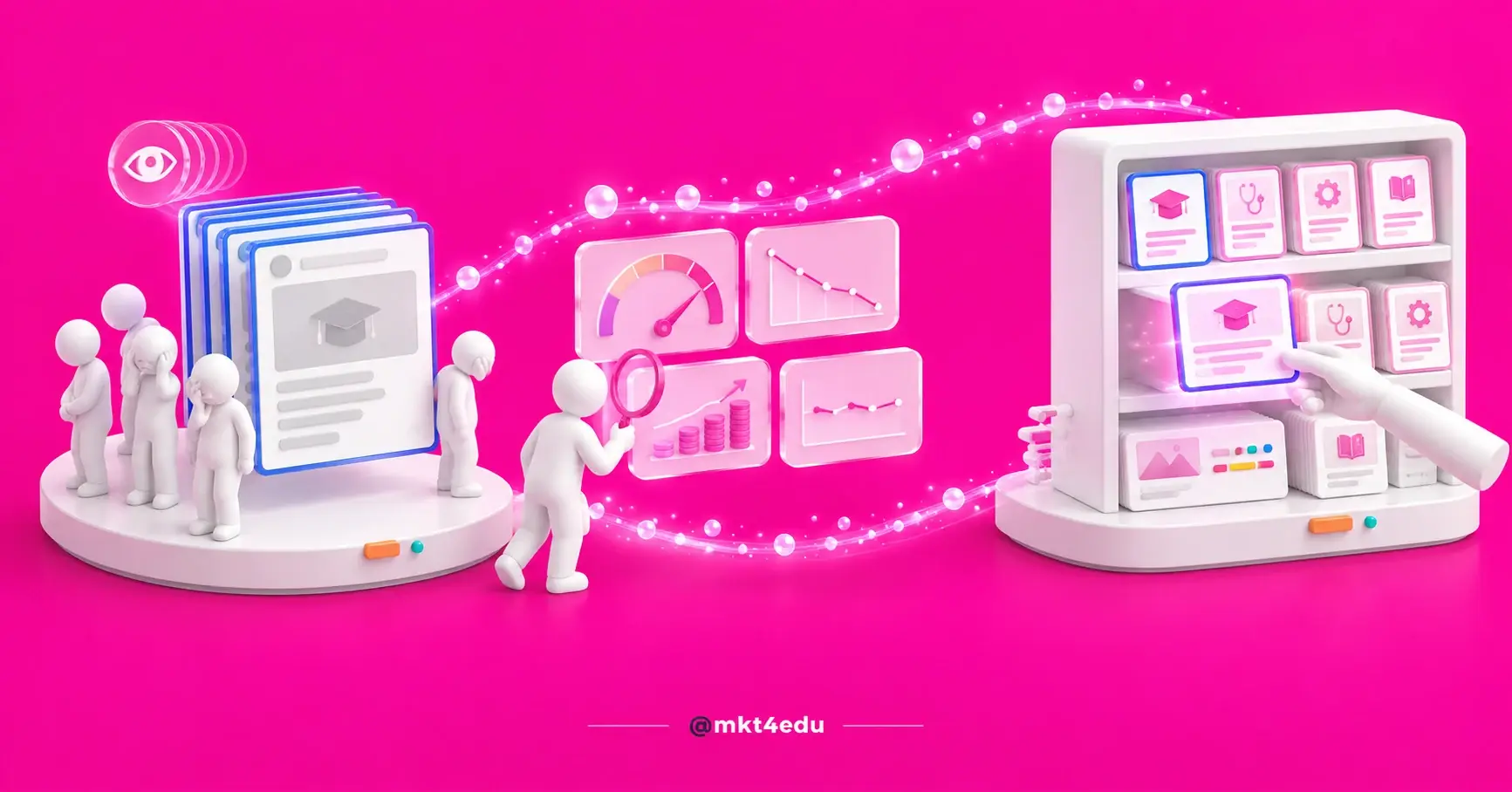
 Image: Flowcharts help map steps, owners, and quality criteria when optimizing marketing processes.
Using Hubspot tools to optimize processes
HubSpot CRM is an all-in-one tool that pulls every customer exchange and every record into one place. It follows a lead, holds your contacts, runs your marketing, reads the data, and more.
The intuitive interface and seamless integration with other HubSpot tools make the CRM a popular choice for marketing teams looking to optimize processes.
Workflow optimization
One of the main advantages of HubSpot's CRM is the ability to optimize workflows.
Through automation, you can set up custom workflows that automate repetitive tasks like sending follow-up emails, assigning leads to salespeople. This builds support tickets, and more.
In turn, this frees up time so your marketing team can focus on higher-value, strategic activities.
Advanced personalization and segmentation
With HubSpot CRM, slicing your public gets more reliable once you set your properties the same way, join up where the data comes from, and keep the database in order. Then you can shape each message by interest, by funnel stage, and by how much someone takes part, with data rules that hold, as described in manage your CRM database.
This results in more relevant and personalized messages, increasing engagement and conversion.
Powerful analytics and reporting
HubSpot CRM reads the data well and reports it well. With dashboards you set up and reads that go deep, you can follow how a campaign is doing, catch a trend, measure ROI, and choose with facts.
A data analysis helps optimize further your marketing processes, finding areas for improvement and adjusting your strategies based on concrete insights.
Integration with other HubSpot tools
A big gain with HubSpot's CRM is how cleanly it joins the other tools in the platform. So you can lean on more: marketing automation, holding your content, reading your social media, and the rest.
The synergy between these tools gives a complete process optimization experience and allows you to make the most of your marketing strategy.
Process optimization is key to marketing success, and HubSpot CRM offers a powerful solution to reach this goal.
With deep automation, a personal touch, close reads, links to other tools, and artificial intelligence, HubSpot CRM lets your marketing team sharpen the plan, run leaner, and get the most out of it.
Try HubSpot CRM and harness its full potential to take your marketing to a new level of excellence.
To learn even more about process optimization concepts and how to improve the alignment of your teams, be sure to visit our website and learn about our innovative solutions for all your marketing efforts.

Frequently asked questions about marketing process optimization
What is marketing process optimization?
Making marketing leaner means putting the work in order and lifting how it gets done, so it runs better and gives more back. You tie each step to an owner and to a standard.
Why isn’t task automation enough?
Handing jobs to software is not enough, because making things leaner asks you to think. What comes first, what is waste, and how do the routines get set. That is what brings steadiness, an outcome you can call, and steady gains.
Where should you start optimizing marketing processes?
You can start by assessing current processes, defining goals, mapping workflows, ranking improvement areas, automating repetitive tasks, implementing a CRM, and tracking results.
How do you assess current processes?
Weighing the steps you run today means looking at each one, seeing how the work really gets done, and turning up the snags, the waste, and the jobs by hand that software could take.
How do you define goals and measure optimization?
Defining goals includes setting clear targets and choosing 3 to 5 metrics per goal, as well as mapping events that represent real funnel progress, such as form submissions, contact requests, and purchases.
Why does mapping workflows help optimization?
Mapping workflows helps because it documents steps, departments, and customer interactions. This makes it easier to see the process end to end and find what can be simplified, removed, or boosted.
How do you prioritize improvement areas?
Picking what to fix first means choosing what will move the needle most, weighed against the read you did and the goals you set, and against how hard it is, what it should give back, and what you have to hand.
Which repetitive tasks can be automated in marketing?
Repetitive tasks that can be automated include follow up email sending, social media posting, and updating funnel stages.
How does LGPD fit into process optimization?
LGPD fits into optimization when consent and preferences are treated as part of the process and, for integrations and automations, data purpose and retention are documented to cut risk and rework.
How does a CRM help optimize marketing processes?
A CRM helps by centralizing customer information, tracking leads, automating tasks, and giving decision making insights, as long as there are rules for needed fields, data quality, naming standards, and update cadence.
What are the advantages of HubSpot’s CRM for process optimization?
What you gain: every customer record and exchange in one place, a lead you can follow, marketing that runs itself, data you can read, and links to the other tools in the platform.
How does workflow automation improve the team’s routine?
Workflow automation boosts the routine by setting up custom workflows for repetitive tasks, such as sending emails, assigning leads, creating tickets, and more, freeing time for strategic work.
How do advanced personalization and segmentation become more consistent?
They become more consistent when properties are standardized, sources are integrated, and the database is kept organized, enabling message personalization by interest, funnel stage, and engagement.
How can you use analytics and reporting to optimize processes?
You can use analytics and reporting by tracking campaign performance, finding trends, measuring ROI, and adjusting strategies based on concrete insights.
Why is process optimization continuous?
Making steps leaner never ends, because a company keeps changing and new room to improve keeps opening. So you keep adjusting, keep refining, and keep an open ear for feedback, for an idea, for something new.

























 Portugal