





Reliable and attractive. Would you say your text has those two attributes? Even if the answer is yes, search engines are the ones that decide, and their criteria have changed considerably over the past two years.
What used to be solved with a well-placed keyword and a short title now goes through an extra layer: a share of all searches now ends inside the results page itself, in answers generated by AI.
So the question that matters is no longer only how to make a blog post appear on the first page. It is how to get that text found, understood and cited, in both formats at once.
The good news is that the list of requirements is shorter than the market usually claims. Much of what circulates as a Google rule appears in no documentation at all, and separating the two is worth doing before touching the text.
What decides whether a blog post appears on Google?
Visibility comes down to the combination of search intent coverage, page trustworthiness and technical accessibility. Google evaluates whether the content answers what the person wanted to know, whether the source deserves credit and whether the crawler can read everything without effort. Failing any of the three drags down the rest.
SEO work organizes those three fronts. It is the set of practices that gives content relevance and authority under the evaluation criteria of search engines. It exists so that material found on the web offers a better experience to whoever is looking.
To appear on the SERP, short for Search Engine Results Page, a page needs to be considered reliable and attractive. When a page meets both criteria, the site starts to become a reference on the subject, and that is what authority means.
Authority is not a label; it is accumulation. The more criteria the content meets consistently over time, the better the position, and the effect spills over to the whole niche, even outside the digital environment.
The return on that investment shows on four known fronts: greater online presence, more visibility in the sales process, more lead generation from organic search and stronger perceived authority. The last one sustains the other three.
The trust layer has its own name today. E-E-A-T, short for experience, expertise, authoritativeness and trustworthiness, guides how human raters judge content, and a real byline, cited sources and editorial transparency are what make it concrete.
It is worth noting what Google declares about the content it wants to reward. The helpful content documentation defines people-first content as content created primarily for people, and not to manipulate search engine rankings, and proposes a list of self-assessment questions for testing your own material.
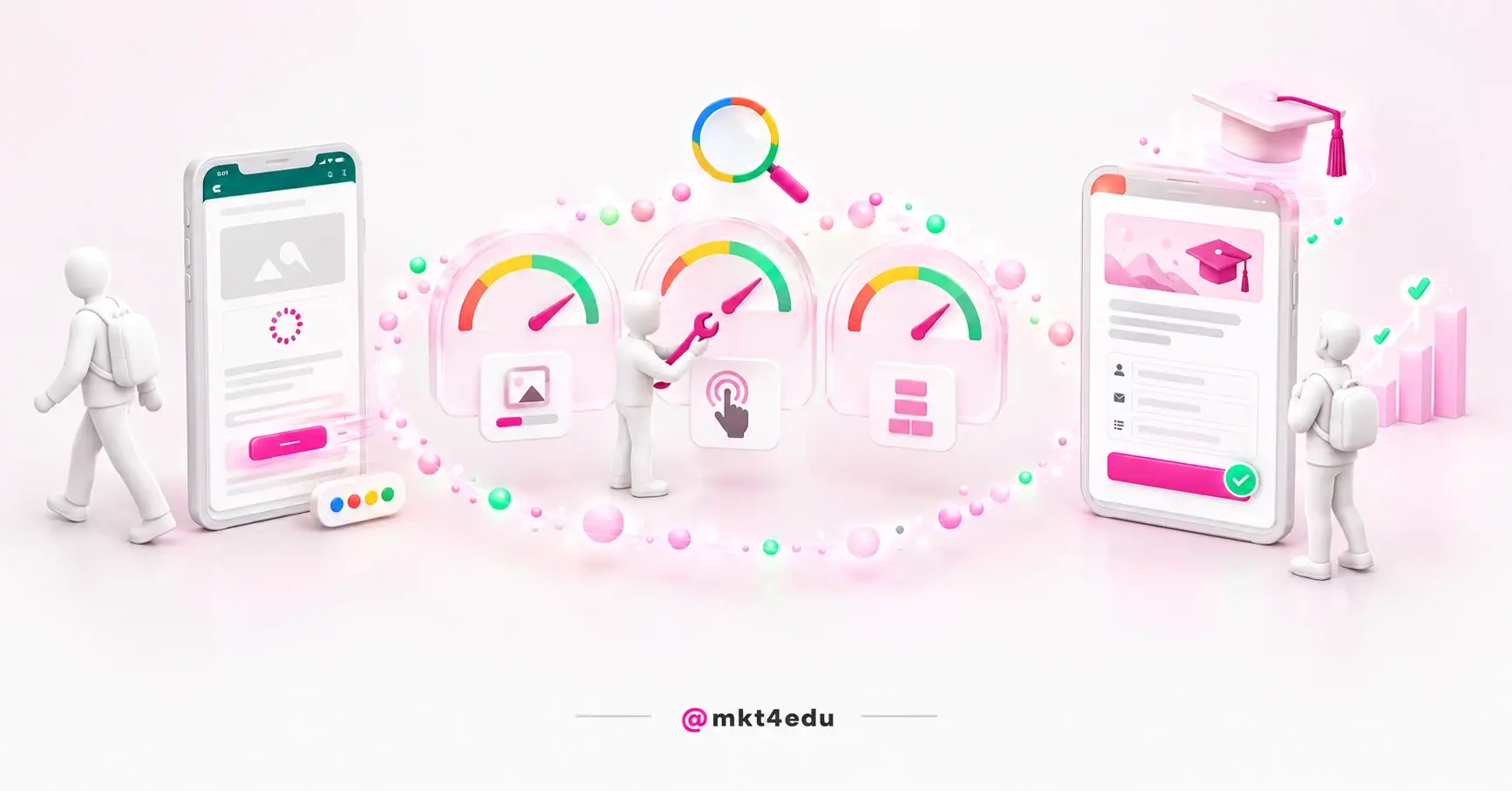
 Caption: Inspecting a blog post for structure and metrics ensures visibility across Google search and AI engine citations.
How do you structure a blog post for search and for AI?
The structure that works in both formats starts from the same principle: answer first, context after. Each section opens by delivering the information and only then develops it, because both the featured snippet and the AI-generated answer extract passages rather than whole pages. Text that saves its point for the end gets chopped up, or never gets pulled at all.
The keyword is still the axis, and its place is predictable. It guides content creation and signals the subject to the reader, which is why it should appear at defined points:
- Beginning of the title tag;
- H1, whether long tail or head term;
- Meta description;
- H2 and H3;
- Beginning of the text, within the first 100 words;
- URL;
- Image alt attribute;
- Main body of the content.
The keyword runs across every stage, and that is precisely why overdoing the repetition backfires. The goal is to signal a topic, not to saturate one.
The title decides the click, and the analogy holds: just as it is common to judge a book by its cover, you can judge what a text delivers by its title.
Imagine you search for "cake recipe". The first result leads to an "easy and quick cake recipe", while the second leads to content about "cake with wheat flour, milk, oil".
Users tend to choose the first, because it delivers the information they were looking for without requiring interpretation. In the second, the keyword does not even appear, and the text starts at a disadvantage.
On subheadings, the most useful change in recent years was writing them as real questions. A heading in question format captures long tail, feeds the People Also Ask block and serves as an anchor for citation.
The meta description is the summary that shows in search and helps the person decide whether to click. It needs the keyword and enough context to capture attention, with an action verb instead of a generic summary.
Scannability closes the structure, and it serves human readers and automated extractors alike. Use subheadings, short sentences, paragraphs that do not stretch, lists to break up text, bold and italics used sparingly, and images or media where they explain something.
The principle behind that is old and still correct: even in a superficial reading, the person must be able to extract the main information. That is the same requirement that makes content easy for AI systems to retrieve.
Links complete the work. An external link shows that you reference sources and offer complementary material, and here the criterion is reliability: pointing to an untrustworthy site transfers that distrust to your content.
Internal links have another function. They show the search engine that your materials are complementary and aligned, forming a content tree, and they keep people moving between related topics instead of leaving at the first unanswered question.
That linking is what turns a standalone post into content marketing with a compounding effect. One post answers one question; a set linked together answers a subject.
What does AI search change about visibility?
What changed was the destination of the click, not the optimization method. AI-generated answers now settle a share of searches inside the results page, and that reduces traffic from simple informational queries. The way to work the content, however, is still SEO done well.
The effect on clicks has been measured. A Pew Research Center measurement found that, on visits where an AI summary was present, a click on a traditional result happened in 8% of cases, versus 15% on visits without one. Only 1% of those visits included a click on a link inside the summary itself.
The study followed 900 US adults, using browsing data from March 2025, so it serves as an indication of a trend rather than a universal number. The direction of the effect, though, is consistent with what content teams report.
The part that most surprises anyone looking for a shortcut is Google's official position. The AI features documentation states there are no additional requirements to appear in AI Overviews or AI Mode, nor other special optimizations necessary, and that the page only needs to be indexed and eligible for a snippet.
The same page describes the mechanism that explains why broad coverage started to matter more. AI features use a query fan-out technique, issuing multiple related searches across subtopics before assembling the response.
The practical consequence is clear. A text that covers the whole subject, including the side questions, has a better chance of being retrieved than a text answering only the main query in great depth.
That is why optimizing for AI search is not a parallel discipline. Anyone already writing with the answer up front, named sources and clean structure has little to adjust.
For a deeper look at passage retrieval mechanics, see how SEO for LLM works and how the AI-Powered Overview assembles an answer from different sources.
Which SEO myths still circulate about content?
Five widely repeated recommendations have no backing in the official documentation, and most of them are contradicted explicitly. Each one is worth checking at the source before being treated as a rule, because they change decisions about topics and formats. The pattern repeats in all five cases: a market convention became a rule attributed to Google.
Here is how each claim compares to what the documentation says:
| What people say | What the documentation says | Source |
|---|---|---|
| Text must exceed 1,000 words | There is no preferred word count | Google, creating helpful content |
| Titles have a 60-character limit | No limit; truncation follows device width | Google, title link documentation |
| Meta descriptions have a 160-character limit | No declared length limit | Google, snippet documentation |
| Marking up FAQ produces a question block in search | The FAQ rich result was discontinued | Google, Search updates log |
| You can apply for a featured snippet | You cannot; the literal answer is "You can't" | Google, featured snippets documentation |
Table: Comparison between market recommendations and the position declared in Google's official documentation.
Content length is the most repeated of the five. The helpful content documentation raises the question in its own self-assessment list and answers it on the same line, in parentheses, stating there is no preferred word count. Longer text sometimes wins by covering more intent, not by adding words.
On titles, the title link documentation sets no character limit: it says the displayed title is truncated as needed, typically to fit the device width. The criterion is screen space, not character count, and keeping titles short remains good practice as an editorial choice.
On meta descriptions, the denial is even more direct. The snippets page states there is no limit on how long a meta description can be, and that the displayed snippet is truncated as needed. The same page notes that Google builds the snippet from page content and uses the meta description only when it describes the page better.
On FAQ structured data, there was a concrete change. Google removed the feature documentation and the question block stopped appearing in search, per the Search updates log, and FAQPage no longer sits among the types that generate rich results.
On featured snippets, the official answer is two words long. Asked how to apply for the format, the feature documentation replies "You can't", and explains that Google's systems decide on their own which page serves as the highlighted answer.
That is not a reason to remove the FAQ from the text. It still pays off through long tail, the related questions block and AI citation. What it no longer does is pay off through markup.
Which technical factors affect page performance?
Technical factors do not make bad content rank, but they prevent good content from being read. Speed, responsiveness and visual stability fall into this category, and Google groups them under page experience. The crawler needs access, and the person needs to be able to use the page.
A responsive site is the first item. Have you ever opened a page on your phone and found proportions, images and text misaligned and hard to read? That page probably does not follow responsiveness guidelines, and search engines favor pages that handle that adaptation properly in HTML, CSS or JavaScript.
The current metrics have defined names and scope. There are three Core Web Vitals: Largest Contentful Paint, Interaction to Next Paint and Cumulative Layout Shift, measuring loading, responsiveness to interaction and visual stability, respectively.
One common expectation is worth correcting here. The page experience documentation is explicit that there is no single signal, and that ranking systems look at a variety of signals. No isolated score settles anything.
Loading speed still matters for the simplest reason: patience has dropped. A free tool such as PageSpeed Insights delivers a performance analysis and points out what to improve, with separate mobile and desktop views.
The performance score in that analysis uses known bands: 0 to 49 in red indicates poor performance, 50 to 89 in orange indicates it needs improvement, and 90 to 100 in green counts as good performance. The bands help with prioritization and should not be read as a ranking grade.
Voice search belongs to the same accessibility chapter. Spoken queries tend to arrive as questions, and content with natural language and direct answers serves that format better, and the question-and-answer structure recommended above already covers it.
What gets a blog post penalized on Google?
What gets penalized is manipulation, not a choice of tool. The spam policies describe specific practices, and they are worth knowing because two of them are committed in good faith by people who are learning. The difference between technique and violation lies in the intent to manipulate rankings rather than serve people.
Excess and absence of keywords are two extremes of the same problem. The spam policy defines keyword stuffing as filling a web page with keywords or numbers in an attempt to manipulate rankings. Constant repetition of a term also gives the text an amateur feel that pushes readers away.
Replicated content is the second. Google values original material, mainly because originality demands effort, and content merely copied from another source adds nothing to the index.
The third deserves care because it circulates in distorted form. Using AI in production is not a violation. The same policy describes scaled content abuse as generating many pages without adding value for users, and cites generative tools only as one of the means.
The correct reading is operational. Human review, fact-checking and adding original information are what separate legitimate use from valueless production at scale, and that applies to text written by a person too.
These criteria do not change by industry. They hold equally for ecommerce publishing product guides, for software documenting use cases and for anyone running educational marketing strategies and publishing career guidance content.
Frequently asked questions about blog post optimization
How do you know the text is ready to publish?
The text is ready when you can answer three things without hesitating: which question it solves, where the direct answer sits and which source supports every number cited. If any of the three fails, the problem is editorial and no technical adjustment compensates.
Turn this list into a routine check rather than a one-time read. A good share of the traffic drops that look mysterious comes from a basic item that stopped being verified once the process became a habit.
Keep the most useful distinction here as well: separating what the official documentation states from what the market repeats. It saves rework and prevents you from optimizing for a rule that never existed.
If you want an outside reading of what your content is failing to capture in traditional search and in AI answers, talk to our team and bring one URL you consider representative.
Writing for AI answers changes what a post has to cover, and teams already using AI tools in marketing notice that first.
If you want your posts to be found and quoted by AI assistants as well as by Google, our SEO for LLM service maps which content in your library is ready to be cited and what still needs restructuring.



























 Portugal