






The education market gets tighter every year, so it asks for fresh answers. Data analysis in higher education is one of them. It helps a school make the right call in how it markets and how it sells.
With it, you can track leads and students, track their behavior, check the progress of campaigns and adjust your strategy in real time according to the results.
The possibilities of data analysis tools for universities are endless! In this article, we'll answer how they work and whether they're really ideal for your company. Take a look!

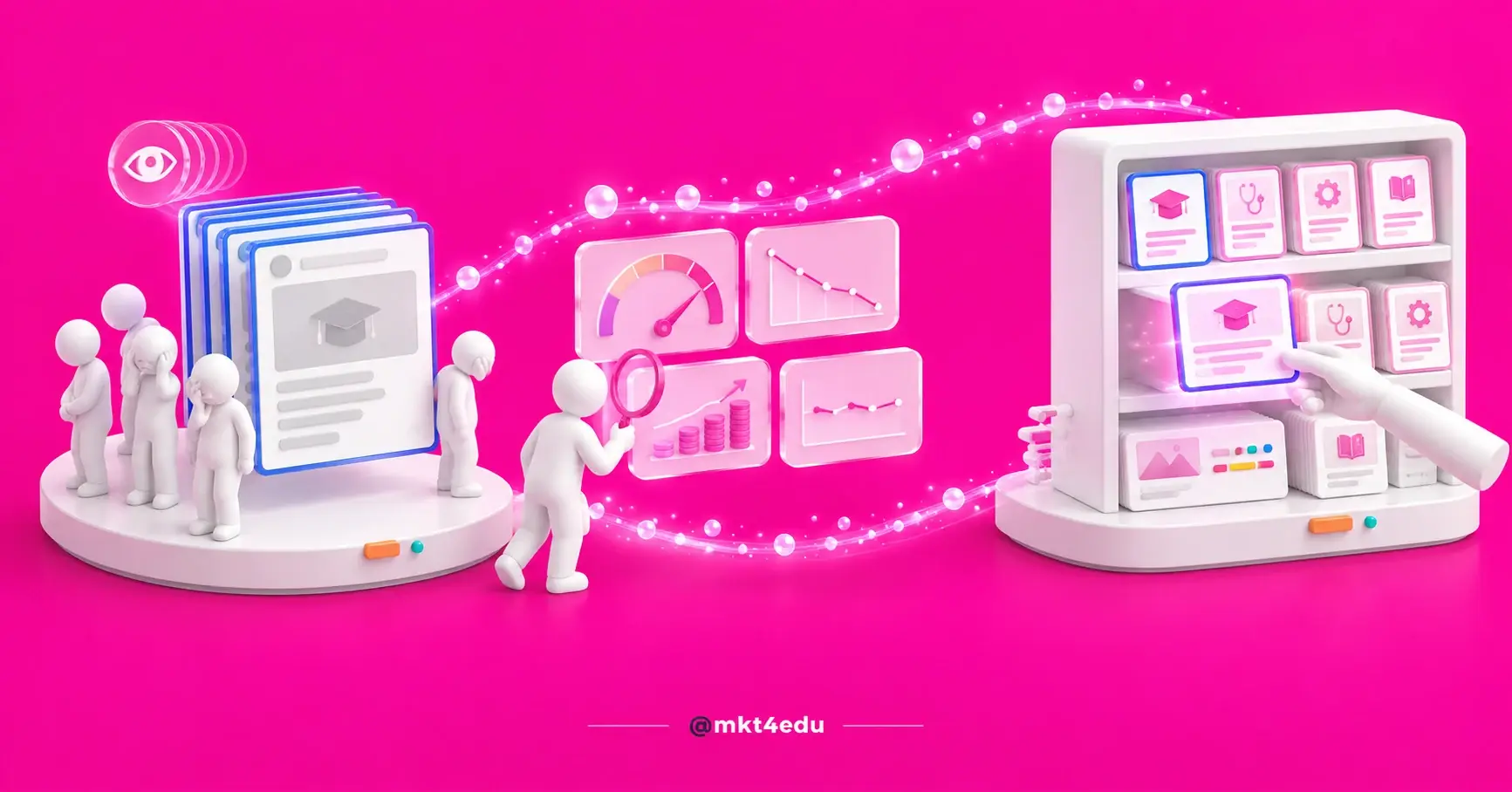
Caption: Data Analysis for Strategic Decisions
How does data analysis work in Higher Education?
Analyzing data means closely monitoring every response to an action promoted by your educational institution. From marketing campaigns to the approaches of sales and service teams, with data analysis you can better measure the repercussions of your strategy and always improve it.
Data analysis should be carried out using tools designed for this purpose, since monitoring and analysis using tools that are not suitable for this purpose misses important insights for the business.
Data gives good indications of what is working or not working in your educational sales and marketing strategy. If it is done with real-time analysis tools, it is possible to reverse unfavorable situations as soon as they occur (such as a drop in sales or a low return on investment in a campaign).
Data analysis also makes it possible to track the behavior of students and potential students in the face of social media or email marketing campaigns. This way, you'll know what appeals more or less to your target audience, anticipating their preferences.
A crucial point for the effective application of data analysis is to understand the level of analytical maturity of the institution. More mature organizations in this regard have structured processes, trained teams and a data-driven culture. T
his allows decisions to be not just reactive, but predictive and strategic, bringing greater sustainability to institutional planning.
For institutions wishing to deepen their strategic use of data, the concept of Learning Analytics has been gaining prominence on the global educational scene.
This approach makes it possible to collect, analyse and interpret student data in real time, with the aim of improving teaching and learning processes, anticipating dropout risks and personalizing educational experiences.
Universities and edtechs that adopt Learning Analytics are able to make more effective pedagogical decisions and achieve better results in retention and academic performance.
Finally, data analysis brings competitive intelligence for the educational institution. With it, you can, for example, find the desired profile of students, based on the analysis of delinquency information, using this knowledge to make strategic decisions.
In addition, the use of Artificial Intelligence (AI) and Machine Learning in higher education is already a reality in institutions that want to predict dropout behavior, detect early academic difficulties and offer personalized recommendations for students.
These technologies help transform raw data into actionable insights, raising the bar for educational management and allowing decisions to be made based on patterns that the human eye would not be able to detect on its own.
How do you choose good data analysis tools for universities?
A good data analysis tool should bring together all the features needed to achieve your institution's objectives. It should allow you to easily visualize information in a visually simple way. It's also interesting that the tool displays data in real time, in order to improve your attraction and retention of students.
After all, does data analysis work in the education market?
If you look at other educational institutions that already use data analysis, you'll be sure that Marketing Automation, Business Intelligence and Big Data tools make all the difference when it comes to making big decisions.
Finally, it is essential that the use of data respects ethical and legal principles. With the General Data Protection Law (LGPD) in force in Brazil, institutions must ensure that the collection and use of information complies with transparency, consent and security standards.
Studies like this one by arXiv reinforce the importance of adopting robust privacy policies, especially in Learning Analytics initiatives, to protect student data and maintain the trust of the academic community.

What are institutions also asking about data analytics in higher education?
What is the use of data analysis in higher education?
Data analysis allows educational institutions to track leads and students, grasp their behaviors, track campaigns in real time and make more strategic decisions in the areas of marketing, sales and retention.
How does data analysis improve the performance of educational campaigns?
With the right tools, it is possible to know exactly which actions are bringing a return, find failures quickly and adjust campaigns while they are still in progress. This avoids waste and increases the effectiveness of strategies.
Which tools are recommended for data analysis in universities?
The best tools offer simple visualization, real-time data and integration with marketing automation and CRM platforms. Features such as dashboards, BI and machine learning are also important differentiators.
What is Learning Analytics and how can it be applied?
Learning Analytics means using school data to shape learning, flag dropout risk, and lift grades. It helps a school make better calls in the classroom, backed by hard numbers.
What precautions are needed when using educational data?
With the LGPD in force, it is key to guarantee the ethical use of data, with consent and security. Adopting clear privacy policies protects students and strengthens trust in the institution.























 Portugal