






Think about the last time you looked up something online. There’s a good chance the answer was right there, at the top of the Google search results or directly in your conversation with ChatGPT, without you having to open a list of websites and compare the information yourself.
This new search behavior has raised an uncomfortable question for content creators: if people are getting answers instead of links, how does your brand stay visible? This is exactly the problem that Answer Engine Optimization, or AEO, aims to solve.
While traditional SEO competes for positions in a list of results, AEO competes for something more subtle and increasingly valuable: the right to be the source cited when artificial intelligence constructs the answer.
And this competition is already taking place right now, with every question asked of ChatGPT, Gemini, Perplexity, and Google’s AI Overviews.
What is Answer Engine Optimization (AEO)?
Answer Engine Optimization (AEO) is the optimization of content for answer engines: systems that, instead of returning a list of links, provide the user with a ready-made answer, typically generated by artificial intelligence from various sources. ChatGPT, Gemini, Perplexity, Copilot, and Google’s AI Overviews are the best-known examples.
The goal of AEO is not to rank first, but rather to be cited. When someone asks an AI “how to increase student enrollment” or “what’s the best way to structure a blog,” the system selects excerpts from pages it considers clear, reliable, and verifiable to compose the answer.
The brands mentioned in this response gain visibility, authority, and, often, a click from a user who has already made up their mind.
This shift in logic also changes the way an SEO specialist works. In traditional SEO, you optimize the page—that is, the title, subheadings, keywords, and links. In AEO, each paragraph must function as an independent answer, with a clear subject, a direct statement, and sufficient context to be excerpted without losing its meaning.
It’s worth noting that none of this starts from scratch. AEO builds on the fundamentals that good SEO has always emphasized: useful content, a clean structure, and reliable sources.
What has changed is the final destination of this content—which now also feeds language models—and the rigor with which each block of text must stand on its own.
What is the difference between AEO, GEO, and SEO?
AEO, GEO, and SEO describe different layers of the same visibility strategy. SEO ensures that content is crawled, indexed, and ranked by search engines.
AEO and GEO, on the other hand, ensure that this same content is understood and referenced by AI systems, whether in response engines or generative experiences.
The distinction between AEO and GEO is more a matter of terminology than of method. The two terms emerged at almost the same time; there is still no established industry standard, and best practices overlap almost entirely.
Here’s how these layers are organized:
|
Aspect |
SEO |
AEO / GEO |
|---|---|---|
|
Where it operates |
Search Engine Results Pages (SERP) |
AI-generated answers |
|
Main objective |
Rank and generate clicks |
To be mentioned and recommended |
|
Optimization unit |
The page |
The paragraph and its relationships |
|
Key metric |
Rank, traffic, and CTR |
Citations, Mentions, and AI Traffic |
|
Authority signal |
Backlinks and strong domain |
Entity consistency across multiple channels |
Table: Comparison between the classic search engine optimization layer and the response engine optimization layer.
Note that the columns are not mutually exclusive. Without a foundation in SEO, content isn’t even considered by AIs, since most response engines search for information on indexed pages.
And without the AEO layer, well-ranked content may simply not be utilized when assembling the response.
How does Answer Engine Optimization work?
AEO works based on how answer engines process a question: they break down the query, search for sources, extract excerpts, and synthesize everything into a single answer, citing some of the pages used. Optimizing for AEO means streamlining each of these steps.
The first step takes place even before the search. When receiving a complex question, systems like AI Mode and AI Overviews trigger dozens of simultaneous subqueries on the topic—a mechanism described by Google itself in its documentation on AI features in search and known as query fan-out.
Understanding how query fan-out works helps explain why very specific pages—which answer a subquery well—can still be cited even if they don’t rank first for the main search term.
Next comes the extraction stage. Language models do not read the page like a human: they extract blocks of text—sometimes called chunks—and assess whether each block makes sense on its own.
A paragraph that begins with “Furthermore, this approach also helps” is difficult to use because it depends on the previous paragraph, whereas a paragraph that opens with “AEO increases the chance of being cited because it structures each excerpt as a complete answer” can be used directly.
Finally, there is the trust layer. Before citing a source, the systems evaluate credibility signals, such as who authored the content, whether the claims are backed by references, and whether the brand is described consistently on its website, social media, and in external mentions.
That’s why entity building—that is, the consistency with which your brand appears across different parts of the web—carries so much weight in this new landscape.
There is also a more recent development in this process: AI agents, which not only respond but also browse and perform tasks on behalf of the user.
This trend, discussed in detail in the content on agent-based SEO, reinforces the same lesson: confusing, slow, or ambiguous websites hinder both people and the machines that decide what to recommend.
How to Practice AEO? 7 Steps to Get Started!
Practicing AEO is, in essence, writing and structuring content in a way that humans can understand quickly and machines can cite with confidence.
The following steps are a good starting point and can be applied to both new content and to revising what you’ve already published.
- Start each section with a direct answer. Open each text block by answering the subheading’s question in 40 to 60 words, then expand on it. This format makes life easier for the hurried reader and is what snippets, “People Also Ask” boxes, and AI-generated answers prefer to extract.
- Write self-contained paragraphs. Each paragraph should have a clear subject and stand on its own without relying on the previous section. When a paragraph only makes sense within the context of the entire piece, it’s unlikely to be featured as a snippet.
- Structure subheadings as actual questions. H2 and H3 headings in question format mirror the way people converse with AI systems and increase the chances that your content will be associated with the right search queries.
- Use structured data to confirm what each block means. Markup such as that used for frequently asked questions, described in the official FAQPage documentation, help search engines interpret the page with less ambiguity. The same applies to article, author, and organization markup.
- Ensure entity consistency. Brand name, description of what the brand does, author details, and contact information must be consistent across the website, social media, and directories. Inconsistencies confuse the models and weaken attribution.
- Strengthen E-E-A-T signals . An identified author, visible dates, cited sources, and concrete evidence of expertise increase the trust that both humans and machines place in the content SEO techniques for LLMs explain how to structure content that stands out in AI responses.
- Spread your presence across multiple channels. AI systems evaluate a brand by looking at the big picture: website, YouTube, LinkedIn, and mentions in industry publications. This multichannel discovery logic—which the market has come to call “Search Everywhere Optimization”—means that the authority you build outside your domain also works in your favor within the responses.
An important note to wrap up this list: AEO is not a technical trick. Google is explicit in its guidance, in its official optimization guide for generative AI experiences, that SEO fundamentals remain the foundation of visibility in these features and that artificial shortcuts offer no advantage.
The practices above work precisely because they make content clearer and more useful for people—not because they trick some algorithm.

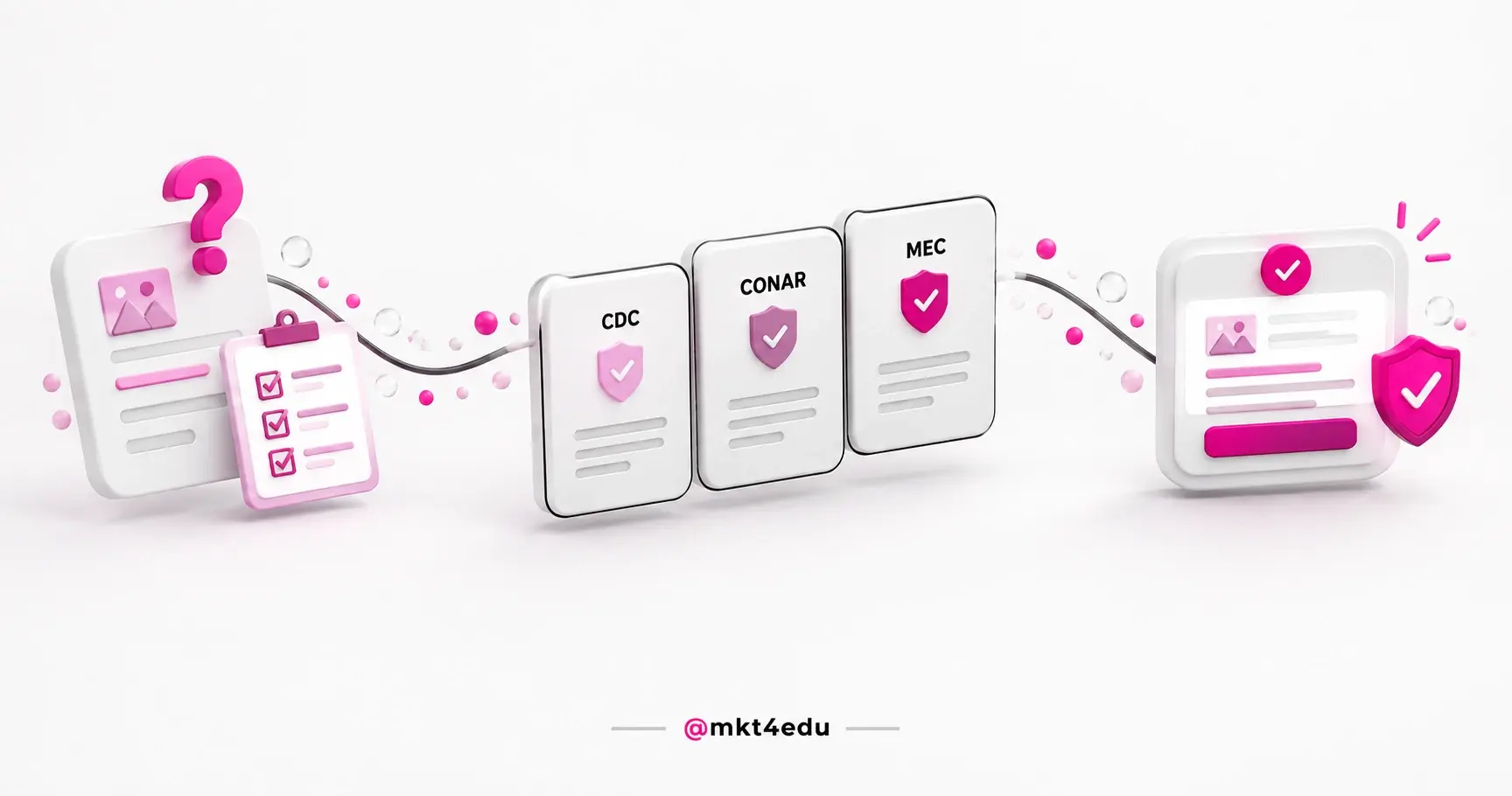
Caption: AEO (Answer Engine Optimization) helps you prepare and structure your content so that it is cited as a reliable source by leading AI systems.
What are the benefits of AEO for your brand?
The main benefit of AEO is keeping your brand visible in an environment where an increasing proportion of responses occur without a click.
When AI mentions your company in a response, it builds brand awareness and trust even if the user doesn’t visit the website at that moment.
This effect translates into very tangible gains:
- More qualified traffic. People who arrive at the website after chatting with an AI have already researched, compared, and understood the context. A SemRush study on the impact of AI search found that these visitors convert about 4.4 times more than those coming from traditional organic search.
- New entry points for the brand. The same study noted that ChatGPT most often cites pages that do not appear among the top results in traditional search rankings. This creates opportunities for specific, well-structured content to appear in responses even when the domain does not yet dominate the SERP.
- Perceived authority. Being cited repeatedly by response systems positions the brand as an authority on the subject, which shortens negotiations and facilitates sales efforts, especially in long-tail cycles such as the educational sector.
- Protection against a drop in clicks. As ready-made answers reduce raw informational traffic, brands that appear within these answers maintain their presence in the decision-making journey. Those that do not appear will gradually fade from the public’s radar.
- Synergistic effect with SEO. AEO efforts improve the clarity, structure, and reliability of content, and these same attributes tend to benefit performance in traditional search. It’s an investment that pays off in both channels at the same time.
As with any authority-building effort, these benefits accumulate over time. Those who structure their citable presence now create an advantage that’s hard to match for those who put off the decision until later.
How do you measure AEO results?
Measuring AEO involves tracking whether your brand is being mentioned, how often, and what impact this has on your business. Since AI-generated responses don’t always generate clicks, measurement combines new signals with metrics you likely already track.
Here are some indicators that can help you build this dashboard:
- Referral traffic from AI tools: tools like ChatGPT, Perplexity, and Copilot already appear as sources in analytics reports, allowing you to track the volume, behavior, and conversion rates of these visitors.
- Presence in Google’s AI experiences: the AI report in Google Search Console now shows website performance data in AI-powered search features, shedding light on a part of the equation that was previously invisible.
- Brand citations and mentions: AI visibility monitoring platforms let you test prompts relevant to your market and verify whether, how, and with what sentiment your brand appears in the responses.
- Impressions versus clicks: When impressions rise and clicks fall, but the incoming leads convert more, the channel may be healthier than the sessions report suggests. The analysis must consider the big picture, not just a single metric.
- Revenue and pipeline: Ultimately, the question that matters is whether AI visibility is generating real opportunities. Connecting traffic sources to your CRM is what allows you to link a mention in ChatGPT to a registration or contract months later.
A word of caution regarding interpretation: AEO results usually appear first as qualitative signals—such as the brand appearing in responses to strategic questions—and only later as measurable volume.
Defining a set of baseline prompts and revisiting them monthly is a simple way to track this evolution from the start.
Frequently Asked Questions About Answer Engine Optimization
Where do I start with Answer Engine Optimization?
Start with what you already have. Choose the most strategic content on your website, rewrite the introductions to each section as direct answers, add an FAQ with real questions, and implement the corresponding structured data.
At the same time, align your brand description across all channels and strengthen your authorship signals. These are easy adjustments to make, and they’re what will lead to your first citations.
The next step is to integrate AEO into your SEO strategy as a whole, rather than treating it as a side project. The two layers share the same raw material—clear, useful, and reliable content—and reinforce each other: content that ranks well tends to be cited, and content that is cited strengthens the authority that helps it rank.
And if there’s still that underlying doubt within your team about whether it makes sense to invest in organic search in a world of ready-made answers, it’s worth taking a step back before moving forward.
Content Is SEO worth it? Data, benefits, and how to measure ROI shows what the data says about organic traffic and conversion, how artificial intelligence has changed the landscape, and how to measure the return on this investment.
If you want to turn this discussion into an action plan for your institution, talk to the mkt4edu team and find out how to structure content that’s ready to be referenced by AI.
Being cited by an assistant and ranking in blue links answer to the same quality bar that Google's spam policies enforce.
Ranking in blue links and being cited by an assistant now go hand in hand, and our SEO for LLM service covers this second front, from content structure to the authority signals language models rely on.



.jpg)
























 Portugal