






Choosing among sales automation options has become a decision made toward the end of the sales funnel: once the team understands what a lead generation agent is, the question becomes which one to hire.
The market is flooded with similar promises, and distinguishing what delivers value from what’s just empty talk requires discernment.
This guide brings together the best AI-powered SDR tools, the criteria for evaluating each one, and how to integrate your choice into your operations without getting ripped off.
What, exactly, is an AI-powered SDR tool?
An AI SDR tool is software that takes on pre-sales tasks previously performed by a human representative: researching accounts, finding contacts, initiating conversations, qualifying leads, and scheduling meetings.
Instead of following a fixed script, it uses artificial intelligence to personalize the approach and respond to replies.
The difference from a simple email auto-responder lies in its autonomy. A good agent decides who to approach based on cues, adapts the message to the context, and follows up without someone having to press buttons at every step.
This logic is the same one that underpins the use of artificial intelligence in generating qualified leads—which is to relieve humans of repetitive work and free them up for the conversations that truly require human interaction.
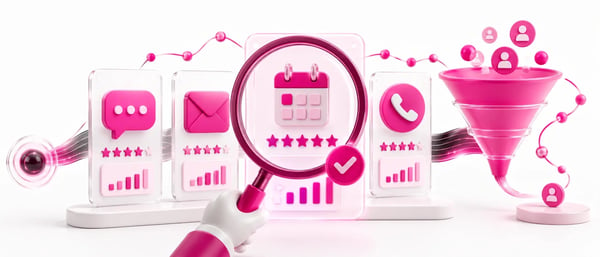 Caption: Integrated channel elements, scheduling, and sales funnel features that should be evaluated when choosing AI-powered SDR software.
How to Choose AI-Powered SDR Software Without Making a Mistake
Choosing AI-powered SDR software begins before you even look at any specific brands. Determine the channel where your prospecting takes place, the CRM you already use, and the level of autonomy you’re willing to give the system.
A tool that looks good on paper but isn’t integrated with your process ends up being a waste of money.
Certain criteria distinguish a sound decision from a costly mistake. It’s worth evaluating each option based on these points:
|
Criterion |
Why it matters |
What to Ask |
|---|---|---|
|
CRM Integration |
Prevents duplicate records and data loss |
Does it connect natively to my CRM? |
|
Channels Covered |
The tool needs to be where your leads are |
Does it support email, WhatsApp, and LinkedIn? |
|
Level of personalization |
Generic messages hurt conversion rates |
Do you personalize based on data and context? |
|
Human oversight |
Define how much the AI acts on its own |
Can I review before sending? |
|
Compliance and data |
Reduces privacy risks |
Does it respect opt-out and LGPD? |
Table: Criteria for comparing AI-powered SDR software before signing a contract.
Note that none of these points are about the list price. A cheaper tool that doesn’t integrate with your CRM usually ends up costing more in the long run, due to rework and scattered data.
That’s why integration is so important—it’s a topic worth exploring in depth when deciding how your SDR agent connects to your CRM.
Which SDR platforms to consider by category
Instead of a ranking that quickly becomes outdated, it’s more useful to look at the tools by category, since each type solves a different problem.
Features and prices change frequently, so treat the following as a starting point and check the current details on each vendor’s website.
Among native CRM agents, HubSpot Breeze stands out. The HubSpot’s lead generation tool identifies accounts showing signs of interest, builds lists, and drafts personalized outreach messages for the team to review or send automatically—all within the same CRM.
For those already using HubSpot, the advantage is that you don’t have to create yet another data silo.
Among the group of autonomous outbound prospecting agents, names such as 11x stand out—with its digital agents for outbound and voice—as well as Artisan, known for its pre-sales agent Ava, and Regie.ai, focused on prospecting and generating sales content; and Salesforge, with its Frank agent geared toward outbound at scale and deliverability.
All of them are positioned to automate the lead generation pipeline from start to finish.
There are also AI-powered engagement platforms, such as Reply.io and its Jason AI, which combine multichannel sequences with artificial intelligence capabilities, and data enrichment and research tools , such as Clay, whose research agent feeds prospecting lists with up-to-date information.
In the Brazilian market, local solutions like eesier are also catching the attention of those who prioritize support and a national context.
How an SDR agent platform connects to your sales funnel
An SDR agent platform only delivers results when it becomes part of the sales funnel—not just an add-on.
In practice, it needs to receive the right leads at the top of the funnel, log every interaction in the CRM, and pass back to the team only those leads that are ready for a sales conversation. Without this seamless integration, the tool generates activity but doesn’t build a pipeline.
The ideal fit follows the logic of inbound sales: marketing attracts and nurtures, the agent qualifies and prioritizes, and the salesperson steps in when it’s time to make a decision.
When this process flows smoothly and everything is recorded in CRMs like HubSpot, the tool ceases to be just a technological promise and becomes a measurable gain in sales efficiency.
How to assess the impact of price on decision-making
Price matters, but it should rarely be the first criterion. An AI-powered SDR tool pays for itself through the time it saves the team and the leads it prevents from being lost—not through a lower monthly fee.
A common mistake is choosing based on the list price and only later discovering the costs of implementation, integration, and customization.
The right question isn’t how much it costs, but rather how much it returns. Comparing the investment to productivity gains and the savings compared to a larger team provides a more accurate picture—a topic worth exploring when evaluating how much an AI-powered SDR costs and what the expected return is.
Frequently Asked Questions About AI SDR Tools
How do you choose the right AI-powered SDR tool for you?
The best AI SDR tool is the one that fits your sales channel, your CRM, and your sales approach—not the one that appears on the most lists.
Start by evaluating integration and control criteria, test it with a subset of your database, and measure the return on investment before scaling up. Good technology that’s poorly implemented won’t deliver results.
If you want to choose and implement the right tool within an inbound sales operation connected to your CRM, it’s worth working with people who test these platforms in real-world scenarios. Talk to the mkt4edu team and evaluate which solution makes sense for your sales funnel.


























 Portugal