




If you're hearing about Nano Banana Pro for the first time and thinking "yet another imaging AI?", take a breath because here's a bigger story.
Nano Banana Pro is Google's new AI image generation and editing model, built on top of Gemini 3 Pro, focused on creating "studio quality" images, with readable text in multiple languages, advanced lighting, camera and composition controls, and support for multiple reference images.
It already appears in the Gemini app, in Google Ads, in productivity tools such as Google Workspace and for developers via the Gemini API, Google AI Studio and Vertex AI.
Throughout this guide, I'll link these features to what really matters to you: attracting attention, generating clicks, leads and sales with visual content and content marketing, without having to be a designer.
Nano Banana Pro in digital marketing in practice
Nano Banana Pro is Google's AI-powered image generation and editing model, built on Gemini 3 Pro, to create "studio quality" images with readable text, in high resolution (2K and 4K) and with advanced light, camera and composition controls.
It's ideal for those who work in digital marketing, advertising, social media and infographics, and need to produce professional visuals without relying on design all the time. Integrated with the Google ecosystem (Gemini, Google Ads, Workspace and API), it helps turn ideas into creatives ready to generate attention, clicks, leads and sales.
-
- Generate professional-looking 2K and 4K images.
-
- Create pieces with readable internal text in various formats.
-
- Combine multiple reference images with visual consistency.
-
- Use the template in Gemini, Google Ads, Workspace and via API.
What you'll see in today's content
- The difference between Nano Banana and Nano Banana Pro and why it matters for marketing
- Where to find Nano Banana Pro in the Google ecosystem (Gemini, Google Ads, Workspace and API)
- Step-by-step instructions for generating and editing images with Nano Banana Pro in Gemini
- Practical prompt templates for ads, posts, infographics and thumbnails
- How to connect Nano Banana Pro to your content marketing goals and sales funnel
- SEO and LLM best practices for writing content about Nano Banana
- Limitations, risks and recommendations for the responsible use of images with AI
- 7-day roadmap to start applying Nano Banana Pro in digital marketing
Happy reading!
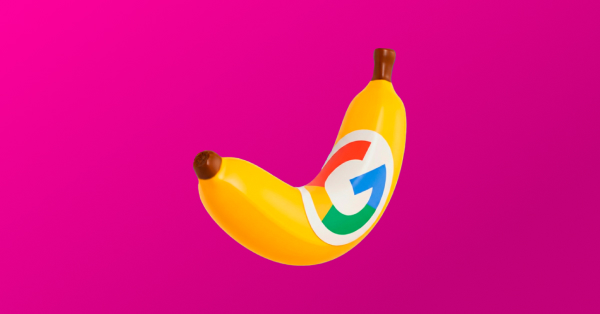 Image 01: Nano Banana Pro as a visual resource to present the use of the model in digital marketing strategies.
What is Nano Banana and what changes in Nano Banana Pro
Before talking about "Pro", it's worth understanding the context.
The original Nano Banana is the codename for the Gemini 2.5 Flash Image model, focused on fast photo editing and generating images from text, with good speed and flexibility for the average user.
The Nano Banana Pro (Gemini 3 Pro Image) is the "next level" version:
- It builds on top of Gemini 3 Pro, with more advanced reasoning and a better understanding of context;
- Generates high-fidelity images, with 2K and 4K options;
- Makes text inside the image much more readable (great for posters, ads, thumbnails, infographics);
- Can mix up to 14 reference images and maintain consistency of up to 5 people in a composition, perfect for campaigns with characters and products.
That's all well and good in technical terms, but what matters for marketing is: less creative limit, more control and less rework.
Before diving into practical use, it's worth seeing side by side where Pro really excels - especially if you create ads, social media pieces or infographics.
|
Feature / Practical use |
Nano Banana (Gemini 2.5 Flash Image) |
Nano Banana Pro (Gemini 3 Pro Image) |
|
Main focus |
Fast editing and casual creations |
Studio-quality images and professional projects |
|
Typical resolution |
Up to ~1K |
2K and 4K for sharper pieces |
|
Text within the image (banners, posters, layouts) |
Good, but with frequent errors |
Much more precise and legible, even with long texts |
|
Multi-image (combine references, scenarios, products) |
Limited |
Up to 14 input images, maintaining consistency of up to 5 people |
|
Creative controls (light, camera, color grading, etc.) |
Basic |
Advanced "director of photography" controls |
|
Connection to Google Search (real-time data) |
No |
Yes, via Search grounding to use real data in infographics |
|
Main use cases in marketing |
Photo editing, simple posts |
Complete campaigns, mockups, storyboards, complex infographics |
Table 01: Nano Banana x Nano Banana Pro (marketing vision).
This comparison provides a simple mind map:
- Nano Banana = ideal for playing around, testing ideas and making quick adjustments.
- Nano Banana Pro = perfect for a professional campaign, with visual consistency, ready-to-go text and fine creative control.
How to access Nano Banana Pro today (Gemini, Google Ads, Workspace and API)
A lot of people get stuck here: "Okay, I get the concept, but where do I click to use it?". Let's make it simple.
To put it bluntly, today you can access Nano Banana Pro via three main "paths", according to Google:
- As an end user (in Gemini, Search and NotebookLM);
- As a marketing professional (via Google Ads, Slides, Vids, etc.);
- As a dev/company (via Gemini API, Google AI Studio and Vertex AI).
Where Nano Banana Pro appears (in practice)
Before showing you how to access it, the idea here is to give you a direct map: if you are a creator, social media, traffic manager or work in the content marketing team, you will probably come across Nano Banana Pro within tools you already use.
Main ways to access Nano Banana Pro:
- Gemini App (web and mobile)
Select "Create images" with the "Thinking" template to use Nano Banana Pro. Free users have limited quotas; paid plans (AI Plus/Pro/Ultra) have more generation.
- AI Mode in Google Search (USA, for now)
Pro and Ultra users can generate images directly in the AI search experience.
- NotebookLM
For those who produce document-based content, Nano Banana Pro helps turn summaries and insights into visuals.
- Google Ads
Google is updating the generation of creatives within the platform to use Nano Banana Pro, with a focus on high-quality ads.
- Google Workspace (Slides and Vids)
Generation of images directly within presentations and internal videos, making day-to-day marketing and sales easier.
- Gemini API, Google AI Studio and Vertex AI
For more advanced projects: integrations, image creation automations, production at scale.
In a nutshell:
- If you're wondering "how to access Nano Banana", in most cases it's within Gemini itself;
- If you're in marketing, you'll see it "under the hood" in Google Ads, Slides, Vids and other tools in the Google ecosystem.
How to use Nano Banana: step-by-step image generation and editing
Now let's get down to what a lot of people type into Google: "how to use nano banana" and "how to use nano banana in Gemini".
The good news is that, although sophisticated, the flow is quite straightforward.
How to use Nano Banana in Gemini (simple step-by-step)
The idea here is to give you a mini-tutorial that works as a "quick answer" for those who just want to get started.
Step-by-step instructions for using Nano Banana Pro in the Gemini app:
- Open Gemini (web or app).
- Select the image mode - choose "Create images" and check that the model in use is Thinking (where Nano Banana Pro is available).
- Enter your image prompt - describe what you want: setting, style, framing, colors, target audience.
- (Optional) Upload a reference image - for example, a product photo, a team photo or a hand-drawn sketch.
- Click to generate and wait a few seconds.
- Ask for adjustments via text - instead of editing pixel by pixel, write "make the background more minimalist", "change the lighting to evening light", "make the headline more readable", etc.
- Download the final image and use it on social networks, advertisements, emails, blogs, presentations, etc.
This flow applies to both generating images from scratch and editing existing images (e.g. cleaning up backgrounds, changing scenery, generating campaign variations, etc.).
The key point: you don't "draw", you talk to the AI. Nano Banana Pro takes your description, uses the Gemini 3 Pro model to reason about the request and then creates the final image.
READ ALSO:
- SWOT analysis: why apply it before any marketing campaign
- Branding strategy: a practical guide to building strong brands
- Native Advertising: what it is, how it works and how to measure it
- 5 digital technology trends for mobile devices
Nano Banana prompts: practical examples for digital marketing
One of the biggest difficulties for those starting out is: "What do I write in the prompt?".
First of all, it's important to reinforce a concept: a good Nano Banana prompt is almost a mini briefing - the clearer it is about the objective, audience, style and context, the more "professional" the image will look.
Examples of Nano Banana Pro prompts for digital marketing
Below are some templates that you can adapt to your niche. Focus on the elements in bold to personalize.
- Ad for paid traffic (physical product)
"Create a 4K image of a minimalist scene with a light background, showing [your product] highlighted on a light wooden surface.
Studio style photography, soft side light, soft shadows.
Add a short headline in Portuguese, legible, in the top corner: '[main benefit in a few words]'."
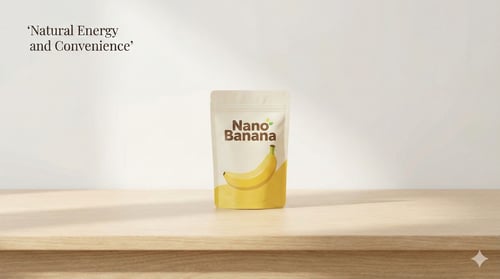 Image 02: Example of a studio-style physical product image generated with a Nano Banana Pro prompt for paid traffic campaigns.
- Content marketing blog post cover
"Generate an illustration in modern apartment style, 16:9, showing a person working in front of a laptop with growth charts, content icons (post, video, blog) floating around.
Color palette in blue, purple and yellow.
Include the title 'Guide to Content Marketing with AI' in readable text."
 Image 03: Sample blog cover created with a Nano Banana Pro prompt for a content marketing with AI guide.
- Carousel for Instagram explaining a concept
"Create 5 frames in 1:1 format for an Instagram carousel on 'How to use Nano Banana in digital marketing'.
Each frame should have: short title in Portuguese, illustrative icons, clean layout, space for text.
Use the same visual identity for all of them, with dark blue, white and yellow colors."
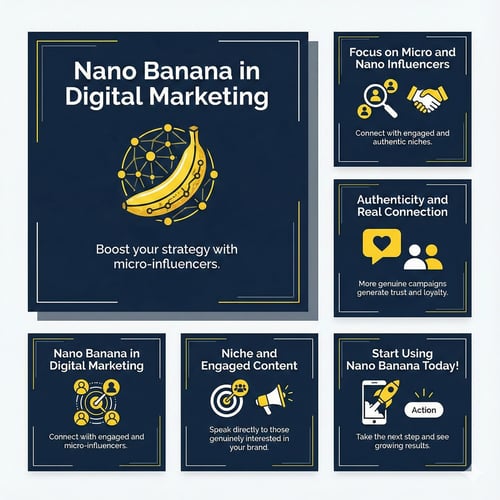 Image 04: Sample educational carousel created with a Nano Banana Pro prompt to explain how to use Nano Banana in digital marketing.
- Educational infographic (top of funnel)
"Generate a vertical infographic in Portuguese explaining 'What is Nano Banana Pro and how does it work'.
Divide it into 3 sections: definition, main features and uses in marketing.
Use simple icons, readable text and blue and green colors. Clean and professional style."
 Image 05: Sample infographic generated with Nano Banana Pro to explain what it is, how it works and how to use it in marketing.
- Landing page mockup
"Create a 16:9 mockup of a landing page for an online course on 'Marketing with AI'.
Show a header with a call to action, a benefits section with icons, an area with testimonials and a highlight for 'Created with Nano Banana Pro and Gemini'.
Modern, clean web design style with plenty of white space."
 Image 06: Visual example of a landing page generated from a Nano Banana Pro prompt for AI marketing courses.
- Thumbnail for YouTube
"Generate a 16:9 thumbnail for YouTube about 'How to use Nano Banana Pro on Gemini'.
Image of a surprised person looking at the screen with a stylized banana in the shape of an AI icon.
Include large, readable text: 'Studio Quality Images with AI'.
Vibrant colors, high contrast, focus on face and headline."
 Image 07: Example of a thumbnail generated with a Nano Banana Pro prompt for YouTube videos about studio-quality AI images.
These prompts serve as a starting point.
The most important thing is to treat the Nano Banana prompts as something alive: test variations, change adjectives, change the context ("more serious style", "more fun style"), and keep adjusting until you get something that suits your brand.
Why Nano Banana Pro is so relevant for digital marketing and visual content
Now for the strategic question: why are so many marketers looking at the Nano Banana Pro?
Some data helps to understand the scenario:
- Visual content is 40x more likely to be shared than text only;
- Posts with images can generate hundreds of % more engagement on social networks compared to text-only posts;
- In e-commerce, High-quality images can increase conversions by up to 60%, and 67% of buyers say that the quality of photos is a decisive factor in their purchasing decision.
- Around 45% of marketing teams already use AI-powered image generation in their workflows.
In other words:
- Visuals rule the game (engagement, clicks, conversions).
- Most teams are already using AI to accelerate this.
Nano Banana Pro comes into its own:
- It's not just "another image generator";
- It's deeply integrated with the Google ecosystem, Gemini 3 Pro and Google Search, allowing you to create visuals aligned with real data, integrated campaigns and SEO.
For you, in practice, this translates into:
- Faster campaigns to get off the ground;
- Less dependence on long agency or design cycles;
- Possibility of testing more creative variations with the same budget.
Content marketing strategies using Nano Banana Pro
Speaking of content marketing, Nano Banana Pro isn't just about "visual decoration". It can make a difference to the metrics you track every day: CTR, dwell time, landing page conversion, etc.
The logic here is simple: connect the business objective, the type of visual content and the expected result. This way, you don't use AI just "because it's cool", but as part of your strategy.
See the table below for this connection:
|
Marketing objective |
Type of visual content with Nano Banana Pro |
Metric impacted |
|
Increase reach on social networks |
Thumbnails, educational carousels, behind-the-scenes images |
Impressions, shares, engagement |
|
Improve ad clicks (CPC/CPM) |
A/B ad creatives, background variations, characters, texts |
CTR, CPC, conversion rate |
|
Increase time on blog page |
Infographics, explanatory illustrations, summary images |
Average time on page, scroll depth |
|
Optimize conversion on landing pages |
Visual sections with benefits, social proof, product mockups |
Conversion rate, leads generated |
|
Reinforce brand authority |
Visual guides, diagrams, process storyboards |
Backlinks, mentions, shares |
|
Produce content for multiple channels |
Adapted versions of the same piece (16:9, 1:1, 9:16) |
Team efficiency, volume of content |
Table 02: How to connect Nano Banana Pro to your marketing objectives.
Moral of the story:
- Always use Nano Banana Pro linked to a clear objective;
- Think of it as part of the architecture of your sales funnel, especially at the top (education and discovery), but already preparing the ground for the middle and bottom of the funnel with more specific pieces.
SEO, LLMs and generative AI: how to write for the Google of today (and tomorrow)
You asked for SEO techniques as well as LLM techniques for indexing in searches with artificial intelligence. Let's get straight to the point.
Today, it's not just a classic search algorithm that "reads" your content, but also large language models (LLMs), such as Gemini 3 itself, which feed AI resources into search engines.
In practice, this means that your content needs to work well in two layers:
- Traditional SEO (keywords, structure, internal links);
- SEO for AI (semantic clarity, direct questions and answers, rich context).
SEO + LLM best practices for Nano Banana content
The idea is that you can produce texts that appear well in both classic organic results and AI answers (snippets, AI Overviews, etc.).
Good practices for writing content that AI understands well:
- Use questions like H2/H3
E.g.: "What is Nano Banana?", "How to use Nano Banana in Gemini?", "Nano Banana prompts for digital marketing".
This helps both the user and the AI to understand exactly what you are answering.
- Give direct answers in the first paragraph
Right after the question title, answer in 2-3 clear sentences, as we did at the beginning of this text. This is the kind of format that AI usually "pulls" for snippets.
- Spread natural keyword variations
Instead of forcefully repeating "Nano Banana", also use natural variations such as "how to use Nano Banana", "image editing with Nano Banana", "image generation with AI", "Gemini 3 Pro Image model", etc.
- Explain concepts in human language
LLMs tend to prefer clear content, with well-chained explanations, concrete examples and little jargon without context, exactly what also helps your human reader.
- Use well contextualized lists and tables
As we're doing here: lists with explanations before and after, and tables that respond to explicit comparisons, as this makes it easier for the model to summarize its content accurately.
- Tie entities and context well together
Whenever you talk about Nano Banana Pro, remember to mention that it is "built on top of Gemini 3 Pro", that it is a multimodal Google model, etc. This reinforces the semantic relationships that LLMs use to respond.
After the technical part comes something important: content that performs well in AI isn't just "optimized", it's useful, honest and nuanced.
Posts that admit limitations, risks and "it depends" scenarios tend to seem more trustworthy, both to people and to language models.
KEEP LEARNING:
- What Google's 'People Also Ask' is and how it works
- Generative Engine Optimization: what it is and how to optimize content
- How to increase visibility on Google: LLMs and AI to grow with SEO
- How Schema.org is revolutionizing SEO for Inbound Marketing
Limitations, risks and responsible use of Nano Banana Pro
It would be dishonest to talk only about the "magic" part. Every image generator with AI comes with risks, and Nano Banana Pro is no different.
A few important points:
- Possibility of creating sensitive or misleading images
Precisely because the images are "studio quality", the potential for someone to use this for disinformation is real.
To mitigate this, Google is adopting some technical measures:
- SynthID (invisible watermark)
All images generated by Google's tools receive an invisible digital watermark, which helps identify whether the media was created by AI.
- Visible watermark (Gemini icon)
Free users and those on some paid plans receive images with a small visible mark, while users on a more professional level (such as Google AI Ultra or dev environments) can remove this mark to keep the look "clean", keeping only the invisible marking.
For digital marketing, the message is:
- Use Nano Banana Pro to create honest campaigns that don't mislead the consumer about what is real product and what is conceptual art.
- Avoid using generated images as if they were factual records, real testimonials or evidence.
- Maintain a flow of human approval - AI generates faster, but it' s your brand that responds legally.
7-day mini plan: how to get started with Nano Banana Pro in content marketing
Many people get excited about technology, but get lost on "where to start". Let's put together a simple 7-day roadmap, focused on the top of the funnel.
The goal here is that in one week you'll take Nano Banana Pro out of the field of ideas and put at least a few pieces on the air, measuring basic results.
7-day roadmap to start using Nano Banana Pro
- Day 1: Setup and exploration
Access Gemini, test the creation of simple images and understand the quota limitations of your plan.
Create 3 - 4 images just to get to know the style.
- Day 2: Choose a top-of-funnel theme
E.g. "What is AI in marketing?", "How to create visual content faster?", "A beginner's guide to content marketing with AI".
List 2 - 3 blog titles or videos.
- Day 3: Create key visuals
Use Nano Banana Pro to generate a blog cover, YouTube thumbnail or main post image.
Save variations for later tests.
- Day 4: Produce a simple infographic
Turn an informative piece of content (old post, spreadsheet, presentation) into a visual infographic using very detailed prompts.
- Day 5: Adapt for social networks
Take these images and adapt the format and message for Instagram, LinkedIn or TikTok (changing aspect ratio, text and tone).
- Day 6: Publish and track metrics
Compare the performance of the new pieces with previous images: engagement, clicks, time on page, etc.
- Day 7: Adjust and document learnings
Gather what worked (styles, colors, types of prompts) and create an "internal guide" of good practices for your team.
After this cycle, you'll no longer just be thinking "I'll test it one day" and you'll have real data on how Nano Banana Pro impacts your sales funnel.
What Nano Banana Pro changes for you in practice
To sum it all up:
- Nano Banana Pro is Google's AI-powered image generation and editing model, built on Gemini 3 Pro, focused on high-fidelity images, readable text and advanced creative control.
- It's already landing in your day-to-day via Gemini, Google Ads, Workspace and developer tools, allowing you to bring visual production closer to the content and media team.
- In the context of content marketing, digital marketing and SEO, it helps to:
- increase visual content production without inflating the structure;
- test more creative in less time;
- create consistent experiences on blogs, networks, ads and internal materials.
At the same time, it' s not magic:
- It requires good prompts, strategic vision and care with responsible use;
- It still has limitations and risks (especially on sensitive topics);
- It works best when it's part of a real marketing process, and not just a "play with AI".
If you're in doubt as to whether it's worth getting on board now or waiting, the reality is:
- Most marketing teams are already using AI;
- Those who learn to combine artificial intelligence + content marketing + SEO for LLMs tend to come out ahead when AI searches become the standard.
You don't have to master everything at once. Start small:
- Choose a top-of-funnel theme;
- Create a post + an image with Nano Banana Pro;
- Publish, measure, adjust.
From there, you build up your own "library of prompts" and best practices, and Nano Banana Pro becomes less of a mystery and more of a concrete tool to make your content work better for you.
If you want to take the next step and turn all this into a consistent marketing strategy, it's worth taking a closer look at how to structure your content marketing in practice.

FAQ - Nano Banana Pro AI
What is Nano Banana Pro and how is it different from the original Nano Banana?
Nano Banana Pro is Google's AI-powered image generation and editing model built on Gemini 3 Pro, focused on "studio quality" images, readable text and advanced creative controls. The original Nano Banana is the codename for Gemini 2.5 Flash Image, aimed at quick editing and more casual use. The Pro offers 2K and 4K resolution, better visual fidelity, much more precise internal text, the ability to combine up to 14 reference images and maintain consistency of up to 5 people in a composition. In practice, the Nano Banana is ideal for quick tests and adjustments, while the Nano Banana Pro is designed for complete professional campaigns.
Who is Nano Banana Pro best suited for in digital marketing?
Nano Banana Pro is especially suitable for creators, social media, traffic managers and content marketing teams who need to produce professional images quickly. It helps those who create ads, social media pieces, infographics, thumbnails, landing page mockups and internal sales materials. As it is integrated with tools that the team already uses, such as Gemini, Google Ads, Slides, Vids and API solutions, it brings visual production closer to the marketing team itself. This reduces dependency on long cycles with agencies or design, without completely replacing the strategic work of branding and art direction.
In which Google tools can I access Nano Banana Pro today?
Nano Banana Pro already appears in various parts of the Google ecosystem. You can access it directly in the Gemini app (web and mobile), choosing the option to create images with the Thinking model. Users can also find it in Google Search's AI Mode (in specific markets), in NotebookLM to transform insights into visuals and within Google Ads, which has been incorporating the model for high-quality creatives. In addition, it is present in Google Workspace, in tools such as Slides and Vids, and in solutions for developers via Gemini API, Google AI Studio and Vertex AI, enabling integrations and automations at scale.
How do I use Nano Banana Pro in Gemini to generate and edit images?
To use Nano Banana Pro in Gemini, the flow is straightforward. First, open Gemini on the web or in the app and select image mode, choosing "Create images" with the Thinking template. Next, type in your prompt describing the setting, style, framing, colors and target audience. If you like, upload a reference image, such as a product photo or sketch. Then click to generate and wait a few seconds. You can refine the result by asking for adjustments via text, changing the background, lighting, style or readability of the text. Finally, download the image and use it in social networks, advertisements, emails, blogs or presentations.
What types of prompts work best with Nano Banana Pro in marketing?
The prompts that work best with Nano Banana Pro are similar to a mini marketing brief. Instead of asking for something generic, it's worth detailing the objective, audience, style, format and context of use. The content includes examples of prompts for: paid traffic ads focusing on the physical product and main benefit; blog covers on content marketing; educational carousels for Instagram; infographics explaining what Nano Banana Pro is and how it works; mockups of course landing pages; and thumbnails for YouTube. Testing variations in adjectives, tone and context helps to arrive at a visual identity that is consistent with the brand.
How can Nano Banana Pro improve campaign results and visual content?
Nano Banana Pro can impact core marketing metrics such as reach, engagement, clicks and conversions. High-quality images tend to be shared more, increase engagement on social networks and improve the performance of paid ads. In e-commerce, sharper, well-produced visuals can increase conversion rates, and most marketing teams already use AI for image generation. In content, infographics, illustrations and summary images help increase time on page and reading depth. With faster production, it's possible to test more creative, adapt formats for multiple channels and optimize campaigns on an ongoing basis.
How does Nano Banana Pro connect with SEO, LLMs and AI searches?
Nano Banana Pro is part of a scenario in which traditional search and AI resources coexist. While it takes care of the visual layer, the accompanying content needs to be optimized for both classic SEO and LLMs that feed AI answers into searches. The text highlights good practices such as using clear questions in H2/H3, offering direct answers in the first few paragraphs, varying keywords naturally and explaining concepts in human language. Lists, well contextualized tables and consistent mentions of entities, such as Gemini 3 Pro and the Google ecosystem, help language models to better understand the content and generate more accurate answers.
What are the main risks and limitations of using Nano Banana Pro?
The main risks of using Nano Banana Pro are linked to the potential to create sensitive or misleading images, precisely because of the high visual quality. There is also the possibility of misuse for disinformation or in contexts that could confuse consumers. To mitigate this, Google applies measures such as SynthID, an invisible watermark that identifies media created by AI, and a visible mark on some plans. Even so, the text reinforces the importance of using the model honestly in marketing, avoiding presenting generated images as records of real facts or testimonials. Human approval remains essential, as the legal responsibility lies with the brand.
How can I start using Nano Banana Pro in 7 days for content marketing?
The content proposes a mini 7-day plan focused on the top of the funnel. On Day 1, you explore Gemini, understand the limits of the plan and create some test images. On Day 2, you choose a top-of-funnel theme and list 2-3 blog titles or videos. On Day 3, you create key visuals for these pieces of content. On Day 4, transform existing materials into a simple infographic. On Day 5, adapt images for social media. On Day 6, publish and track performance metrics. On Day 7, record learnings, styles and prompts that worked, creating an internal guide to good practice.
What does Nano Banana Pro change in practice for my marketing team?
In practice, Nano Banana Pro allows you to produce more visual content without inflating the structure or relying so much on long cycles with agencies or design. It brings image creation closer to the content and media team, helping to test more creative in less time and to maintain visual consistency across the blog, networks, ads and internal materials. At the same time, the model is not "magic": it requires good prompts, strategic vision and care with responsible use, especially on sensitive topics. The text reinforces that those who learn to combine AI, content marketing and SEO for LLMs are likely to come out ahead as AI searches become standard.

























 Portugal