


Knowing how to use a CRM has become a basic condition for selling well, but many managers live the same scene: the tool was bought, the team was told, and months later the deals are still in a spreadsheet. The problem is rarely the software.
A CRM is a platform that centralises contacts, deals and customer interactions in one place, so anyone on the team sees the full history before acting. It only keeps that promise when everyone feeds the system, every day.
So this article starts with correct daily use and only then moves on to resistance. Before demanding adoption, the manager needs to be clear about what, exactly, the team should be doing in the tool.
How to use a CRM day to day: the basics the team has to master
Using a CRM day to day comes down to three habits: logging each interaction at the moment it happens, keeping each deal at the stage that reflects reality and scheduling the next task before ending the contact. When those three habits exist, the pipeline becomes a faithful picture of the operation.
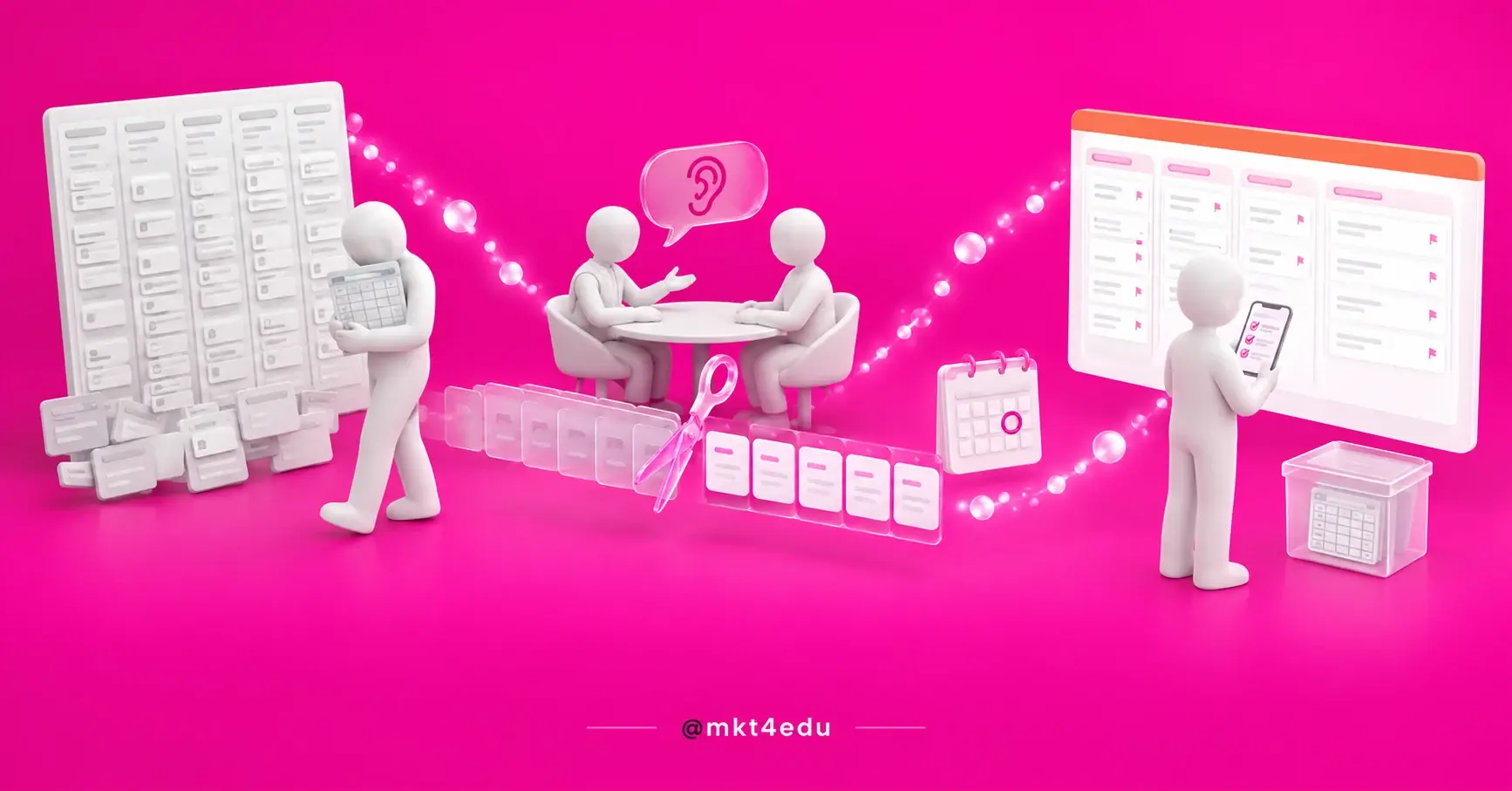
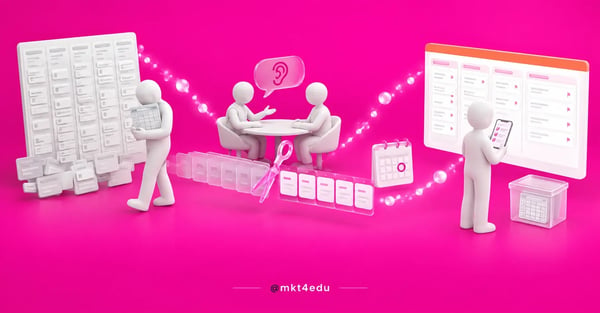 Caption: how to use a CRM starts by listening to the team's real flow and cutting whatever supports no decision
It sounds simple, and it is. The difficulty is not learning the tool, it is sustaining the routine. So it pays to turn the basics into a daily ritual that fits into a few minutes:
- Open the day with the CRM task queue, not the inbox.
- Log the call, the email and the meeting on the matching deal, right away.
- Move the deal to the next stage only once that stage's criteria have been met.
- Schedule the next activity before closing the record.
- Close lost deals with the real reason instead of letting them age in the funnel.
These habits apply to any platform. In fuller tools such as HubSpot CRM, learning how to use HubSpot CRM in the sales routine helps automate part of the logging and reduce the manual effort that feeds the resistance.
With the basics in place, refinements such as the essential tips to improve your CRM start to make a real difference. Before that, any fine-tuning is noise on top of a process that does not exist yet.
To see that logic applied to a real operation, the conversation below covers the CRM's role in commercial growth.
Video: conversation from the mkt4edu channel on the return that appears once the team learns how to use a CRM
Which signs show the CRM was never adopted?
The signs appear before any report: a parallel spreadsheet circulating in the team, an out-of-date pipeline, deals moved in bulk the night before the meeting and the manager asking for status over chat. When two or more of those coexist, CRM adoption has failed.
The parallel spreadsheet is the most serious sign. It shows the team found a way to work outside the system and that the CRM became bureaucratic duty, filled in after the sale already moved.
The out-of-date pipeline comes next. Deals stuck for weeks at the same stage, generic values and expired close dates all say nobody treats the funnel as a working tool.
Bulk stage advances complete the trio. The rep drags five deals at once the night before the meeting, just so the funnel looks current. The data exists, but it does not describe reality.
In implementations run by mkt4edu, the most recurring pattern is another one, and quieter: the flow designed in the CRM differs from the flow the team actually practises. The stages come from an old process design the operation never followed, and the system starts demanding a reality that does not exist.
That diagnosis changes the target of the fix. When the design is wrong, demanding individual discipline only makes it worse, because it asks the rep to be faithful to a process that is not theirs.
Measuring adoption, in that scenario, means looking less at logins and more at data quality. The importance of CRM for companies lies in the decisions it supports, and a decision made on stale data is wrong from the start.
The damage is not limited to sales. Marketing strategies depend on that data too: database segmentation, nurturing and reading return by channel all start from what the sales team logs in the system.
Why do sales reps resist the CRM?
Reps resist when the tool costs more effort than it returns in value. A funnel with stages that do not match the real sale, too many required fields, modules the rep never opens and a sense of surveillance form the classic picture. Resistance to change is the consequence, not the cause.
The question of why the team does not use the CRM usually gets the wrong answers: laziness, ill will, attachment to the old way. In practice, the rep abandons the system because it gets in the way of selling, and no motivational speech fixes a badly configured tool.
There is also a legitimate fear of exposure. If the CRM only serves to demand numbers in a meeting, logging data becomes producing evidence against yourself, and the team quickly learns to log the bare minimum.
Video: video from the mkt4edu channel on the modules a team needs to know to learn how to use a CRM
mkt4edu's implementation experience shows a detail few managers notice: manual stage advancing is only abandoned once the team is formally instructed at the process switch. Without that explicit milestone, each rep keeps the old habit, and the funnel mixes two processes at once.
Lack of training closes the list. A tool presented in a single meeting, with no guided practice and no reference material, breeds insecurity, and insecurity becomes a parallel spreadsheet within weeks.
Understanding these causes takes the problem out of the moral field. Why the team does not use the CRM stops being an accusation and becomes a diagnostic question, with answers that point to process, configuration and training.
How do you talk to the team without imposing the tool?
The conversation about adoption works when it starts by listening to the real flow, not by defending the tool. The manager maps how the team sells today, using the team's own words, and adjusts the system to that reality before asking for discipline. Imposition produces surface compliance, process produces habit.
In the switches mkt4edu runs, the correction comes through process, never through individual pressure. Three moves repeat: the day-to-day vocabulary replicated in the CRM, the funnel trimmed until only the stages that really exist remain, and access profiles cleared of every useless module.
That adjustment also unblocks inbound sales. Lead scoring, contact cadence and sales automation all depend on consistent logging, and none of them works on a funnel the team does not feed.
A simple script organises that conversation with the team:
- Listen first: ask each rep to describe their own flow, from first contact to close.
- Translate the process: rename stages and fields with the vocabulary that came up in the listening.
- Cut the excess: remove fields, stages and modules that support no decision.
- Train on real cases: run the training on the team's actual deals, not on generic examples.
- Mark the switch: set a formal date when the parallel spreadsheet stops counting and the CRM becomes the only official record.
The formal switch is the step that brings resistance down the most. When there are dates, clear communication and support in the first days, the team understands the change is about the process, not a test of obedience.
Technical configuration runs alongside the conversation. A well-run HubSpot implementation and configuration delivers a clean funnel, logging automations and dashboards that give value back to the rep.
For teams that prefer specialist support on that switch in HubSpot CRM, mkt4edu's HubSpot CRM consultancy covers everything from process design to team training, with the funnel fitted to the flow the team actually practises.
Frequently asked questions about how to use a CRM
What changes in sales when the team masters how to use a CRM?
When the team masters how to use a CRM, the manager trades guesswork for predictability: the funnel shows reality, the revenue forecast gains a basis and every customer conversation starts from the full history. The tool stops being a chore and becomes a daily advantage for whoever sells.
The road there does not run through more pressure. It runs through an honest diagnosis of the low-adoption signs, listening to the real flow and a well-communicated process switch, with the system fitted to the way the team already works.
With that base in place, inbound sales gains raw material: lead prioritisation by behaviour, cadence at the right moment and forecasting by stage. Marketing gets the same gain, with real segmentation and lead handover that carries full context.
If your operation's next step is training the team on the corrected process, the guide to CRM training shows how to structure that in practice, from the content of each session to how often to reinforce it.











 Portugal