



.jpg)



There is a kind of project that ends well and fails anyway. The schedule was met, the integrations work, the reports are ready, and months later part of the team is still tracking its own work in a parallel spreadsheet.
CRM training that did not stick rarely shows up in the project closing report. The consequences appear the following quarter, when someone asks for a number and discovers the database does not reflect the reality of the operation.
The good news is that, in mkt4edu's experience, this pattern repeats across different companies and institutions. Since the causes are known, most of them can be anticipated before go-live and corrected after it.
What is the difference between implementing a CRM and the team using it?
Implementing a CRM means configuring the platform, integrating systems and training the team. Using it is when the work starts happening inside it by default. Implementation has an end date, while usage is behavior and has to be sustained after the project ends.
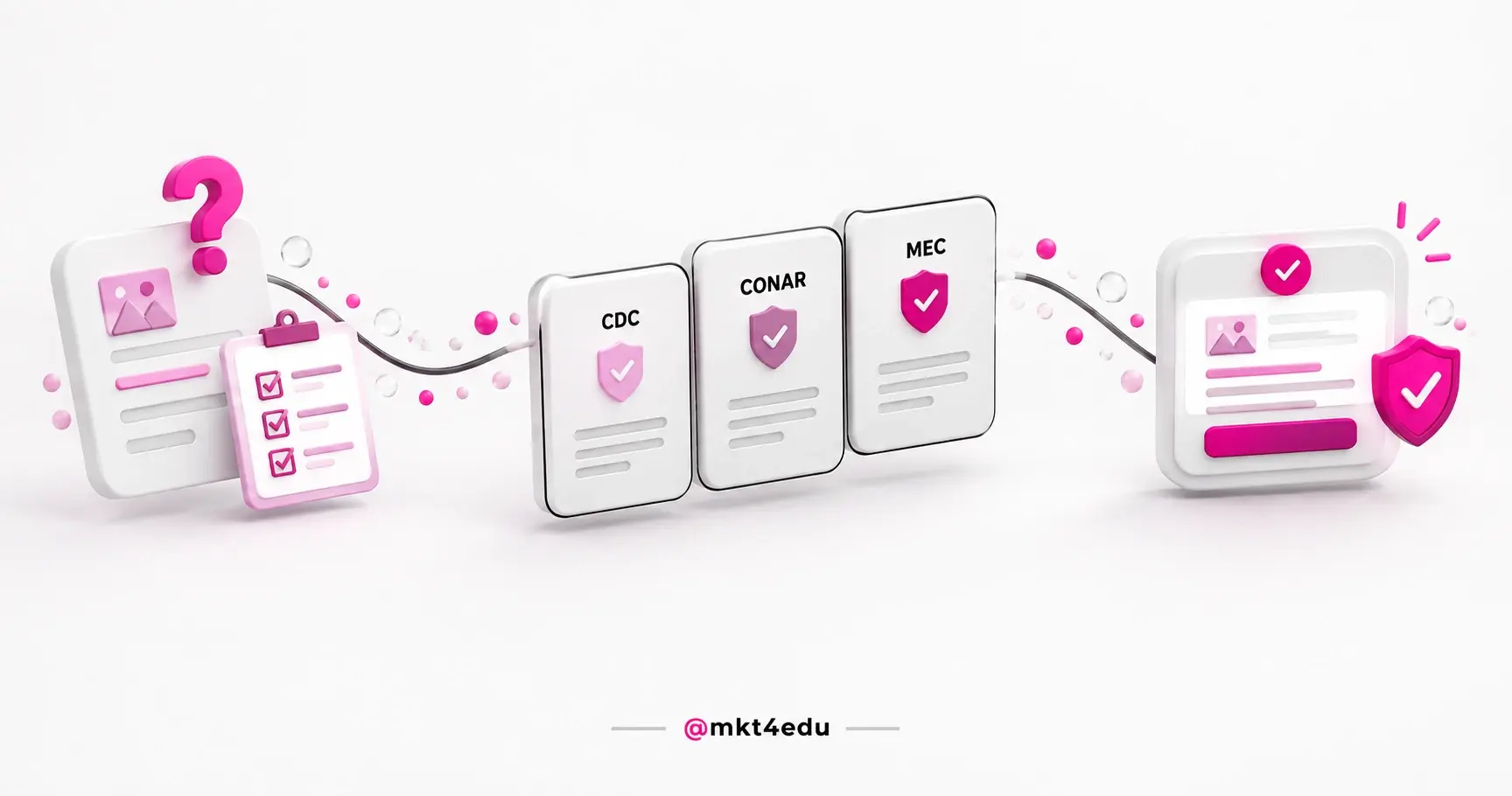
 Caption: CRM training only turns into adoption when it moves beyond screen demos and follows the team's real process
That distinction explains why well-executed projects still disappoint. The right order for the phases of a HubSpot implementation resolves the technical part predictably, but it does not guarantee the sales rep logs the conversation they had in the hallway.
There is a second common misunderstanding. Onboarding is the initial support, and CRM training is knowledge transfer, so neither one replaces managing behavior over the following months.
The difficulties in a CRM implementation also change nature over the project. Before go-live, they are technical and have known solutions; after it, they become matters of routine and incentive, which nobody can configure on a screen.
That turn catches many teams off guard. The project team disbands in the delivery week, exactly when the implementation challenges that most determine the final result begin.
When the difference is clear, planning changes. The institution starts reserving effort for after go-live, instead of treating the delivery date as the finish line. That is how mkt4edu designs HubSpot CRM implementation projects.
Which signals show the team is not using the CRM?
Four signals indicate the team is not using the CRM: records created outside the system, required fields filled with generic information, deals stuck at the same stage for weeks and reports nobody consults. They appear before any formal complaint reaches leadership.
The first signal is the most direct. If there is a parallel spreadsheet circulating by email, the CRM lost to it on some practical dimension.
The second is subtler. Fields filled with “TBD”, “no information” or repeated dates indicate the team meets the obligation without seeing any sense in it.
The third shows a lack of routine. Deals untouched for weeks mean updating is not part of the working day, and that nobody is asking for that update.
The fourth signal is usually the most expensive. Reports that are never opened reveal that leadership has not adopted the tool either, and no CRM training survives without an example from the top.
Here is how the signals translate into a diagnosis:
|
Signal observed |
Likely cause |
First action |
|
Parallel spreadsheet |
The CRM takes more effort than the alternative |
Reduce fields and simplify logging |
|
Generic field values |
The user sees no return from what they fill in |
Show the report that field feeds |
|
Stalled deals |
No routine and no follow-up |
Put the CRM into the team's weekly meeting |
|
Ignored reports |
No leadership sponsorship |
Make visible decisions from the data |
Table: Reading the signals of low adoption and the first correction recommended for each one.
What causes team resistance to moving to the CRM?
Resistance to change comes from three perceptions: that the CRM exists to control the work, that it adds tasks without giving anything back, and that the old way worked fine. None of them is resolved with an announcement, because all three are conclusions drawn from the user's own experience.
The perception of control is the most common in sales teams. When the launch message talks about “visibility for management”, the rep hears surveillance and pushes back.
The perception of extra effort usually has a real basis. A record with twenty required fields in an operation that serves people over WhatsApp is, in fact, extra work with no immediate return.
The third perception is the hardest to overcome, because it comes from experienced people. Someone hitting quota with the old method has no obvious reason to change, and needs to see a personal gain before joining in.
Implementation challenges, at this point, stop being about configuration. They become a persuasion problem, and demand concrete proof rather than argument.
How do you run change management in the shift to a CRM?
Change management in the shift to a CRM rests on four fronts: visible leadership sponsorship, reducing the effort asked of the user, a clear benefit for whoever fills things in, and continuous reinforcement after go-live. All four need to move together, because each covers a different objection.
Sponsorship has to be demonstrated, not declared. Prosci's change management research associates active and visible sponsorship with a 79% chance of the project meeting its objectives, against 27% when that sponsorship is extremely ineffective. When leadership asks for the number via the CRM report, the message lands faster than any training.
Reducing effort usually delivers the most immediate result. Cutting required fields, automating data entry and integrating the channel the team already uses removes much of the friction.
The benefit for whoever fills things in is the most neglected front. The user has to get something back, such as a ready history when picking up a contact again or a task that appears on its own on the right day.
Continuous reinforcement prevents relapse. Short follow-up meetings through the first ninety days cost little and sustain the behavior while it is not yet a habit.
The order of these fronts matters as much as the execution. Starting with enforcement, before reducing effort and showing the benefit, usually produces formal data entry and bad data, which is worse than an empty field.
Recognizing early adopters speeds up the rest of the group. Naming in a meeting the team that closed the month with an updated database works better than repeating the obligation to everyone at once.
It is worth remembering that trust in the database also depends on security. When how data privacy is handled in the CRM is clear, the team logs more and hides less.
How do you structure HubSpot CRM training?
HubSpot CRM training works best when it is organized by process, not by screen. Instead of walking through menus, the session follows a real task from the participant's day, from first contact to logging the outcome.
Format matters too. Short sessions by role deliver more than a single long CRM training for the whole institution, because the registrar's office, sales and coordination use different parts of the platform.
Reference material reduces dependence on whoever ran the training. A manual of the platform's main features fills that role for day-to-day questions.
A second cycle of CRM training is usually worth more than the first. After thirty days of use, the team's questions stop being generic and start being about their own work.
Recording the sessions covers turnover. In areas with frequent staff changes, whoever joins after the project usually learns by watching a colleague, and inherits the wrong shortcuts along the way.
Training people who do not operate the system daily also makes a difference. Coordinators and directors who can read a HubSpot CRM report ask better questions and stop requesting the number through other channels.
Part of the training is deciding what each profile sees. HubSpot's documentation on managing user permissions details how to separate access by role, which avoids a cluttered screen for someone who only needs to log a contact.
It also pays to build internal champions. One person per area who masters the CRM and understands its benefits for the organization resolves more day-to-day questions than an external support channel.
How do you measure CRM usage month by month?
CRM usage is measured by data, not by perception. Four numbers are enough: weekly active users, the percentage of deals updated in the last seven days, completion of critical fields and the volume of activities logged per person.
Monthly tracking prevents late discovery. When the drop appears in the third month and someone acts in the fourth, recovery is far cheaper than a turnaround after a year of an outdated database.
It pays to define an acceptable floor for each indicator before starting. Without an agreed threshold, any number looks reasonable in the next meeting.
Institutions already running HubSpot's CRM structured into a revenue strategy usually track these indicators on the same dashboard as commercial results.
Reading them together helps with persuasion. When usage and results appear side by side, the link between logging well and selling better stops being rhetoric.
A simple dashboard solves the tracking. HubSpot's documentation on analyzing your sales team's productivity shows calls, emails, meetings and tasks per user in native reports, with no development required, which avoids postponing measurement while waiting for a bigger project.
Indicators deserve a review every six months. Completion targets that made sense at launch can become bureaucracy when the process changes, and an outdated indicator is one of the CRM implementation difficulties that most quietly erodes adoption.
At educational institutions, the academic calendar sets the natural rhythm for that review. The start of recruitment, the enrollment period and re-enrollment demand different fields and reports, and treating the whole year with the same configuration is one of the sector's most frequent implementation challenges.
Frequently asked questions about CRM training
How do you turn CRM usage into results next cycle?
Start by measuring real usage before deciding anything. Active users, updated deals and completion of critical fields give you, in one afternoon, the diagnosis that months of meetings did not.
Then cut what weighs on the user. Every required field removed and every automated entry gives time back to whoever operates the system and reduces the main justification for resistance.
Finally, make the data visible in decisions. As long as leadership asks for numbers by email, the CRM will remain a bureaucratic obligation instead of a working tool.
Much of the team's resistance comes from not understanding why the system exists. The content on what CRM is and how to use it in student recruitment works as an initial alignment before any tool training.


























 Portugal