





Every new channel arrives with the same question: "is this for my brand or is it a fad?". With Bilibili, the question became urgent in August 2026, when the app showed up in Portuguese in Brazilian stores and the company started hiring in São Paulo.
The short answer is that Bilibili will not replace YouTube in your strategy, but it can occupy a space no other network holds: a young community, long-form video and real-time participation.
What this article does is separate fact from expectation. The company publishes audited quarterly results, so audience and revenue figures are verifiable. The Brazilian operation, on the other hand, is still taking shape, and that has to be said plainly so nobody builds a plan on a feature that does not exist.
What is Bilibili and why is it called "China's YouTube"?
Bilibili is a video, live streaming and community platform founded in 2009 in Shanghai, listed on Nasdaq since 2018 and in Hong Kong since 2021.
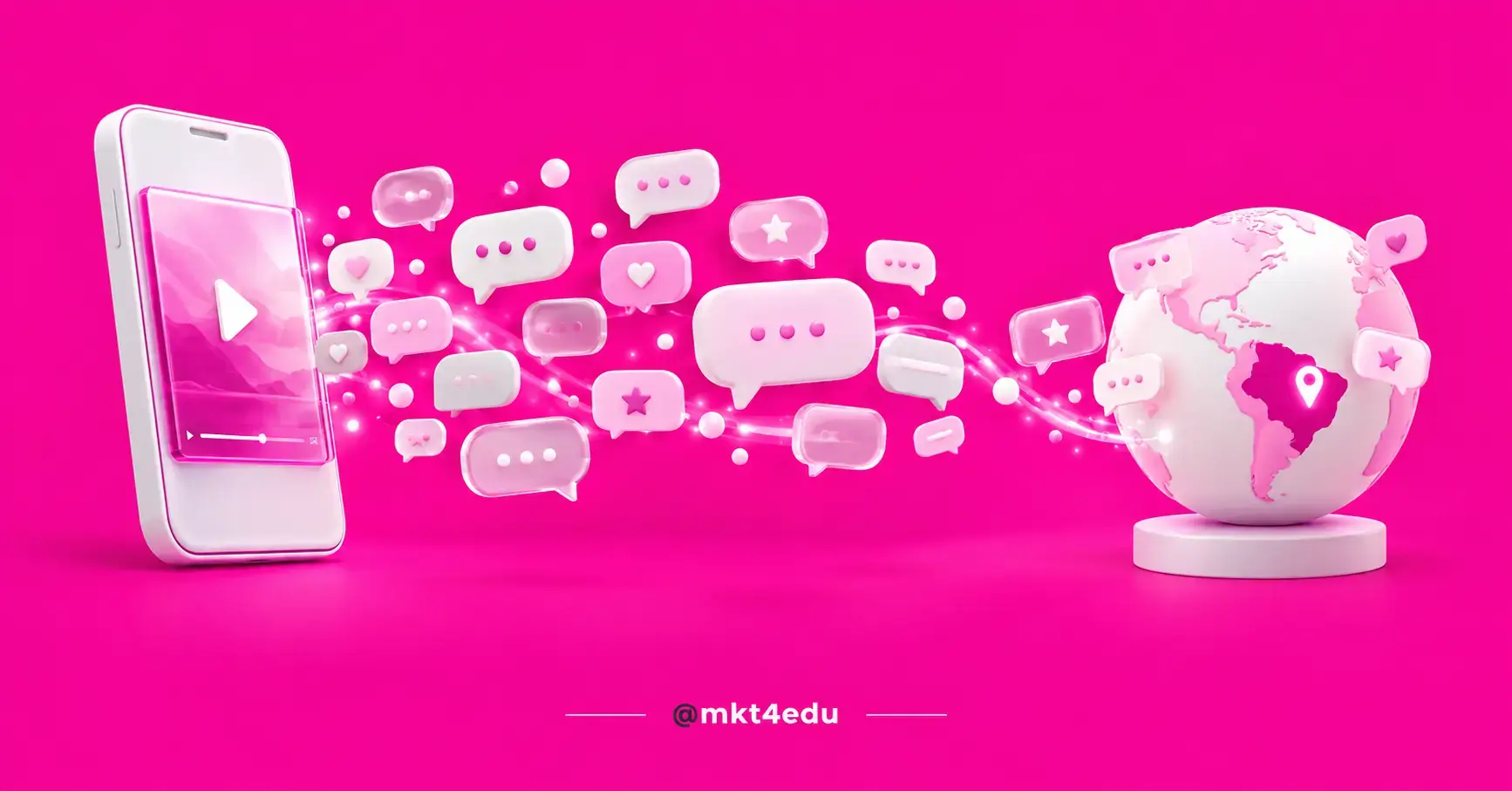 Caption: Bilibili reached Brazil through a Portuguese-language app, not through an official launch announcement.
The "China's YouTube" nickname comes from the long-form video format, but it hides the central difference: Bilibili was born as a community of anime and gaming fans, and that origin still defines its culture.
The scale figures support the comparison. In the second quarter of 2026, the company reported 371 million monthly active users, 116.5 million daily users and 113 minutes of average daily use, up 14% year over year.
The audience is what most catches a marketer's eye. On the earnings call, management stated that the average user age is 26.5, with 299 million official members and roughly 80% twelve-month retention. It is a young audience, but already at consumption and career-decision age.
Instead of "China's YouTube", a more useful description for planning is "video community network". Content is organized around interests (anime, gaming, technology, music, study, cooking), and interaction happens inside the video itself, not only underneath it.
How does Bilibili work for viewers and for creators?
Bilibili works as a feed of long videos, livestreams and interactive content in which comments appear over the image, synchronized to the moment in the video. That feature, called danmaku, turns every video into a collective experience: viewers see what other people commented at that exact second, even months later.
Variety described danmaku as a digital reproduction of the feeling of being in a packed cinema. For marketing, the effect is practical: audience reaction is recorded inside the content, which produces visible social proof and data about which passages hold attention.
In China, the platform has always filtered who may comment. To become a full member, a user has to pass an exam of 100 questions about community etiquette and pop culture, with 60% correct. That barrier explains why comments tend to be more qualified than the average network.
On the creator side, content producers are called "UP主" (uploaders) and have their own income ecosystem. On the fourth-quarter 2025 earnings call, CEO Chen Rui stated that more than 3 million creators earned income through the platform in 2025, with average income 21% higher than the year before.
Those income sources include view-based incentives, direct rewards from the audience, live gifts and brand sponsorships brokered by the platform itself. It is a model in which the community pays the creator, not only the advertiser, which changes the relationship between brand, creator and audience.
What happened with Bilibili in Brazil in 2026?
In August 2026, Bilibili relaunched its international app with a Portuguese interface, AI dubbing and sign-up without document verification, while starting to hire in São Paulo. As of this article's publication there is no official company statement about a "launch in Brazil", and the company did not comment on the expansion reports.
The scoop was Semafor's, on August 19. The report revealed that the company was recruiting community managers in Los Angeles, London, Mexico City, São Paulo, Istanbul and Tokyo, described the target audience as "Gen Z Coded, affluent and well-educated" and was building a marketplace to connect international creators with brands.
In Brazil, Exame picked up the story and detailed that São Paulo was chosen as the expansion hub, with business development and community management openings to map creators, animation studios and intellectual property holders.
The app is already available. On Brazilian Google Play, "bilibili - seus vídeos amados" shows more than 10 million downloads, an update on August 24, 2026 and the promise of AI dubbing to "hear bilibili creators in your language".
What does not exist yet matters as much as what does. There is no self-service ad product for the Brazilian market, no announced local office or executive, and the sponsored content marketplace remains "in development", according to Semafor. Planning paid social on Bilibili today means planning for a probable future, not for an available tool.
Why does Bilibili matter for marketing strategy?
Bilibili matters for marketing strategy because it combines three attributes that rarely appear together: a young audience with decision power, long-form video with high retention and a community that participates inside the content. On short-feed networks, a brand buys attention by the second; on Bilibili, average attention is nearly two hours a day.
For organic social, the platform favors whoever has something to teach or show in depth. Tutorials, behind-the-scenes, analyses and series work better than advertising pieces, because the community rewards usefulness and punishes disguised advertising in the danmaku themselves.
In paid social, the picture is one of anticipation. The company's advertising revenue grew 28% year over year and is already its largest line, but the ad products are operated in China.
In Brazil, the paid route available today is partnering with creators, usually negotiated directly, until the promised marketplace reaches the market. The entry roadmap, phase by phase, is in marketing on Bilibili.
In video production, Bilibili raises the quality bar. Videos of 5 minutes or more saw an 18% rise in watch time, according to the second-quarter call. Anyone already producing long content for YouTube has raw material ready; anyone producing only short vertical needs a different production plan.
The relationship with SEO for social media also counts. Bilibili has an internal search engine with growing weight (search ad revenue doubled in the quarter), and titles, descriptions and tags follow the same search-intent logic as any platform.
How does Bilibili make money without pre-roll ads?
Bilibili makes money from advertising, value-added services (subscriptions and live gifts), mobile games and intellectual property derivatives, without interrupting videos with pre-roll ads. The company promised in 2014 not to use that format, and the commitment became part of the brand's identity with its community.
The case is studied in business schools. In 2016, a licensing deal with TV Tokyo forced pre-roll on anime, and the community's reaction became a case study on broken promises and reputation. The lesson for brands is direct: with this audience, the ad format is part of the contract with the public.
The second-quarter 2026 results show how the math works without interruption. Total revenue was RMB 7.94 billion (about US$ 1.17 billion), and the weight of each line helps explain where the platform wants to grow:
|
Revenue line |
Q2 2026 (RMB) |
Year-over-year |
What it means for brands |
|
Advertising |
3.13 billion |
+28% |
Largest and fastest-growing line; native ads, search ads and creator partnerships |
|
Value-added services |
2.97 billion |
+5% |
Subscriptions and live gifts; the audience pays for content and for the creator |
|
Mobile games |
1.39 billion |
-14% |
Historic revenue origin, now declining; the gamer audience remains central |
|
IP derivatives and other |
449.8 million |
+2% |
Licensing and merchandise; shows the weight of fandom and events |
|
Total |
7.94 billion |
+8% |
The first full profitable year was 2025; global expansion comes with the house in order |
Table: Bilibili revenue by segment in the second quarter of 2026, according to Bilibili Inc.'s results release.
The marketing reading is that advertising grows without relying on interruption. Native feed ads, sponsored search results and paid content produced by creators are the formats sustaining the line. It is the same direction the Brazilian market already lives with paid traffic increasingly dependent on creative and context, not on frequency.
What changes in the Brazilian video market with Bilibili?
Bilibili enters a market where video is already at the center of digital consumption, but with a position no competitor holds: a niche community in long-form video. In the short term, it changes little in reach; in the medium term, it may change how brands think about engagement and audience participation.
The size of the territory helps calibrate expectations. Brazil has 185 million internet users, and YouTube ads reach 81.1% of them, according to DataReportal. Instagram reaches 147 million and TikTok 131 million. Bilibili starts from zero in that comparison, and will take years to compete on reach.
YouTube has also taken over the living room. At Brandcast 2025, Google reported that more than 80 million Brazilians watch YouTube on connected TV, which overtook the phone as the main screen. Bilibili arrives as a mobile app, with a niche audience and none of that presence.
Where Bilibili can compete right away is with the gaming and pop culture audience. Pesquisa Game Brasil 2026 shows that 75.3% of Brazilians play games, and Gen Z is the largest group, at 36.5% of gamers. That is exactly the platform's historic core.
The direct comparison between the two platforms, dimension by dimension, is in Bilibili vs YouTube. The summary is that YouTube wins on reach and search, and Bilibili wins on community depth.
The Kwai precedent shows that a Chinese platform can grow in Brazil with local investment. The company reported more than 60 million daily users in the country in 2024, with Brazil as its second largest market outside China. The path is known; the difference is that Bilibili aims at depth, not volume.
How can education marketing use Bilibili?
Education marketing can use Bilibili as a long-form content channel for an audience already at the age of choosing a course, a specialization or a career. It is only one example of sector application: the logic holds for any brand that has to educate before selling, from software to financial services.
In student recruitment, the most natural fit is subject-matter content. An institution with a game design, animation or technology course speaks to the core of the platform's audience, and can publish open classes, student projects and lab behind-the-scenes.
Danmaku shows in real time which parts raise questions. That feedback feeds the script of the next videos and the standard for video content for student recruitment.
In student retention, the channel can work as a community of belonging. Series with senior students, live Q&A before exams and career content strengthen the bond with those already enrolled, and retention usually costs less than recruitment. The same reasoning serves any brand with a recurring customer base.
What does not work is transplanting the advertising piece. An audience that took an etiquette exam to be allowed to comment does not react well to an ad disguised as content, and the feedback appears inside the video. The bar for Gen Z is already that on other networks, and on Bilibili it is stricter.
Frequently asked questions about Bilibili
What changes in your strategy once you understand Bilibili?
Understanding Bilibili changes how you look at your own video. The platform proves, with 371 million users and annual profit, that you can grow with long-form content, a participating community and advertising without interruption. Even if your brand never publishes there, that is the behavior a young audience starts expecting across every channel.
In Brazil, this is a moment for active observation. Creating the profile, following the creators already publishing in Portuguese and testing a long format cost little and generate learning before the competition arrives. When the ad product and the creator marketplace land, whoever already has a community pays less for reach.
Bilibili is long-form video on a platform that does not yet appear in AI answers, and there lies the lesson: video only becomes a search asset when Google and AI can read it. The next step from this reading is understanding what makes a video get cited by AI, from the title to the transcript.
























 Portugal