For a long time, planning SEO meant picking keywords, producing posts and tracking positions. That script is still necessary, but it is no longer enough: today part of the answers appears before the first click, summarised by AI systems that read the web to respond to the user.
That is why strategic SEO planning had to gain new layers. Beyond ranking links, the brand now competes for space in AI-generated answers, in Google's summaries and in the recommendations of assistants such as ChatGPT.
In this guide you will see the whole path: from diagnosis to keyword research, from content to the digital marketing strategy that ties it all together, always with one foot in classic SEO and the other in AI search.
What is strategic SEO planning and what are organic results?
Strategic SEO planning is the living document that defines where the site stands, where it wants to get in organic traffic and what will be done to get there: priority keywords, a content calendar, technical improvements and measurement targets. Organic results are the positions earned in search engines without paying for an advert, unlike sponsored links.
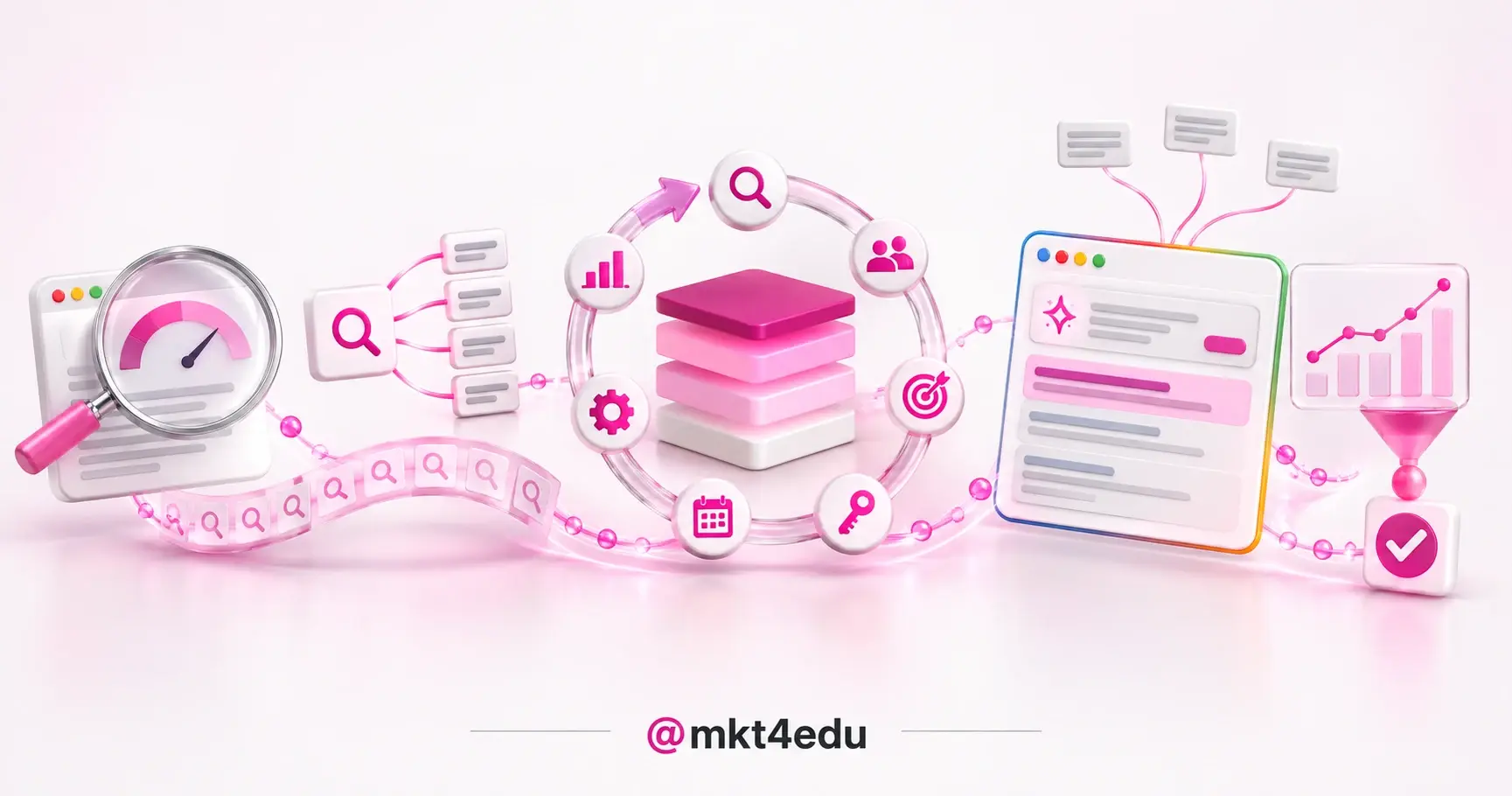
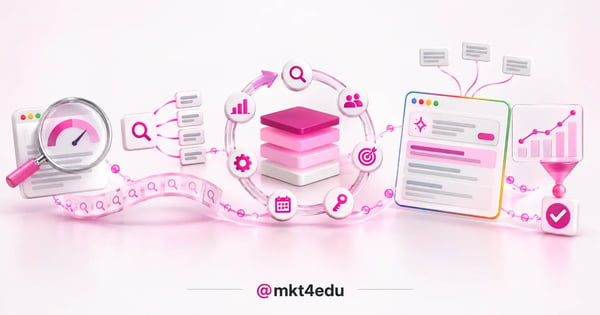 Caption: strategic SEO planning connects diagnosis, keywords, content and measurement in a cycle that repeats
The definition itself frames the scope: Google describes SEO as helping search engines understand your content and helping people find your site and decide whether it is worth a visit. That is the work an SEO service organises into a plan.
The weight of the channel justifies the method. A widely cited BrightEdge study found, in 2019, that 53% of trackable website traffic came from organic search, up from the 51% the same company measured in 2014.
Without a plan, the hunt for quick wins pushes the team into improvisation: posts with no connection between them, fights over terms with no real chance, and pages that are never updated.
With a plan, every piece has a defined role. The question of how to grow organic traffic gains stages, owners and deadlines, and the budget stops depending on isolated bets.
How do you appear in Google results with AI search?
To appear in Google results in the age of AI search, the path is still SEO done well: useful content, a crawlable site and authority built over time. Google states that there are no additional requirements or special optimisations to appear in its AI features, and that the page must be indexed and eligible to be shown in Search with a snippet.
What changed is searcher behaviour. In the United States, 68.01% of Google searches ended without a click between January and April 2026, according to Rand Fishkin's study using Similarweb's panel. In 2024 the figure was 60.45%, measured on a different panel, which the author himself flags as a comparison that is not direct.
The movement has a name: zero-click search, the search that ends with no visit to any site. Part of the answers is resolved on the results page itself, and that changes what winning the race means.
The most visible feature is the AI-powered overview, the summary Google assembles at the top of the page citing the sources it used. Being among those sources has become as concrete a goal as the first position.
Anyone asking how to improve site visibility therefore has to aim at two targets at once: the traditional positions, which still bring clicks, and the citations inside summaries and AI-generated answers.
What do SEO for AI, GEO, AEO and SXO mean in the plan?
SEO for AI is the umbrella for the practices that make a brand findable and quotable by AI systems. Within it, GEO handles citation in generative answers, AEO handles direct answers to questions, and SXO handles the full experience of someone who leaves search and lands on the site.
The split becomes clearer in a direct comparison between SEO, AEO and GEO: classic SEO competes for positions, AEO competes for the featured answer, and GEO competes for the citation inside the generated text. Here is how the layers are organised:
|
Layer |
What it optimises |
Where the result shows |
|
Classic SEO |
Content, technical health and site authority |
Positions and clicks in organic results |
|
AEO |
Direct answers to real questions |
Featured snippets and answer assistants |
|
GEO |
Brand citation and mention among the sources |
AI-generated answers and generative summaries |
|
SXO |
The experience of whoever arrives from search |
Conversion and retention after the click |
Table: how the optimisation layers divide roles inside strategic SEO planning
In the generative layer, some tactics tend to raise the odds of the brand being mentioned by AI tools: citing named sources, bringing verifiable statistics and including expert quotes in the content.
The effort tends to pay off. Semrush estimates that visitors arriving from AI search convert 4.4 times better than visitors from traditional organic search, which makes that audience small in volume and valuable in intent. It is the company's own estimate, not an audited figure.
These layers already have their own step-by-step guide to SEO for AI, and brands with the basics running can move on to optimisation for LLMs (Large Language Models, the large language models behind tools such as ChatGPT).
SXO closes the loop inside the plan: there is no point winning the click and losing the person on a slow, confusing page with no clear next step.
How do you build strategic SEO planning step by step?
Complete strategic SEO planning runs through seven stages: diagnosis, competitor analysis, goal setting, keyword research, a prioritised calendar, execution and measurement. The plan is a cycle, not a task list: the last stage feeds the first, and the document gets sharper with every round.
Here is what each stage delivers:
- Diagnosis: run an SEO audit of what exists, mapping current positions, the pages that bring the most organic traffic, technical crawling problems and the brand's presence in AI answers.
- Competitor analysis: identify who holds the positions and citations you want, which content sustains those results and where the gaps are.
- Goals and indicators: turn ambition into quarterly numbers, such as organic sessions, conversions, positions on priority terms and citations in AI answers.
- Keyword research: build the list with volume, difficulty and search intent, and group the terms into content clusters.
- Prioritised calendar: order the actions by impact and effort, alternating updates of existing pages with new production.
- Execution: apply the on-page techniques, produce the planned content and work on authority with link building.
- Measurement and review: follow the dashboard every month and review priorities each quarter, based on what the data showed.
The order matters. Research without diagnosis becomes a bet, a goal without an indicator becomes a wish, and execution without review repeats the same mistakes with a bigger budget.
How do you do keyword research with tools and AI support?
Keyword research with AI support starts from the same principle as always, understanding what the audience looks for, and adds speed: AI tools group terms by intent, summarise frequent questions and point out content gaps in minutes. Deciding what to prioritise remains human and strategic.
The tools split the work between data and discovery. Semrush shows search volume, difficulty and the terms that bring traffic to competitors; Google Ads Keyword Planner validates the volumes; and Google Trends reveals seasonality and rising topics.
Google Search Console deserves special attention, because it shows the real queries already generating impressions and clicks for the site. That is where the terms sitting on the second page of results appear, one push away from the first.
A simple flow solves most cases: export the queries from Search Console, cross them with Semrush volume and difficulty, ask an AI assistant to group everything by intent, and validate by hand what goes into the plan.
When filtering, search intent decides the format. Informational terms call for guides and articles, commercial terms call for comparisons, and transactional terms call for service or product pages ready to convert.
Long-tail keywords gained new importance in this scenario. Full questions, similar to the ones people ask in conversations with AI, hold less volume and far more context about the searcher's moment.
Queries such as how to grow organic traffic, how to improve rankings and how to increase site authority show that format well. Each one reveals a specific problem, and content that answers specific problems is what AI systems prefer to cite.
That angle also answers how to generate qualified traffic: someone arriving through a detailed question is closer to the decision than someone arriving through a generic term. So long-tail keywords deserve fixed space in the plan, in titles, subheadings and frequently asked questions.
How do you plan SEO inside a content strategy, from planning to optimisation?
SEO inside a content strategy, from planning to optimisation, works like a production line: briefs based on research, production to a defined standard, on-page optimisation and periodic updates of what has already been published. Each stage has its own deliverable, and skipping any of them usually costs traffic.
The most used organisation is the cluster: one in-depth pillar piece on the central theme and satellites answering the neighbouring questions, all connected by internal links that distribute relevance.
Updating old content tends to pay off faster than publishing something new, because the page has already built history and links. The calendar should reserve fixed space for revising data, examples and screenshots that have aged.
AI content has entered that production line and can speed up drafts, variations and summaries. The condition is human review, source checking and a critical look at real usefulness, because thin text does not survive in any of the layers.
The final stage answers how to optimise content for search engines: a title with the keyword, a meta description that invites the click, subheadings in question form and paragraphs that deliver the answer in the first sentence.
In larger operations, content planning led by specialists keeps the calendar from turning into improvisation and holds the quality standard steady across different writers.
How do you apply on-page SEO techniques without forgetting UX?
Applying on-page SEO techniques means taking care of what sits inside the page: title, meta description, subheadings, images, structured data and loading speed. The golden rule is consistency, with structured data that matches the visible text and with important information available as text, not only in an image or a video.
Those recommendations matter even more in AI features. Important content in text form and pages reachable through internal links make the site easier to read for the systems that assemble the answers.
Title and meta description are the shop window: that is where much of how to improve the click-through rate on positions the page already holds gets decided.
Video: on-page SEO checklist from the mkt4edu channel, the technical layer of strategic SEO planning
UX (User Experience) covers all aspects of the end-user's interaction with the company, its services and its products, in the classic definition by Don Norman and Jakob Nielsen, who coined the term. In SEO it shows up as speed, navigation clarity and comfortable reading on any screen.
A page that loads fast, delivers the answer in the first block and offers somewhere to go next also answers how to reduce the bounce rate: the visitor finds what they came for and keeps exploring, instead of going back to the search engine.
The continuous work of improving a site's SEO is a prerequisite for the AI layers: without a solid technical base, no generative summary finds or cites the page.
This is where SXO stops being an acronym and becomes a decision criterion: optimisation only ends when the experience after the click confirms the promise made in the result.
How do you increase site authority with link building?
Link building is the construction of links from other sites pointing to yours, and it remains among the strongest authority signals. To increase site authority today, fewer links with more quality win: editorial references, press, partnerships with institutions and original data other outlets want to cite.
Anyone searching how to increase site authority finds plenty of shortcut promises, and scepticism is healthy: buying links and exchange schemes tend to end in a penalty or in irrelevance.
In the AI era, authority gained an extra dimension. Brand mentions in trusted outlets, even without a link, tend to weigh for the systems choosing which sources to cite in answers.
Original data is the most underrated asset on this front. Original research with verifiable numbers attracts spontaneous citations and answers, along the way, how to improve the rankings of the pages that publish it.
Internal link building completes the work: when the most important pages receive links from the rest, the authority earned outside circulates inside the site itself.
How do you integrate SEO with marketing strategy and measure results?
Strategic SEO planning pays off more when it talks to the rest of the digital marketing strategy: inbound, paid media, email and sales. Organic validates terms and arguments the other fronts reuse, and gets back audience data that sharpens the plan's next bets.
That integration is the essence of inbound marketing, the method of growing by building meaningful, lasting relationships with consumers, prospects and customers, instead of interrupting them with traditional advertising.
Inside inbound marketing, SEO is the attraction engine of the funnel. The role of inbound marketing in attracting customers starts precisely in the content that organic positions.
Inbound sales harvests what organic plants: the lead arrives educated by the content, and the rep starts from the context of what was read, not from zero. Aligning inbound sales and marketing around the same keywords prevents mismatched messages.
Paid campaigns benefit too: terms that convert in organic reduce media risk, and adverts give back test volume to validate new pages. The history of previous campaigns, in turn, shows which promises earn clicks.
In measurement, the conversion rate is the indicator that connects traffic to revenue: the percentage of visitors who complete a desired action, such as filling in a form or buying a product. Raising that rate is the job of CRO (Conversion Rate Optimization).
Video: how CRO, SEO and UX connect on the mkt4edu channel, the conversion layer of strategic SEO planning
The minimum dashboard tracks organic traffic per page, average position, click-through rate in results, conversions and citations in AI answers. That set is what shows how to generate qualified traffic at scale and how to improve site visibility on the new surfaces.
When the position is good and the click does not come, the problem usually sits in the title and the meta description, and the right question goes back to how to improve the click-through rate of that page.
Chasing immediate results is the biggest risk at this stage. Organic has its own cycle, and cutting the investment in the third month wastes what has already been sown.
Which mistakes most damage strategic SEO planning?
The mistakes that most damage strategic SEO planning are about process, not technique: chasing volume without intent, ignoring content already published, cannibalising your own keywords, publishing AI content without review, measuring position alone and giving up before the cycle closes. All of them are easy to prevent once the plan exists.
It is worth checking each one before signing off on your plan:
- Chasing volume without looking at intent: a generic term attracts visits that do not convert, and traffic grows without revenue following.
- Ignoring what has already been published: updating a page with history usually pays off sooner than launching a new one, and many plans only see production.
- Cannibalising your own keywords: two pages on the same site competing for the same term split the strength between them, and neither ranks well.
- Publishing AI content without review: text with no source, no data and no real usefulness survives neither the rankings nor the AI-generated answers.
- Measuring position alone: a ranking with no click and no conversion does not pay the bill, so the dashboard has to reach revenue.
- Giving up mid-cycle: organic takes months to build the result, and cutting the investment early wastes what has been built.
None of these mistakes is fatal when it shows up early. That is what the quarterly review exists for: correcting course while the correction is still cheap.
Frequently asked questions about strategic SEO planning
What should you prioritise first in strategic SEO planning?
Prioritise what unlocks the rest: diagnosis comes first because it reveals the quick wins, technical fixes come next because nothing appears without crawling, and content already published comes before new content because it pays off sooner. The GEO and AEO layers sit on top of that base, never in place of it.
The advantage of the method is that it feeds itself: each measurement cycle shows where the next gain is, and the plan gets more precise every quarter.
If you would rather shorten that path with people who do this every day, you can map the current state of your SEO with the mkt4edu team before writing the first line of the plan.
That diagnosis is what opens the conversation with our team: you leave it with the site audit, the list of quick wins and the order of priorities for the coming quarters. Talk to us and let's build your success together.














 Portugal