






In the universe of hybrid marketing, HubSpot stands out as one of the leading platforms offering a variety of tools and features to drive business growth.
But how exactly can we integrate HubSpot solutions with offline strategies to create a truly effective marketing approach?
In this post, we'll explore five strategies that combine the power of HubSpot with traditional offline tactics. This gives businesses a unique competitive advantage in today's landscape.
What you will see in this post:
Understanding hybrid marketing
What is the difference between inbound and outbound marketing?
5 Hybrid Marketing Strategies with HubSpot
The main focus of an online strategy
The importance of offline marketing
Happy reading!
What is hybrid marketing?
Hybrid marketing is a strategy that combines marketing tactics marketing online e offline to reach and engage the target audience.
Digital marketing lives online: social networks, email marketing, websites. Offline marketing covers the older ground: an event, a flyer in the hand, an ad in print.
The integration of these two worlds brings several gains. Firstly, it allows for a more comprehensive approach, reaching both people who prefer to interact online and those who have more affinity with traditional media.
Furthermore, the combination of strategies gives greater brand visibility and recognition, since it is present in different communication channels.
Another gain is the opportunity to create more complete experiences for the consumer.
Say a company holds an event to launch a product. It can back that up with a digital campaign that gives everyone who came something extra. People stay engaged, and they stay loyal.
Inbound vs. Outbound Marketing
In the world of marketing, two concepts stand out: inbound and outbound. While the outbound marketing traditionally pushes the brand message to the target audience, the inbound marketing takes a more subtle approach, attracting customers through relevant and valuable content.
In hybrid marketing, these two approaches complement each other to create a comprehensive strategy.
THE outbound marketing still plays a vital role in reaching a wide audience and introducing the brand, in turn, inbound marketing comes into play, nurturing leads and building lasting relationships.
In practice, outbound focuses on mass campaigns in offline spaces, such as TV and radio ads, as inbound is directed to attract customers through virtual environments, such as blogs, social media and SEO.
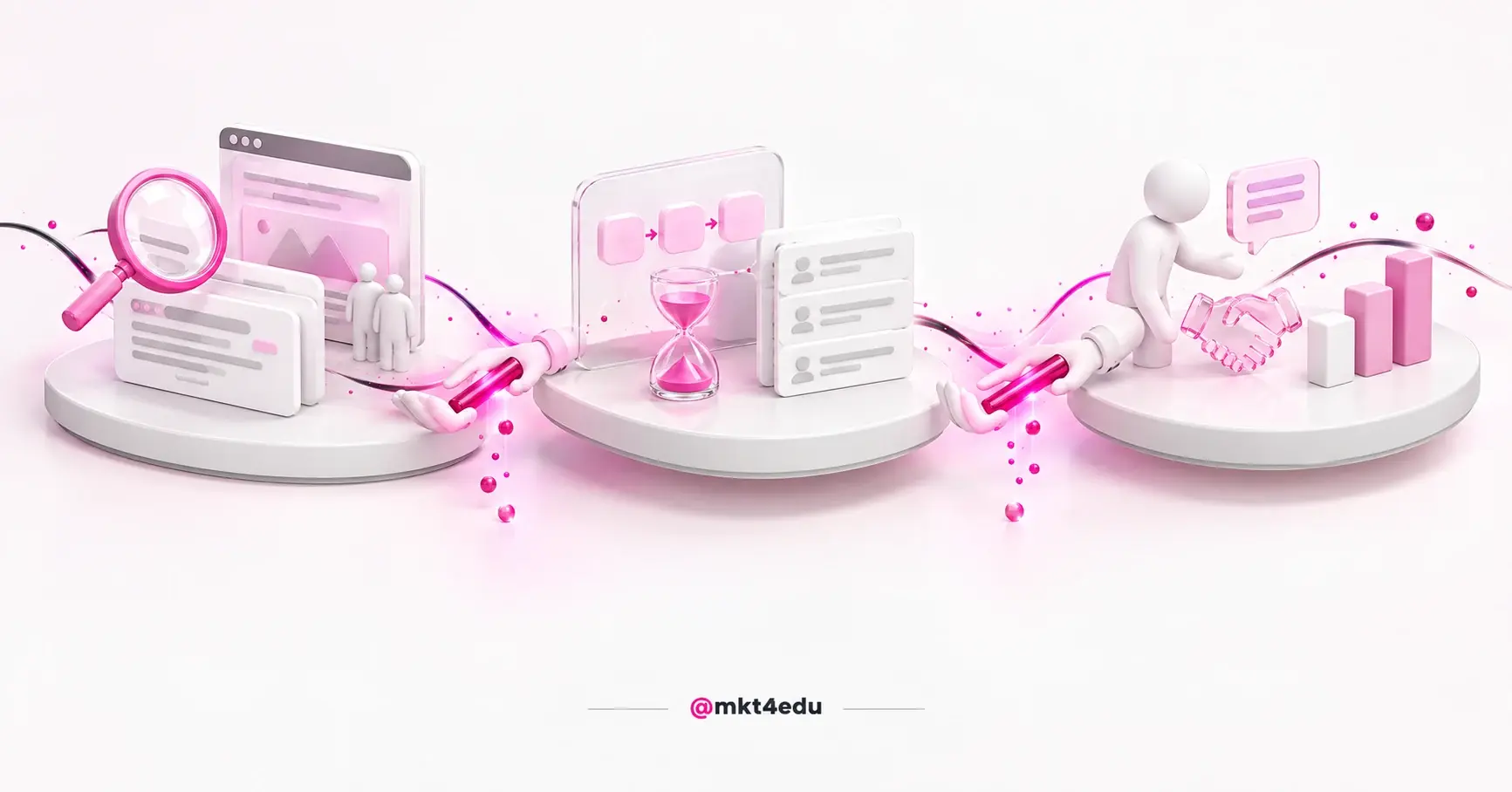
 Caption: Hybrid Marketing with HubSpot
5 hybrid strategies using HubSpot
Now that we've discussed what hybrid marketing is and the main aspects of inbound and outbound approaches, let's focus on how to use the company's platform. HubSpot and its tools to elevate your campaigns more effectively, both in online and offline environments.
1. Integrate your online and offline channels
HubSpot offers a powerful platform for integrating online and offline marketing campaigns, maximizing the impact and effectiveness of your marketing strategies.
First, centralize all your marketing data in one place, regardless of whether it comes from online or offline campaigns. This includes information about leads, customers, interactions, and campaign results.
Use HubSpot tools to track and analyze traffic sources for your campaigns, both online and offline. You can track where your leads and customers are coming from by identifying which channels are generating the best results.
Based on the data collected, you can customize your marketing campaigns to meet the specific needs of your customers, both in the online and offline spaces. This encompasses segmenting target audiences, sending personalized messages and creating tailored offers.
By leveraging HubSpot's capabilities to integrate marketing campaigns across both environments, you can create more effective strategies, increase audience engagement, and drive growth for your business.
2. Automate your hybrid campaigns
HubSpot's platform also enables companies to automate process-chav and, from tracking customer behavior to audience segmentation and content personalization.
With HubSpot's automation, a marketing team can run joined-up campaigns that bend to what each customer likes and does, across every channel, digital or physical.
This means you can create automated workflows to nurture leads, send personalized communications, and even track campaign performance in real time.
HubSpot also brings deeper reads and reports. A business can weigh how well its hybrid marketing is doing, and change course when it needs to.
With detailed insights into customer behavior and campaign performance, companies can make more informed decisions and maximize the return on their marketing investments.
See also
- How can a good HubSpot Consultancy boost your business?
- How to manage activities from Hubspot features;
- HubSpot CRM and 4RevOps Expertise: Elevated Strategy;
- Improve your sales strategies with Hubspot.
3. Hybrid marketing in online spaces
FFocusing specifically on the scope of an online strategy In the context of hybrid marketing, it is key to highlight some key practices to ensure good performance in virtual environments.
Within this scenario, it is worth highlighting the importance of content marketing, which plays a key role in digital marketing, and that's where HubSpot's tools come into play.
Well, content marketing isn’t just about creating captivating posts; it’s about telling stories, educating and inspiring.
HubSpot has a wide range of features to create and distribute content effectively, from blog creation to social media management and email marketing automation.
The platform centralizes all these activities in a single space, simplifying the process and allowing a holistic view of the campaigns.
Using SEO and social media with a plan is key to a strong presence online, and to pulling in leads worth having. Search engine optimization (SEO) is what makes your content easy to find when someone goes looking for it.
With HubSpot, you can track your SEO performance and make adjustments as needed, maximizing visibility.
Social media is another vital channel for expanding reach and interacting with your target audience. HubSpot makes it easy to schedule posts, track conversations, and track engagement. That leads to a proactive approach to building relationships with prospects.
4. Offline Approaches to Hybrid Marketing
Don't underestimate the potential of a good offline marketing strategy, then, In-person events give a unique opportunity for direct interaction with the target audience.
From trade fairs to product launches, these events give a space for build personal connections, present products in a tangible way and give immersive experiences.
The ability to interact face-to-face creates a lasting impact and strengthens the relationship between the brand and the consumer.
Likewise, workshops are a powerful tool for educating and engaging an audience. By offering practical and informative sessions, brands can show their industry expertise, solve specific customer problems and establish themselves as thought leaders in their field.
But for hybrid marketing to be real, you have to join the offline work to the online. An ad in print or a spot on the radio can be backed by a digital campaign with careful aim.
Hybrid marketing takes what is good about the offline world and adds the open field of the online one. Together they give you a whole way to reach people and pull them in.
Put an event, a workshop, an old-school ad, and your online work side by side, and the whole thing gets strong and quick on its feet. It drives growth, and it makes the brand known.
5. Measuring results with HubSpot
Tracking and analyzing data not only offers a more assertive perspective on the performance of your campaigns, but also allows for strategic adjustments in real time.
As we said, HubSpot holds a set of smart tools that make it easy to read your results in hybrid marketing. With tracking and reads in hand, your marketing and sales teams can follow how a campaign is doing online and off, with nothing lost between the two.
One of the biggest advantages is the ability to measure return on investment (ROI) in a more comprehensive way.
With HubSpot, you can track customer engagement across every touchpoint, from digital interactions to in-person events. This allows for a holistic view of the impact of campaigns and helps attribute the value of each marketing channel.
Additionally, HubSpot gives customizable and intuitive reports that make data interpretation easier. With clear charts and highlighted key metrics, marketers can quickly find what's working and what needs tweaking.
Create smarter campaigns with HubSpot!
IInvest in investment strategies hybrid marketing with focus on uniting inbound and outbound It could be the missing piece for your business to reach a larger, more diverse audience and engage consumers more meaningfully across all touchpoints.
As we discussed throughout the text, in the online environment, it is key to invest in SEO, content marketing, social media and digital advertising to increase brand visibility and attract qualified traffic.
On the other hand, in the offline world, events, sponsorships, traditional advertising and public relations still play a key role in building relationships and creating brand awareness.
However, the integration of these strategies is the key for an effective marketing campaign.
Thus, HubSpot, with its marketing automation approach, CRM and analysis tools, is key in the successful rollout of hybrid marketing.
When using the HubSpot and its features, companies can customize their marketing strategies according to customer behavior and preferences, adapting them to both the online and offline world.
Summary: Doing hybrid marketing well, online and off, is key to reaching a mixed crowd and pulling them in. With HubSpot a company can run all its marketing from one place and keep it lean. The whole thing joins up, and the business grows.
Did you know that Hubspot can also be used as a sales platform? Discover how to implement it correctly in your business and integrate all your processes into a single intelligent environment!

























 Portugal