





How to create a Bilibili account became a brand question in August 2026, when the international app arrived in Brazilian stores in Portuguese and the company started hiring in São Paulo.
The hard part isn't sign-up, which turned out simple. It's knowing what the platform requires, what it hasn't documented in Portuguese yet, and what a brand needs to prepare before hitting "publish."
This guide separates what's verifiable (the app, the sign-up methods, the published rules, the official channels) from what the platform still doesn't publicly explain for the international version. Where a menu path isn't documented, the text says what to configure, not which screen to click, so the step doesn't age out with the next update.
What do you need to create a Bilibili account in Brazil?
To create a Bilibili account in Brazil, you need the right international app, an email or phone number to receive the confirmation code, and a minimum age of 12 or 13, depending on the store. No ID document is required, and the account can be opened by a team member on the brand's behalf.
The right app is "bilibili - your beloved videos", published by Bilibili Singapore, with more than 10 million downloads and an update from August 24, 2026 on Google Play. There's a second, older app aimed at Southeast Asia and focused on anime; it isn't the relaunch and doesn't have the global interface.
 Caption: how to create a Bilibili account in just a few steps, with no ID document.
On the App Store, the same app shows 13 languages, including Portuguese, a 13+ rating and in-app purchases. On Google Play, the rating is 12+. The official support listed in the store is the email global.support@bilibili.com.
Identity verification is gone. Semafor revealed that the relaunched app no longer requires a document for sign-up, and the platform's official creator account confirmed "easier sign ups with no identity verification." That's the change that opened the door to brand accounts outside China.
Before signing up, it's worth having ready what the profile will ask for: channel name, square avatar, cover image, bio text and website link. Whoever arrives with that ready sets up in minutes; whoever improvises publishes a half-finished profile and takes longer to fix it.
How do you create a Bilibili account step by step?
Creating a Bilibili account takes five steps: download the international app, open sign-up, choose between email, phone or a third-party account, confirm the code you receive, and set the interface language. The process is the same for a person and for a brand; the difference is in what gets filled in afterward.
The first step is installing the app from the official store, checking the name "bilibili - your beloved videos" and the pink icon with a globe, which distinguishes the international version from the Chinese one. In some countries the listing doesn't appear; reports mention India, Russia and Italy, and no official list has been published.
The second and third steps are sign-up itself. According to PCLabs, the app accepts sign-up by phone, email or third-party accounts, such as Google, Facebook and Apple, with no identity verification for a standard account. For a brand, a shared corporate email is the safer option, since it doesn't depend on any one person's phone.
The fourth step is confirming the code sent to email or phone. The fifth is language: the Portuguese interface has been available since the August 2026 update, and AI dubbing to watch creators in other languages is advertised in the app's description, though the platform doesn't detail how to turn it on or off per video.
Store the credentials in the team's password vault from day one. The brand's Bilibili account is an asset, and swapping who's responsible without losing access is the kind of problem worth solving before it happens.
How do you set up the brand profile on Bilibili?
Setting up the brand profile on Bilibili means filling in name, avatar, cover, bio and link to match the company's visual identity and its audience's search intent. The exact menu path isn't publicly documented for the international version and changes with updates; the fields don't. That's where it's worth investing.
The channel name should be the brand's name the way the audience types it, with no creative suffix. Bilibili's internal search matches text first, and a brand that calls itself one thing on Instagram and another on Bilibili gets lost. The same logic as SEO for social media applies here.
The avatar and cover follow the visual identity, with one context caveat: Bilibili is a pink platform. Brands whose primary color is also pink need contrast in the avatar (a white or dark background) to avoid disappearing into the interface. A quick test is looking at the profile inside the app before considering the setup done.
The bio answers two questions in a few lines: who the brand is and what the channel publishes. Terms the audience searches for (the name of the field, product or course) fit naturally in here, because the bio is read by search.
The link should point to a dedicated landing page, with a campaign parameter, so the channel's traffic shows up in the CRM.
What's still pending is organization account verification. As of this article's publication, there's no public documentation about an official badge for businesses on the international version. The recommendation is to use the official name and visual identity, stay consistent with your other channels, and follow the platform's official creator account, which announces new features.
How do you activate Bilibili Studio and publish your first video?
Bilibili Studio is the creator hub on the international version, where you manage the channel and publish content; the platform describes it as a space for global creators to manage videos and translate them into Chinese. Access starts from the account you've already created, and the first upload requires a title, description, tags, cover, category and originality declaration.
The global Studio's existence is confirmed on the platform's official pages, which maintain a creator hub and a help center for the international version. The content on those pages loads dynamically and isn't readable to outside crawlers, so the text below describes the fields, not the buttons.
Upload fields follow Bilibili's official submission rules: tags directly tied to the content (characters, concepts, attributes), a static cover coherent with the video, and a choice between original and reposted content. Tags unrelated to the video hurt search, according to the platform itself.
The title is the field that carries the most weight. It also becomes the title tag on the page Google indexes, in the pattern "video title | bilibili", so search intent needs to come at the start.
The description holds the context, the tracked link, and, when the main title is in Portuguese, the English version, as the official rule recommends for translated titles.
The platform has also opened onboarding channels for creators outside China: an official creator account on X, a Discord server, and an animation contest with a $15,000 prize for independents. For a brand publishing regularly, following those channels is how you learn about new features before the press does.
The detail of each field, with what to write and what to avoid, is in SEO for Bilibili. This article stops at setup; that one starts at optimization.
Which community settings and rules matter for a brand?
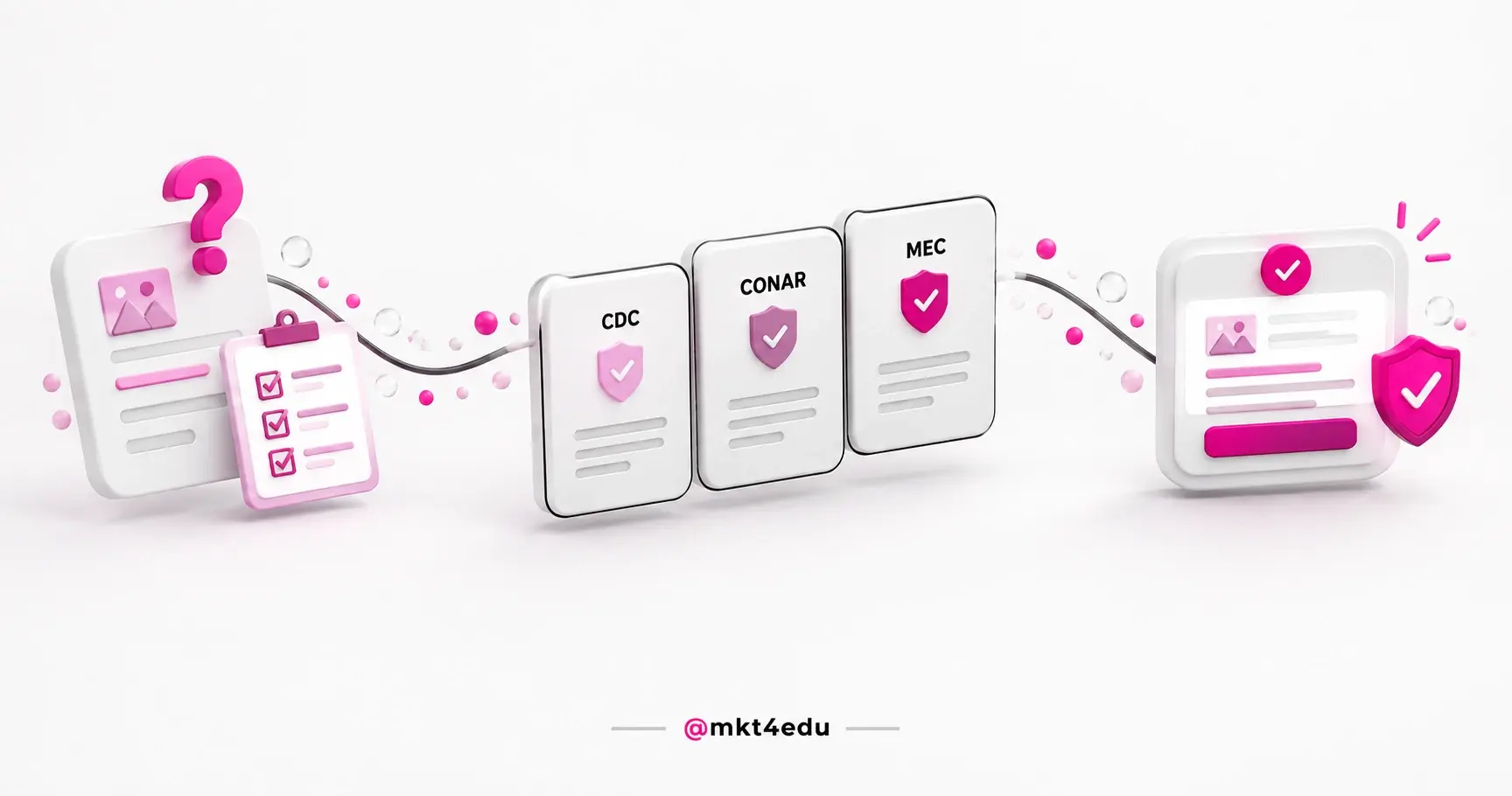
For a brand, the community settings that matter on Bilibili are control over danmaku and comments, moderation, and three documents the platform publishes for the international version: the community rules, the advertising policy and the copyright policy. Reading all three before the first video avoids getting it taken down later.
Danmaku are the comments that float over the video, synced to the second, and they're the heart of the platform. A brand might feel tempted to turn them off to control the narrative; in practice, that removes the participation signal search and recommendation rely on. The recommendation is to keep them on and moderate, not silence them.
The official documents are published on the international domain. The platform maintains community rules, an advertising policy specific to the international version and a copyright policy, with an infringement reporting channel. For brand content, the advertising policy is required reading.
Copyright deserves extra attention with video. Background music, a clip from a series, someone else's image: everything that's already a problem on YouTube is a problem here too, made worse by the fact that AI moderation on the international version is still being built, according to the job postings revealed by Semafor. Publishing only licensed or original material is the rule.
What doesn't exist, as of this article's publication, is the 100-question test the Chinese platform requires to become a full member. Official communication for the international version talks about simplified sign-up, and no accessible source describes account tiers or comment restrictions for new accounts. If that changes, it changes first on the official creator channels.
How does monetization work on Bilibili for someone just starting out?
Monetization on Bilibili for someone starting out outside China still has no rules published by the platform in Portuguese or on an accessible official page. What exists is what the press reports: requirements of 1,000 followers or 100,000 views, identity verification to get paid, and incentive programs, audience rewards and live-stream gifts.
Times Brasil detailed the requirements cited for monetizing, attributing the information to the Indian press, with no official page. The same figures show up in unofficial guides describing the Chinese platform, paid in yuan. For the international version, the data should be read as a reference, not a rule.
A per-thousand-views figure also circulates in the international press, but that same coverage notes that Bilibili hasn't published an official rate card. Any revenue projection for a Bilibili channel today is a guess, and a brand shouldn't build that into its plan.
For a brand, direct monetization matters less than it does for a creator. The company's channel exists for community, search and relationship; revenue comes from the product, not the video. What's worth following is the sponsored-content marketplace the platform is developing, because it will formalize partnerships between brands and creators.
The golden rule at this stage is not to build a plan on top of what isn't documented. The Bilibili marketing strategies that already work are the organic ones, and that's what gives a newly created channel traction.
How does an educational institution set up its channel on Bilibili?
An educational institution sets up its Bilibili channel with the official name, an avatar with brand contrast, a cover showing the campus or labs, a bio with the course areas the audience searches for, and a tracked link to the enrollment page. It's one sector example; the logic serves any brand that educates before selling.
The account should be opened with an institutional email shared by the marketing team, not an intern's phone. Institutions swap teams often, and the channel's account is a brand asset. The password vault and a record of who has access should be part of the process from day one.
The bio does the work of search. A university center with technology, game design and animation courses names those fields in the bio, because those are the terms Bilibili's young audience types. The link should point to an enrollment landing page with a campaign parameter, so the Bilibili lead shows up separately in the CRM.
The first video published sets the channel's tone. An instructor's open class, a student project, or a behind-the-scenes lab video works better than an institutional piece, because the community values usefulness. The full mechanics are in video content for recruitment.
Copyright matters twice as much for institutions. A recorded class with background music, a slide with an unlicensed stock image, or a film clip used as a teaching example are common infringements in an academic setting and are removable on the platform. Publishing only what the institution produced or licensed is the rule that avoids the problem.
Frequently asked questions about creating a Bilibili account
Where should you start after creating your Bilibili account?
After creating a Bilibili account, the start is observation, not publishing: follow Portuguese-speaking creators in your topic, read the danmaku on videos that already exist about it, and take note of how the audience talks. A channel that's set up and empty for two weeks is worth more than one full of institutional video the community ignores.
By the time the first video goes up, it already carries what this guide got ready: a searchable name, a profile matching the brand, a tracked link, tags that name the content, and licensed material. What comes next is getting found, and that's where setup turns into SEO.
The first video only does its job if it gets found, and Bilibili's search has its own rules for title, tags, cover and retention. The next step after this setup is SEO for Bilibili, which shows what makes a video show up in the platform's search.


.jpg)





















 Portugal