Switching tools looks like the obvious move when a funnel stops delivering the numbers you expected. The problem is that most alternative lists stack six names as if they were interchangeable, without saying what each one does or how much it charges. Funnelytics alternatives fall into four very different families, and mixing those families up gets expensive.
One builds the page. Another organises the commercial relationship. A third reads customer behaviour inside the site, and the fourth measures traffic. Funnelytics sits in a fifth category: drawing and tracking the entire path on a single canvas.
The entry price of each option was read on the vendor's own pricing page in October 2026. Alongside it comes an honest replacement test: in which scenario does the tool genuinely do what Funnelytics was doing, and in which scenario does it cover only a fragment?
What does Funnelytics do and what do the alternatives replace?
Funnelytics is a customer journey mapping tool: you draw the visitor's path on a canvas, connect pages, ads and emails, and watch how many people move through each step. Funnelytics alternatives replace parts of that job, and almost never the whole of it.
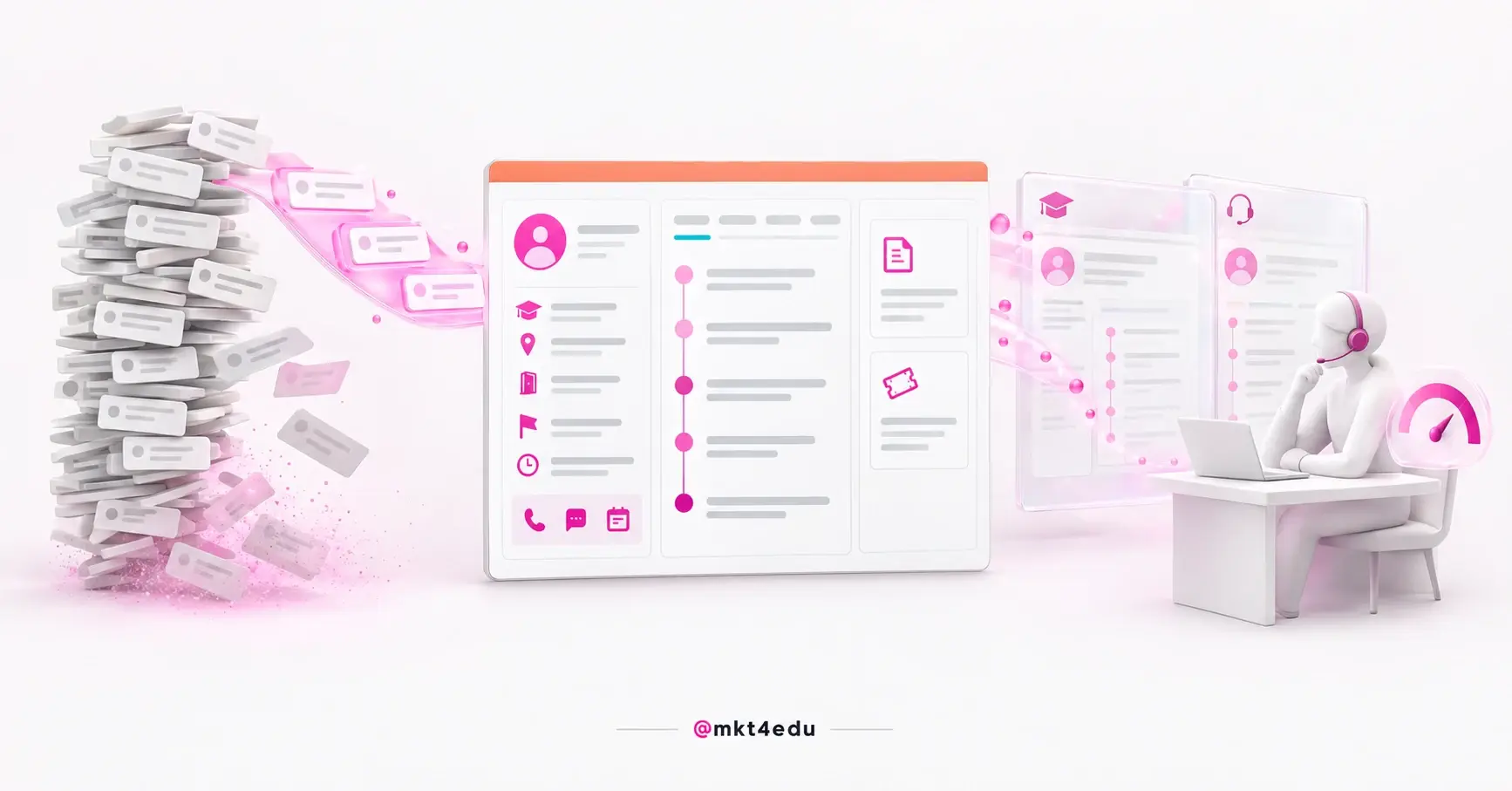
 Caption: Funnelytics alternatives each cover a different slice of the funnel, and the slice missing in yours is what decides the pick.
The confusion starts because four distinct activities all get called "working on the funnel". In inbound marketing programmes the four live side by side, and telling them apart is what makes any comparison useful.
Building means creating the opt-in page, the sales page and the checkout. Managing means tracking each deal and each lead inside a commercial process. Measuring means knowing how many sessions came in, through which channel, and how many converted. Mapping means seeing all four on the same drawing.
For years Funnelytics was described purely as an analytics tool. The company itself now separates the Journeys line, built around the buyer's journey, from the Ecom line, built for ecommerce operations. That split changes who each alternative serves.
If your problem is a page that does not convert, the answer lives in building and in CRO (Conversion Rate Optimization). If your problem is not knowing where the lead disappears, the answer lives in funnel analysis and in customer journey mapping.
The two videos in this article are in Brazilian Portuguese.
Video: What Funnelytics is and what it is for, on the 4RevOps AudioBlog. This video is in Portuguese.
How much does Funnelytics cost today, plan by plan?
Funnelytics publishes five price tiers, and the first one is free. The Essentials plan is free forever, Map Pro costs US$ 39 per month, Performance Pro costs US$ 129 per month, Performance Business costs US$ 349 per month and Ecom Insights costs US$ 2,500 per month.
Reading those numbers in practice matters more than the table itself. The jump from Map Pro to Performance Pro is the jump from drawing the funnel to tracking what happens inside it.
Teams that only use the drawing to align everyone around the funnel stages rarely need to go past Map Pro. Teams that want step-by-step attribution and version comparison land in the US$ 129 per month band and above.
Ecom Insights is a different product for a different audience. Comparing its price with a page builder makes no sense, because it answers an ecommerce operations question rather than a general marketing and sales one.
That is the starting point of the whole comparison: every alternative has to be judged against the plan you would actually use, not against the most expensive line on the price list. For smaller operations, the maths almost always stops at the free tier or at Map Pro.
Do ClickFunnels or Leadpages replace Funnelytics for analysis?
They do not. ClickFunnels and Leadpages are page-building platforms, and what they deliver is the structure a visitor walks through, not the reading of what happens during that walk. They show up on Funnelytics alternative lists by topic adjacency, and that adjacency confuses more than it helps.
ClickFunnels assembles the full commercial path, with opt-in page, sales page, upsell and checkout in one environment. Plans start at US$ 97 per month on Launch, or US$ 81 per month billed annually.
Above the entry tier, the ClickFunnels price list climbs to US$ 197 per month on Scale and US$ 297 per month on Optimize, with US$ 164 and US$ 248 per month on the annual versions. Dominate costs US$ 5,997 per year and exists only on annual billing.
Unlimited funnels come with every plan, and what scales is the contact volume, from 10,000 to 400,000. That tells you plainly what the tool is for: it charges for the size of your database, not for the depth of your analysis.
Leadpages solves a smaller and cheaper slice of the same problem. The Pro plan costs US$ 29 per month, Business costs US$ 49 per month, Grow costs US$ 99 per month and Optimize costs US$ 199 per month.
Enterprise is quote-based. The platform offers a 7-day trial and advertises a 20% discount on annual billing.
Since the page lists monthly figures only and never publishes the discounted annual price, the monthly number is the only reliable one for budgeting.
Both tools include reports and A/B testing, which help with individual marketing campaigns. What neither includes is the view of the whole path, with paid traffic, email and third-party pages on one map. Swapping Funnelytics for either of them does not change your tool, it changes your problem.
The combination that tends to work is different: build in ClickFunnels or Leadpages and keep a mapping layer on top. That way your digital marketing strategy gets the page and the reading at the same time.
Is Hotjar still an alternative for reading customer behaviour?
Hotjar remains the best qualitative read of customer behaviour inside a page, with session recordings, heatmaps and feedback surveys. The relevant change since 2023 is administrative: the Hotjar pricing page now redirects to Contentsquare, which absorbed the product.
On the Contentsquare plans page, the Free plan costs US$ 0 and covers 200,000 sessions per month. The Growth plan shows up between US$ 39 and US$ 49 per month depending on the payment option, and Pro and Enterprise are quote-based.
That range deserves care. The page toggles between monthly and annual payment without labelling which figure belongs to which option, so the honest number is the range rather than an attribution of one value to one billing mode.
Hotjar answers "why did this visitor stop here", while Funnelytics answers "how many reached this point and how many moved on". Those are different questions, and the answers complement each other far better than they compete.
In CRO work, the most productive pattern is using the funnel map to find where the drop happens and the session recording to understand the cause. Trading one for the other leaves half of the diagnosis out.
Do HubSpot and Pipedrive cover marketing and sales in one funnel?
HubSpot and Pipedrive are CRMs (Customer Relationship Management) and they take care of the funnel once the lead has a name. They organise deals by stage, log interactions and support marketing automation, but neither draws the anonymous path that comes before the form.
HubSpot charges per seat. The Core Seat costs US$ 20 per month on Starter, US$ 50 on Professional and US$ 75 on Enterprise. The Service Seat costs US$ 100 on Professional and US$ 150 on Enterprise, and is not available on Starter. The View-Only Seat carries no extra cost.
That seat structure favours small teams that want CRM, email and reporting in one place. Using HubSpot as the central platform gives you the complete contact history, and that history is what sustains consistent inbound sales over time.
The same history connects marketing campaigns to closed deals. That is how the lead's buying journey becomes readable from the first click all the way to the signed contract.
Pipedrive follows different pricing logic. The page publishes US$ 14 per seat per month on Lite, billed annually, plus US$ 39 on Growth, US$ 59 on Premium and US$ 79 on Ultimate, all on the same annual basis.
One Pipedrive detail deserves attention from anyone building a budget. The monthly billing toggle exists on the page but shows no figures, so the only price you can state is the annual one. Planning with an estimated monthly value means inventing a number.
The question that separates the two cases is simple. If the problem sits between the anonymous visitor and the form, a CRM will not solve it; if the problem sits after the form, the CRM is exactly the missing piece, and a well-executed HubSpot CRM implementation usually pays off more than another analytics dashboard.
Is GA4 a free Funnelytics alternative for measuring the funnel?
GA4 (Google Analytics 4) is the most complete free alternative for measuring a funnel, and the standard version is still free of charge. It records sessions, traffic sources, events and conversions, and it lets you build funnel exploration reports, without the Funnelytics visual canvas.
The naming changed back in 2023. Standard Universal Analytics properties stopped processing data on 1 July 2023, and "Google Analytics" has meant GA4 rather than Universal ever since.
That shift is not cosmetic. In GA4 everything is an event, including a page view, which changes how you declare each funnel stage before measuring anything at all.
The GA4 ceiling shows up when the funnel crosses domains and channels Google cannot see on its own, such as a WhatsApp group, a phone call or a third-party ad. At those points measurement depends on manual tagging, and the reading stays incomplete without configuration work.
In cross-channel digital marketing strategies, that ceiling appears early. Improving a conversion rate is rarely solved by measurement alone, but without measurement it is not solved at all.
That is why combining the two tools usually costs less than replacing one with the other. Integrating Funnelytics with Google Analytics feeds real session and conversion figures into the drawing, and the final bill sits at Map Pro plus a free GA4 property.
How do the Funnelytics alternatives compare side by side?
A comparison only becomes honest when each tool is judged by the problem it solves rather than by its feature list. The figures below are entry prices, read on each vendor's own pricing page in October 2026, and they exist to size up the investment band of each route:
|
Tool |
What it solves |
Entry price |
When it replaces Funnelytics |
|
Funnelytics |
Draws and tracks the whole journey on one canvas |
Essentials free forever; Map Pro US$ 39/month |
Benchmark for the comparison |
|
ClickFunnels |
Builds the full commercial path, from opt-in to checkout |
Launch US$ 97/month, or US$ 81/month billed annually |
Never; it is page building, not analysis |
|
Leadpages |
Creates landing pages and lead capture with A/B testing |
Pro US$ 29/month |
Never; it covers the page, not the path |
|
Hotjar (Contentsquare) |
Shows customer behaviour inside the page |
Free with 200,000 sessions/month; Growth between US$ 39 and US$ 49/month |
Only when the question is the cause of the drop, not the volume |
|
HubSpot |
Combines CRM, marketing automation and sales reporting |
Core Seat US$ 20/month on Starter |
Partly, from the form onwards |
|
Pipedrive |
Organises deals by stage and the sales team routine |
Lite US$ 14 per seat per month, billed annually |
Never; it is a pipeline CRM, not a journey map |
|
GA4 |
Measures sessions, sources, events and conversions on site |
Free on the standard version |
Partly, when the funnel fits inside the website |
Table: Entry price and replacement criteria for each Funnelytics alternative, with figures published by the vendors in October 2026.
The right-hand column is the one that decides. Only HubSpot and GA4 appear as partial replacements, and each covers a different half of the problem: HubSpot from the form onwards, GA4 up to the form.
No row in the table says "replaces it entirely", and that is not a gap in the research. Funnel mapping is a narrow category with few direct competitors, and most alternative lists simply ignore that fact.
How do you design a sales funnel before picking the tool?
The tool choice comes after the drawing, never before. Designing a sales funnel means answering four questions: where the person enters, what they need to know at each step, what signals progress and where they usually stop. Without that, any platform becomes a pretty and useless dashboard.
Sketching the funnel on paper costs an afternoon and avoids months of a badly chosen subscription. Five steps cover the step-by-step sales funnel exercise in any operation, with or without a paid tool:
- List the funnel stages that genuinely exist in your operation, not the ones from a generic model.
- Name the traffic source behind each entry point, separating paid media, organic, referral and your own database.
- Define the event that marks progress at each stage, such as form submitted, meeting booked or proposal accepted.
- Record the current sales conversion rate between one stage and the next, even if the number is an estimate.
- Mark the two biggest drop-off points and work on those alone in the first cycle.
This step-by-step routine requires no licence at all. It works just as well for teams on a spreadsheet as for teams already paying for a platform.
With that drawing in hand, the tooling question changes shape. Instead of asking which Funnelytics alternative is best, you start asking which tool measures the event you have already defined as critical.
Customer journey mapping adds the layer the funnel drawing lacks. Mapping the customer journey means looking at the route through the buyer's head, with the doubts and obstacles of each moment, rather than only through the team's internal stages.
The two views fit together. Building a customer journey that supports the funnel means pairing each commercial stage with the question the person is asking at that moment, and that pairing is what turns inbound marketing strategies into real lead conversion.
Anyone building a customer journey from scratch reuses those same five steps, with one swap: the internal stages give way to the questions the buyer is weighing.
This is where the most consistent CRO gains come from. Much of the answer to improving a conversion rate lies not in a new subscription but in fixing the step with the biggest loss, and optimising the funnel inside the strategy usually pays off more than switching platforms.
In CRO marketing, that order of priority barely changes: first the step that loses the most, then the tool. Fixing a weak stage lifts the sales conversion rate faster than any new dashboard.
Video: What CRO is and how conversion rate optimization supports the funnel fix, also in Portuguese.
Frequently asked questions about Funnelytics alternatives
Funnelytics alternatives or funnel fixes: what comes first?
The right order is draw first, subscribe second. Among the Funnelytics alternatives, only HubSpot and GA4 replace part of the job, and even then each covers a different half of the route. The other four solve neighbouring problems that are legitimate but genuinely different.
If the budget is tight, the lowest-risk path is clear: start with the free Essentials plan and GA4, draw the funnel with your real stages, and only then decide where the money makes a difference. A paid tool solves an identified problem well, and an unformulated one very badly.
If the bottleneck is already mapped and the number still refuses to move, the conversation stops being about software. It becomes a conversation about offer, page, message and contact cadence, which is the territory of CRO and of the marketing strategy that keeps the funnel running day to day.
Improving lead conversion depends on those four fronts long before it depends on a new subscription.
Want an outside reading of your funnel before signing up for another tool? Talk to the mkt4edu team for an analysis of your stages, your drop-off points and what genuinely needs investment right now.














 Portugal