






Selling more isn't always about talking to more people. Often, it's about talking to the right people at the right time—and stopping wasting energy on those who aren't going to buy anytime soon.
That’s where AI-powered lead qualification changes the game. Instead of the team relying on gut feelings to decide who deserves attention, artificial intelligence cross-references profile and behavioral data to identify who is closest to making a decision.
The result is a cleaner sales pipeline and a sales team that’s more focused on what matters.
What Is AI-Powered Lead Qualification?
AI-powered lead qualification is the process of using artificial intelligence to separate contacts who are ready for a sales approach from those who still need to mature.
AI analyzes profile and behavioral data, compares it to the characteristics of a good customer, and returns a prioritized list.
The difference from the manual model lies in scale and consistency. A salesperson can effectively evaluate a few leads per day; AI evaluates the entire database using the same criteria, without fatigue or mood-based bias.
Operations that already use artificial intelligence to generate qualified leads apply this same classification logic to organize the database by likelihood of closing a deal.
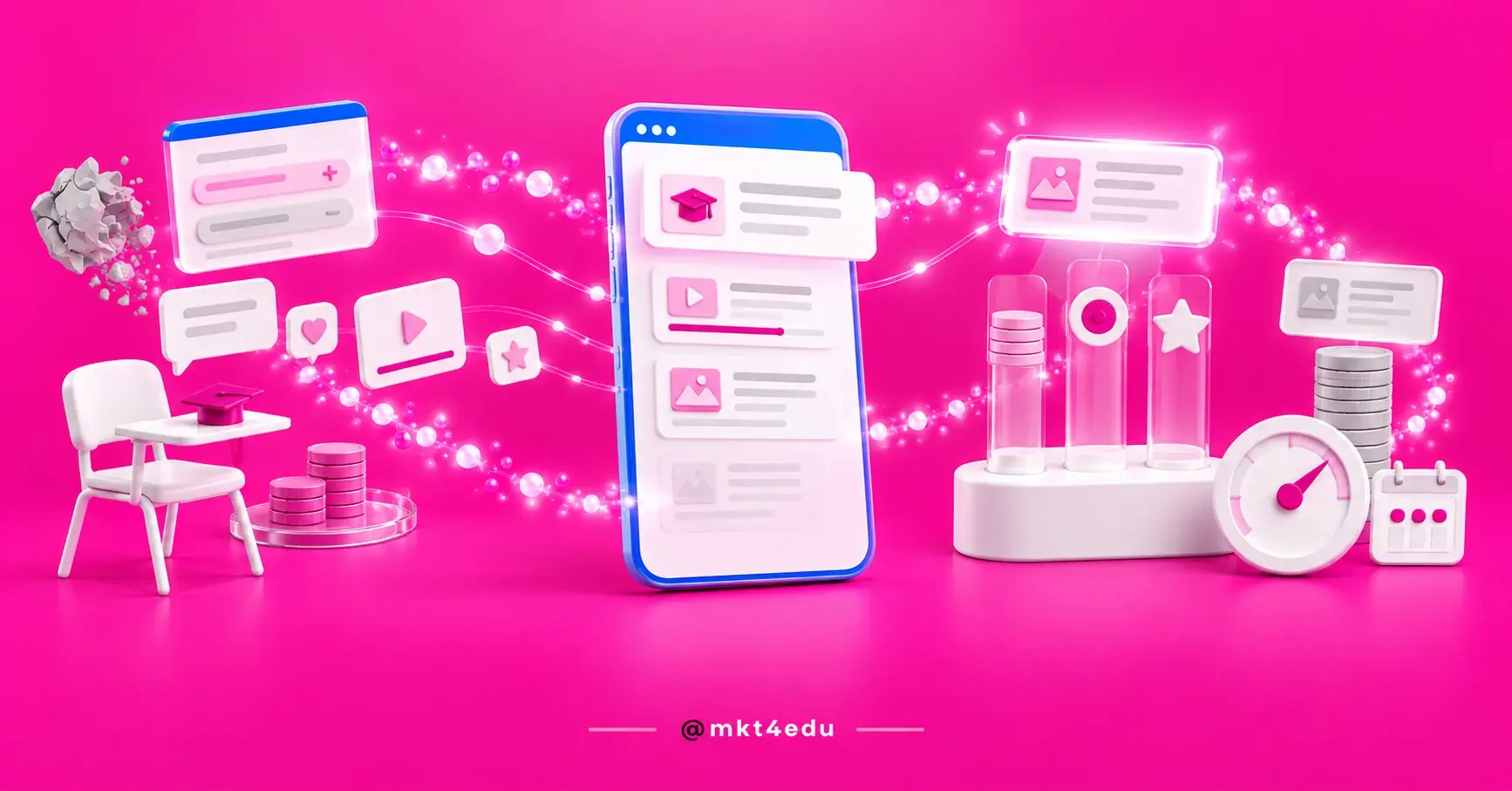
 Caption: Illustration of the automated AI-powered lead qualification and scoring workflow.
Why Qualifying Leads with AI Improves Sales Funnel Results
Effective lead qualification tackles the biggest waste in sales: the time spent on people who aren’t going to buy. When the team pursues everyone equally, it dilutes their efforts and loses hot leads amid the volume.
AI solves this by prioritizing leads, which tends to boost conversion rates without expanding the lead pool.
There’s a second, more subtle effect. Clear criteria align marketing and sales around what constitutes a good lead, reducing the classic friction between the two departments.
Marketing stops handing over raw leads, sales stops complaining about bad leads, and the handoff becomes smoother. This alignment is the foundation of an inbound sales operation that works.
Which lead qualification criteria really matter
Good lead qualification criteria fall into two categories: profile and behavior. The profile (or fit) indicates whether the lead matches your ideal customer. Behavior (or engagement), on the other hand, indicates how much interest the lead shows. A strong lead usually scores well on both.
The profile category includes segment, company size, the decision-maker’s role, and the main pain point, while the behavior category includes signals such as pages visited, materials downloaded, emails opened, and responses in conversations.
A common mistake is to focus on only one aspect: prioritizing those who have the right profile but show no interest, or chasing after those who engage a lot but don’t match your ideal customer profile at all. AI helps precisely by consistently cross-referencing these two sets of data.
How the ICP definition guides the entire qualification process
Defining the ICP—the ideal customer profile—is the starting point for any qualification process. Without knowing who the ideal customer is, there can be no criteria for a good fit, and AI ends up prioritizing based on isolated signals. The ICP provides the benchmark against which each lead is measured.
Defining the ICP means clearly describing the characteristics of the companies and individuals who buy the most and stay the longest: industry, size, job title, context, and purchase triggers.
The more precise this profile is, the better the AI can distinguish between leads that deserve priority and those that do not.
It’s worth remembering that the ICP isn’t set in stone, and revising it as your customer base evolves keeps your qualification criteria aligned with reality.
How AI-powered lead scoring works in practice
AI-powered lead scoring translates profile and behavioral criteria into a score that ranks the lead base. Instead of fixed, manual rules, artificial intelligence weighs these signals based on patterns, adjusting the weight of each one according to what actually drives conversions.
Here’s how the signals are organized:
|
Signal Type |
Examples |
What it indicates |
|---|---|---|
|
Profile (fit) |
Position, industry, company size |
Whether the lead matches the ICP |
|
Intent |
Pricing pages, requests for proposals |
Proximity to decision |
|
Engagement |
Opens, clicks, responses |
Current level of interest |
|
Negative |
Inactivity, unsubscriptions |
Signs of disengagement |
Table: Types of signals that feed into an AI-powered lead scoring model and what each one helps indicate.
The advantage of AI-powered scoring over a manual model is continuous adjustment: the score learns from results and becomes more accurate over time. In CRMs like HubSpot’s, this type of scoring based on profile and behavioral signals is already part of everyday sales operations.
Where do methods like BANT, MEDDIC, and SPICED come in?
Qualification methods help structure the conversation and can work alongside automated scoring. They provide a script of questions that the team—or the SDR—uses to determine whether a lead should move forward. AI prioritizes which questions to ask.
The most widely cited methods in the market have distinct focuses. The BANT methodology examines budget, authority, need, and timeline.
The MEDDIC methodology delves deeper into metrics, the financial decision-maker, criteria and the decision-making process, pain points, and the internal sponsor, and is commonly used in complex sales. The SPICED qualification focuses on the situation, pain, impact, critical event, and decision.
There is no one-size-fits-all method: each is best suited to a specific type of sale, and it’s best to choose based on your sales cycle, without trying to use them all at once. Each one is substantial enough to warrant its own in-depth study.
Frequently Asked Questions About AI-Powered Lead Qualification
How can you start qualifying your leads with AI?
AI-powered lead qualification doesn’t replace your strategy—it enhances it. Define your ICP, choose clear profile and behavior criteria, let the AI prioritize, and use a series of questions to guide the conversation.
This set of tools is what transforms a large lead pool into a usable sales funnel.
If you want to structure lead qualification using AI within an inbound marketing and sales operation —with criteria and scoring linked to your CRM—it’s worth working with those who manage this process on a daily basis. Talk to the mkt4edu team and evaluate the best design for your sales funnel.
Scoring rules written on paper become decisions in seconds once AI handles lead qualification.



























 Portugal