The Google results page has stopped being only a list of links. In AI Mode, the search surface where AI answers directly and opens room for follow-up questions, the company now sells advertising inventory inside the answer itself.
The format is live in ten markets and announced for three more. Whether your campaigns can touch it today depends entirely on where you are buying, and the rest of what matters has not been confirmed: eligible campaign types, volume or how the inventory is bought.
For paid media management, that changes the budget conversation before it changes the operation. In a live market there is something to test this month; in an announced one there is a planning decision to take now, in the middle of the recruitment cycle.
And it changes the content conversation too. The same answer that now shows the ad is the answer that cites organic pages, which puts SEO strategy and digital marketing strategy at the same table as the media budget.
What are ads in AI Mode and how does Google display them?
Ads in AI Mode are commercial slots shown inside the answer AI assembles in search, rather than above or below it as in the traditional list. Google states that the units appear clearly labelled as “Sponsored”, and the advertiser does not choose the position inside the generated text.
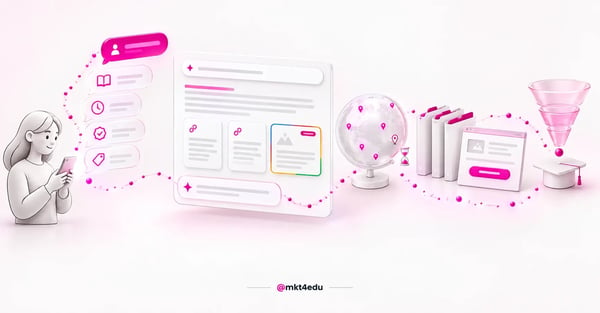 Caption: ads in AI Mode share the same answer that cites the organic pages
The difference from a classic search ad is the surroundings. In a traditional result, the ad competes for attention with ten blue links. In a generated answer, it shares space with a text that has already delivered the information the person was looking for.
The format also gained a conversational variant. Google launched multiturn ads, which allow serving inside follow-up questions in AI Mode, for now only in the United States. In practice, the second and third question of the conversation get inventory of their own.
Two surfaces often get confused here. AI Mode is a search tab people enter to have a conversation. AI Overviews are the summary generated at the top of the ordinary results page, with the list of links right below.
That distinction matters for planning. Teams watching their own audience notice that AI Mode changes organic traffic differently from the way AI Overviews change it, and the two surfaces call for separate readings in the report.
Where do ads in AI Mode already run?
Ads in AI Mode run today in ten markets, after the expansion announced on 28 October 2026: Australia, Canada, India, Kenya, Malaysia, New Zealand, Nigeria, Pakistan, the Philippines and Singapore. If you buy media in any of those, the inventory is live now.
For three other markets, what exists is a statement of intent. In the same announcement, Google says it plans to expand to additional locales in Q4 2026, including Brazil, Mexico and the United Kingdom. That is a public commitment with a quarter-long window, not a launch date.
That difference between what is running and what was promised is what organises the budget decision. Here is how the picture divides:
|
Status |
Markets |
What you can do |
|
Ads in AI Mode live |
Australia, Canada, India, Kenya, Malaysia, New Zealand, Nigeria, Pakistan, the Philippines and Singapore |
Serve, test with a small slice and watch performance |
|
Multiturn (follow-up question ads) |
United States |
Follow it as the reference for where the format is heading |
|
Expansion announced for Q4 2026 |
Brazil, Mexico and the United Kingdom |
Prepare the account, the creative and the measurement |
Table: how ads in AI Mode are distributed between live and announced markets, per Google's October 2026 communication
Three pieces of information remain open, and they weigh more than the date. Google did not detail which campaign types are eligible, did not say whether advertisers already running on the search network start serving there automatically, and published no volume forecast. The performance gains the company cites come from internal data, with no open methodology.
Anyone who has lived through the arrival of a new channel recognises the pattern. It happened with ChatGPT Ads in Brazil, where the format announcement came months before it was actually possible to buy media with any predictability.
What is the impact on organic traffic when the ad enters the answer?
What happens to organic traffic is the most asked question about the format, and the honest answer today is that nobody has measured it. The ad occupies the same screen where the generated answer cites organic pages, but there is no public study showing one reduces the other.
Claiming a loss without data would repeat the mistake made when AI Overviews arrived, when predictions of traffic collapse circulated before any reliable measurement. The situation calls for monitoring, not reaction.
What you can do is look at your own numbers. The generative AI report in Google Search Console, the free tool where Google shows how a site appears in search, records impressions in AI features. That panel delivers impressions and nothing more, with no clicks and no click-through rate.
That limitation has a direct consequence for SEO strategy. With no click in the panel, presence in a generated answer becomes a visibility indicator, and proof of results still comes from sessions, completed forms and enrolments.
The most useful reading combines both fronts. When AI impressions rise and organic sessions stay flat, the likely conclusion is that the answer resolved the question on screen. When both fall together, the problem usually sits elsewhere, and average position on Google helps locate where.
How do you prepare Google Ads campaigns for AI Mode?
In a live market, the sensible move is a controlled test: a small slice of budget, a short window and a clear read of what changed, rather than shifting the plan around a format nobody has benchmarked yet. In an announced market, there is no specific setting to switch on, so the work is foundational.
Either way the foundation is the same, and it is worth doing before the inventory matters: an organised account, creative that answers a question and measurement you can trust.
Start with account structure. A campaign with loose grouping already suffers on the traditional search network, and tends to suffer more when the ad has to sit beside a conversational answer on a specific topic.
Ad copy comes next. An institutional slogan works badly beside a paragraph that has just explained something, while a headline and description answering a concrete question speak better to the surroundings.
The landing page deserves the same attention. If someone arrives after reading a summary, they are past the discovery stage, and the page has to deliver the next step without repeating what the answer already said.
Video: the landing page practices that ads in AI Mode demand from whoever arrives after the answer, on the mkt4edu channel (in Portuguese)
Measurement closes the list, and it is where most money is lost. A good share of paid traffic management in education still measures conversion at the form and stops there, which hides what happens between the lead and the enrolment.
Organising that is routine work, not campaign work. Well-run paid traffic management solves those four points before any new format appears, and that is what separates teams who exploit a newly opened channel from those who discover it late.
What changes in marketing strategy with ads in AI Mode?
Marketing strategy changes less in the channel and more at the boundary between teams. When the ad and the organic citation share the same answer, separating whoever handles media from whoever handles content stops making operational sense.
That boundary was already dissolving. Inbound marketing was born from the idea of attracting with content rather than interrupting, and an AI-generated answer is precisely where useful content and a paid ad reach the same reader in the same second.
The result is that three routines start depending on each other. SEO management defines which questions the brand appears in without paying, paid media management defines which questions are worth paying to appear in, and the sales team receives both audiences with the same level of information.
On the commercial side, inbound sales carries more weight than it seems. Someone arriving after reading a complete answer already knows the basics, and a first contact that repeats the basics wastes the head start search handed over for free.
Video: the paid versus organic tension that ads in AI Mode move inside a single answer, on the mkt4edu channel (in Portuguese)
Among digital marketing strategies, the steadiest ones treat that combination as one thing. It is the reasoning that already appears when paid traffic and organic content are planned together, and AI Mode only makes the separation more expensive.
One note on proportion. Whole campaigns do not need redesigning around a format that is still new even where it is live, and treating a platform move as an emergency usually costs more than moving with preparation.
How do you apply ads in AI Mode in education marketing?
Education marketing has a trait that makes this format more relevant than average: deciding to study involves long research, with many chained questions. That is exactly the behaviour AI Mode was designed to serve.
Someone choosing a programme does not run one search, they run a sequence. A question about the field, then about duration, then about accreditation and the recognition of the degree, then about tuition. Each of those questions is a chance to appear.
Inbound marketing has organised that chain for years, with content built for each stage of the decision. AI Mode simply concentrates in one place the questions that used to spread across several searches.
How do you map the questions of someone choosing a programme?
Mapping starts outside keyword tools. The questions the contact centre, the messaging channels and the recruitment team receive every day are the most faithful raw material an institution can use.
After that, group them by stage. Discovery questions, comparison questions between institutions and decision questions about price and enrolment call for different answers, and only the third group justifies heavy budget competition.
How do you split budget across education marketing campaigns?
Splitting budget improves when it stops being a per-channel share and starts following the offer. A programme with a small cohort, a high ticket and local competition will not accept the same cost per lead as an entry-level programme with many places.
That per-programme cut is what lets you absorb a new channel without disorganising everything else. With the media budget split by programme, testing a newly opened format becomes a single decision rather than a review of the whole plan.
How do you connect marketing campaigns and inbound sales?
The connection is made through the data travelling with the lead. When campaigns record which question brought the person in, the inbound sales team starts the conversation where the search left off, instead of going back to zero.
At an education institution, that usually matters more than extra volume. A lead who arrived researching accreditation needs institutional proof, and one who arrived researching tuition needs clear commercial terms.
How do you measure results without clicks in the panel?
Measuring without clicks requires an agreement between teams, made in advance, about what counts as progress. An impression in an AI feature enters as a presence indicator, and proof of return is still enrolment, not visibility.
It also helps to record the declared source. A “how did you hear about us” question on the application form recovers part of what the panel does not show, especially when the journey started in a generated answer.
How do you prepare the site for both fronts?
The technical preparation serves both fronts at once. A page that loads fast, answers the question in its first paragraph and carries verifiable institutional information tends to be cited in the organic answer and to convert the paid click better.
That foundation is the same one supporting paid media management with predictable results in any channel. A new format never compensates for a weak page, and never has.
Frequently asked questions about ads in AI Mode
Where do you start with ads in AI Mode?
Start with what does not depend on Google. An account organised by offer, ad copy that answers a question, a landing page that delivers the next step and measurement that runs through to enrolment are your decisions, available today, useful whether the format reaches you this quarter or later.
Then treat the inventory as a test, not a turning point. Reserving a small slice of budget for the first month of availability teaches more than any forecast made now, and protects the main plan.
And keep both fronts talking. The answer showing the ad is the same one citing content, so splitting SEO management and paid media management across teams that do not speak is the most efficient way to lose both opportunities.
If the next step is understanding the other side of that same answer, the piece on how AI Mode changes traffic to your site shows what happens to the organic part of the same result.













 Portugal