


Almost every e-commerce diagnosis starts in the same place: the report shows hundreds of carts created and a small fraction of paid orders, and the commercial team immediately asks how much to put into Paid Media to close that gap.
The market's default answer is to launch dynamic remarketing to all abandonments at once, and that is where abandoned cart remarketing usually becomes expense instead of revenue. The problem is not the technique, it is the order.
Whoever abandons a cart almost always leaves an identifiable trace before leaving: an email, a phone number, sometimes a tax ID. There is an owned channel to reach that person at a marginal cost close to zero.
When the ad goes first, it pays for a click the email would have generated for free twenty minutes later. This guide inverts that sequence and shows how to back the inversion with data.
Where does the customer abandon the cart before completing the purchase?
Abandonment does not happen at a single point: it spreads across adding to the cart, the shipping screen, registration, payment choice and confirmation. Each step produces a different objection, and the recovery message only works when it answers that step's objection, never a generic “you forgot something”.
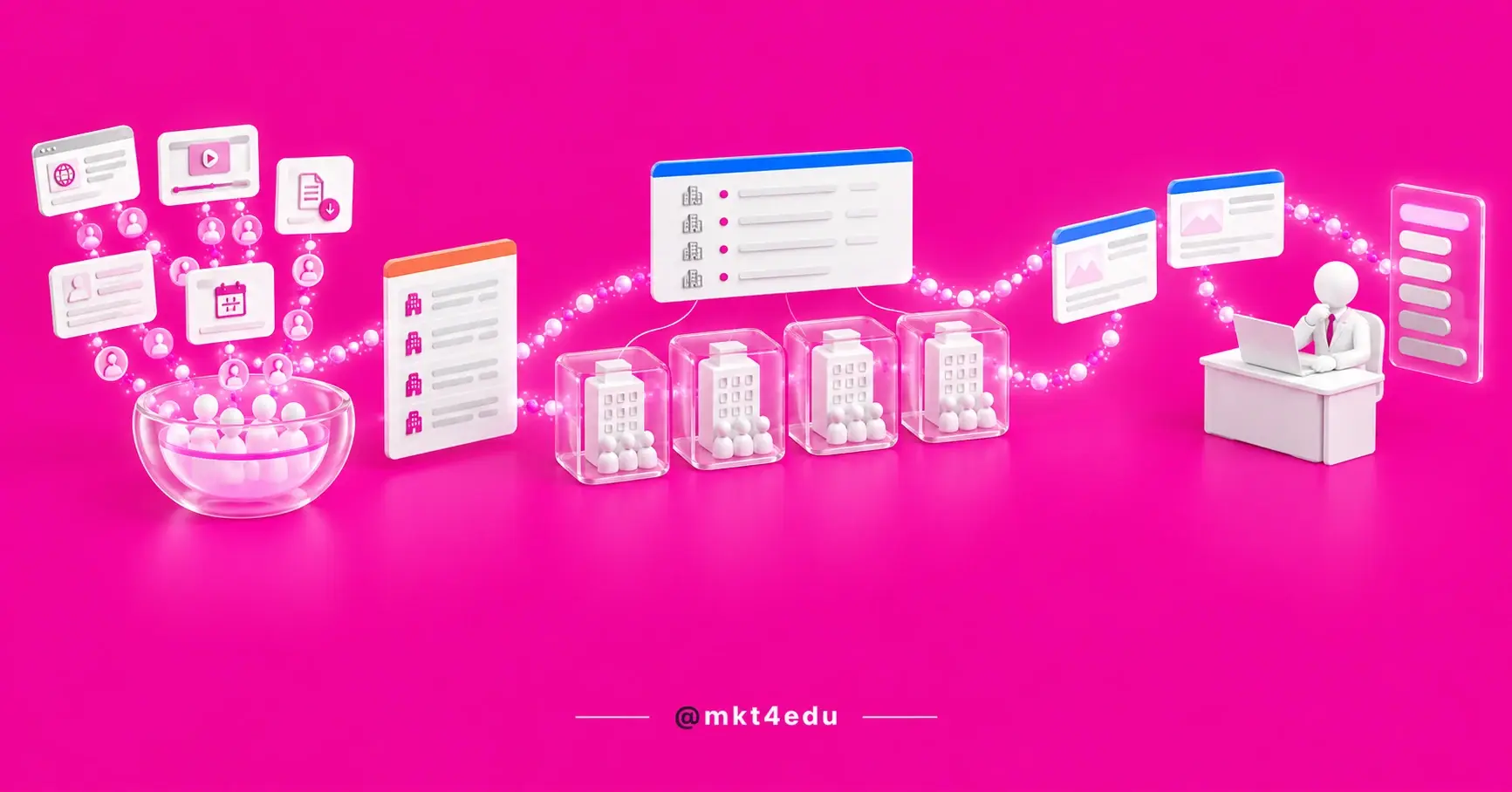
 Caption: abandoned cart remarketing only pays off when media comes after the owned channels
It is worth calibrating expectations before investing. The Baymard Institute, which aggregates e-commerce usability studies, records 70.22% as the documented average cart abandonment rate from 50 different studies, in a survey updated on September 22, 2025.
The 70% level is not a target to beat, it is the channel's baseline. If seven out of ten carts are abandoned as a structural pattern of online retail, no remarketing cadence will zero that rate. The work is to recover the recoverable share and stop paying for impressions on the share that never intended to buy.
The drop-off points organize into five groups:
- Adding to cart with no immediate intent: the cart became a wish list. The person is comparing prices, saving for later or testing the shipping cost. There is no objection to solve, there is timing to respect.
- Shipping and delivery shock: the final price appears and dismantles the decision. It is the most actionable drop-off for an owned message, because a shipping condition or a concrete delivery date changes the math on the spot.
- Registration friction: a long form, a required account, validation that fails on mobile. Here remarketing is palliative.
- Payment refusal or limitation: a declined card, insufficient installments, a missing payment method. This abandonment has the highest recovery rate of all, because intent was complete and the blocker was technical.
- Insecurity on the last screen: doubts about the return policy, warranty, provenance or the store's reputation. It responds well to social proof and objective information, badly to a discount.
In the third group, the real gain comes from conversion rate optimization in the checkout itself, not from media. And telling all of them apart depends on recording the event at the right point: without add to cart, begin checkout and purchase recorded separately, the operation treats five distinct problems with a single email. A CRM integrated with the e-commerce operation is what lets you store the exit stage alongside the contact.
What is the right channel order in abandoned cart remarketing?
The order that preserves margin is simple: owned channels first, paid channels after. Email opens the cadence, WhatsApp comes next with a recorded opt-in, a second email changes the angle and only then are ads released, exclusively to people who did not react to any of the three.
The economic argument is direct: an email send to the owned base has a marginal cost close to zero. A dynamic remarketing click, by contrast, is charged by auction, and the cost per click on a warm audience tends to be higher precisely because every advertiser competes for the same high-intent audience.
If the ad goes before the email, it buys the click of someone who was coming back for free. The conversion looks good on the media dashboard, but the store's total orders do not change. What changed was the acquisition cost.
There is a second, less discussed reason: coverage. Email reaches whoever filled in the field at checkout, with their name and cart items. The ad reaches a browser or platform account identifier, with no idea whether that person already got three of your messages in the last hour. Starting with the identified channel is what allows correct exclusion later.
Here is how the sequence is organized, with each step's exit trigger:
|
Step |
When it fires |
Content |
Exit from the cadence |
|
1. Email |
30 minutes to 1 hour |
Cart items and a direct link back |
Came back and bought |
|
2. WhatsApp |
4 to 24 hours |
One concrete objection: shipping, delivery or stock |
Replied or bought |
|
3. Email 2 |
24 to 48 hours |
A new angle: return policy, warranty, social proof |
Came back and bought |
|
4. Ad |
From 48 hours |
Dynamic catalog, if the catalog justifies it |
Converted |
|
5. Suppression |
7 to 30 days |
Leaves the paid audience and moves to a re-engagement base |
End of the window |
Table: the abandoned cart remarketing sequence, in which each step only releases the next one
The fourth step's audience is abandonments minus buyers, minus anyone who clicked the email, minus anyone who replied on WhatsApp and minus anyone outside the ticket window. Without those exclusions, the paid step becomes “all abandonments” under another name.
The WhatsApp step requires prior consent. The platform's documentation requires the business to make clear that the person is agreeing to receive messages and to state the business name at the moment of opt-in. Without that record, the channel leaves the cadence.
The fourth step does not exist out of laziness. A real share of people who abandon never open an email or reply to a message, and for that share the ad is the only way back. What changes is the size of the paid audience, which stops being all abandonments and becomes the silent ones.
Shrinking the paid audience is what returns efficiency to the budget. When it drops to the fraction owned channels did not reach, the same budget covers more days of window and sustains higher frequency per person, with money left for prospecting. It is worth crossing that math with the reading of how much it costs to invest in paid traffic before setting the daily cap.
How do you build the abandoned cart audience in Google and Meta?
The abandoned cart audience is a subtraction, not an inclusion. It starts from whoever fired the begin checkout event, minus buyers, minus anyone who already reacted to the owned channels, within a window of days defined by the ticket. Without those three exclusions, the audience is just site visitors under another name.
The technical basis is the event. In both Google and Meta, the audience rule reads events fired by the tag or the pixel, not the page URL. Relying on a checkout URL is fragile because many e-commerce platforms use the same route for different steps.
The minimum list size has to be checked before planning. The Google Ads help center states 100 active visitors or users in the last 30 days for the Search Network, the Display Network and YouTube; Gmail is not part of that volume rule.
The figure of 1,000 that appears on other pages has an explanation: customer lists uploaded or refreshed from February 1, 2024 follow the 100-user minimum on Search and YouTube, and lists not refreshed since then remain bound to the previous requirement of 1,000 matched users. For abandoned carts the audience is usually fed by site events rather than an uploaded list, but it is worth confirming before sizing it.
On Meta, the limit that most affects the cadence is retention. The website custom audience documentation states 365 days as the maximum duration, after which the person leaves the audience unless they meet the rule again. For abandoned carts that ceiling is plenty, because no useful recovery window comes close to a year.
Three decisions make the biggest difference when building it:
- Separate by stage, not by session: someone who added to cart and someone who started checkout have distinct intents, and keeping both in one audience dilutes the message.
- Feed the exclusions from the CRM, not only from the pixel: whoever clicked the recovery email has to leave the paid audience the same day.
- Segment by cart value: a $20 cart and a $900 cart do not deserve the same frequency or the same window.
Leaving the paid audience requires syncing between the automation tool and the ad platform, the way it is done in list segmentation inside the CRM. And one operational detail closes the build: the audience has to be recycled, not accumulated. An audience that only grows fills up with people who abandoned two months ago, already bought from a competitor and keep consuming impressions.
Video: the automated flow that sustains an abandoned cart remarketing cadence, on the mkt4edu channel (in Portuguese)
When is dynamic remarketing with a product catalog worth the budget?
Dynamic remarketing builds the ad on the fly, pulling from the catalog the items the person viewed or added to the cart. The format is worth the budget when the catalog is large, variation between orders is high and producing manual creative per product would be prohibitive. Outside that scenario, it adds complexity without proportional gain.
The prerequisite is infrastructure, not creativity. For retail, Google requires product data sent to Merchant Center, with the feature enabled, the accounts linked and the specific tag on the site. An outdated feed produces ads for out-of-stock products, which burns budget and trust.
There is a simple test to decide. If the store has fewer than a few dozen items and most sales concentrate in a handful of them, well-made static creative usually performs the same or better, with far less feed maintenance. If the store has hundreds or thousands of items, with fast turnover and an assortment that changes weekly, dynamic stops being a luxury and becomes the only viable way to show the right item.
Platform automation of creative and audience, as in Meta Advantage+, tends to perform better precisely in that high-volume scenario.
There is a caveat that rarely appears in the manuals: a dynamic catalog ad is great at re-presenting the product, but it does not resolve objections about shipping, delivery time, payment or return policy. And those account for most actionable abandonments. Dynamic, then, is good at what email already does well and weak at what email does better.
The practical recommendation is to reserve dynamic for the silent audience in the fourth step, with a clean feed and buyers excluded. Do not use dynamic as the first touch, because it costs more than the owned channel and delivers a less complete message.
How long should you wait before reaching someone who abandoned a cart?
The window depends on the ticket, because the ticket defines deliberation time. An impulse purchase is decided in minutes and cools in hours, so the cadence has to be short and the ad comes in fast. A high-value purchase involves research, comparison and sometimes third-party approval, which stretches the interval between sends and the total window.
Getting that calibration wrong costs money in both directions. Too short a window on a high ticket drops the audience before the decision matures. Too long a window on a low ticket keeps ads running for people who already bought elsewhere or lost interest.
The intervals below are an editorial starting point, not an official platform standard, and need adjusting to the operation's real cycle:
|
Ticket range |
1st email |
|
Ad starts |
Total window |
Frequency |
|
Impulse purchase |
30 min |
4 hours |
48 hours |
7 days |
Low |
|
Low to mid ticket |
1 hour |
12 hours |
48 to 72 hours |
14 days |
Medium |
|
Mid to high ticket |
2 hours |
24 hours |
72 hours |
21 to 30 days |
Medium, with rotation |
|
High ticket and B2B |
4 hours |
24 to 48 hours |
5 to 7 days |
30 to 45 days |
Low, with rotation |
Table: reference intervals for calibrating abandoned cart remarketing according to average order value
The ad does not start before 48 hours in any of the ranges, because that is the minimum time for owned channels to complete their open-and-reply cycle.
The total window grows with the ticket, but frequency falls. A long consideration treated with high impact becomes pursuit, and the effect on the brand is the opposite of what was intended.
Frequency, in fact, is the most neglected item in the cadence. On a high ticket, the same impact repeated several times a day for thirty days produces saturation and a negative brand association. Rotating creative and capping impressions per person solves more than raising the bid.
One calendar exception is worth noting. In peak retail season, decision cycles shorten and auction competition rises, which tends to justify bringing the ad forward and shortening the total window, without changing the channel order.
How do you know whether cart recovery was incremental?
Attributed conversion and incremental conversion are different things. Attributed is the sale that happened after contact with the ad, according to the platform's attribution rule. Incremental is the sale that only happened because of the ad, and would not have happened without it. In an abandoned cart audience, the distance between the two is enormous.
The reason is structural. Whoever abandoned the cart already showed high intent, already received an email and perhaps a WhatsApp message, and some of those people would come back on their own. Every ad shown to them collects credit for a conversion that was already booked.
The honest way to measure is to hold back a control group. Google itself documents the logic in its conversion lift study, which compares a treatment group, exposed to the ads, with a control group prevented from seeing them, and defines incremental conversions as the difference between the two.
Anyone without the volume for a formal study can apply the same logic operationally. Randomly separate a slice of the abandonments, between 10% and 20%, and exclude that slice from the paid audience. The separated group keeps receiving email and WhatsApp normally, it just does not get ads.
After a full cycle, compare the recovery rate of the two groups. If the group with ads recovers much more, the budget is generating new revenue. If the rates look alike, the ad is buying conversion the owned base was already delivering.
The control test also repositions the dashboard indicators. Cost per conversion on a remarketing campaign tends to look excellent by construction, and for that reason it does not work as a standalone decision criterion. The useful reading combines incremental revenue, the cost of incremental recovery and order margin, in line with what is tracked in RevOps indicators.
Four numbers are enough to run the cadence safely:
- Recovery rate per channel, split between email, WhatsApp and ads, to see which one actually carries the result.
- Cost per recovered sale, counting only media budget against the exposed group's sales.
- The difference between the exposed group and the control group, which is the only measure of incrementality.
- Net margin on the recovered order, because recovering a sale with an aggressive discount can add revenue and remove profit.
Video: the step-by-step monitoring that also applies to abandoned cart remarketing, on the mkt4edu channel (in Portuguese)
Frequently asked questions about abandoned cart remarketing
Where do you start with abandoned cart recovery?
Recovery starts with owned channels: email first, WhatsApp next and ads last, only for people who did not react to either. Abandoned cart remarketing returns when the budget enters at the end of that queue; with the order inverted, the same mechanism produces a pretty report and a thinner margin.
Three things separate those who recover revenue from those who merely make the sale more expensive. The first is event instrumentation that distinguishes abandonment stages. The second is exclusion synced between the CRM and the ad platform. The third is a control group always running, so attribution is not confused with incrementality.
None of the three is media work. All of them are operations work, which is why most stores prefer to launch dynamic remarketing to everyone: it takes less work today and costs more every month.
If you want to attack the root, the bigger gain is rarely in the recovery cadence. It is in reducing abandonment at the source, with CRO on the checkout, and using remarketing only for the share no page optimization resolves.
Instrumentation comes before the ad. Channel order and test design only stop being guesswork when the abandonment stage and the confirmed purchase live in the same place, which is the job of a CRM connected to e-commerce.













 Portugal