





For every question typed into Google there is now a second, far less visible contest: who gets cited in the ready-made answer generated by AI (Artificial Intelligence).
ChatGPT, Gemini and Google's AI mode have become the first stop for millions of buying decisions, and many brands that rank well in traditional search simply do not exist in those answers.
That is the gap SEO for AI closes: preparing content to be found, understood and cited by the systems that generate answers, without abandoning the search that already delivers results.
The challenge starts with the name. The market christened this work AEO (Answer Engine Optimization), GEO (Generative Engine Optimization), AIO (AI Optimization) and SXO (Search Experience Optimization), and the acronym soup makes them look like competing disciplines. At bottom they are layers of the same system, and each one has its own goal and metric.
What does SEO for AI mean and why is the name confusing?
SEO for AI, also called AI optimisation, means preparing content for the search systems that answer with generative AI, from ChatGPT to Google's AI mode. The term works as an umbrella for acronyms such as AEO, GEO and AIO, and the confusion exists because the market christened, almost at the same time, different angles of the same work.
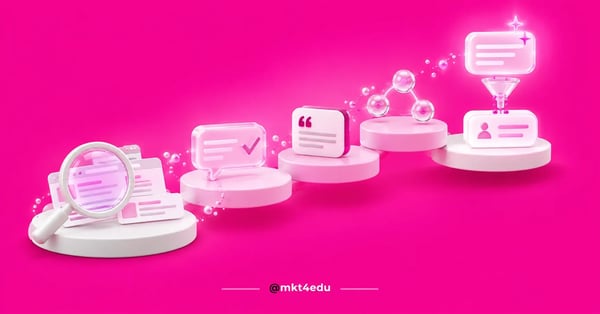 Caption: SEO for AI stacks layers on the same base: being crawled, becoming the answer, being cited and, in the end, converting
People looking the subject up often do not even know which name to use, and with reason. Every tool, agency and consultant picked an acronym to describe its own approach, but the object is one: making the brand appear when the answer is generated by a machine.
The good news is that the naming contest does not change the method. For Google search's AI features, there is no additional requirement, special file or mandatory markup: the same practices as search in general apply, enforced more strictly.
Instead of picking an acronym and hoping, the more productive route is understanding what each layer optimises. The same article can, at once, rank in search, feed a snippet, be cited by ChatGPT and convert the reader into a customer.
When in doubt about where to invest first, look at the metric that is missing. Position and traffic call for the SEO base, snippets and direct answers call for AEO, brand mentions in AIs call for GEO and AIO, and low conversion with good traffic calls for SXO.
What are the layers of modern search?
Modern search is organised into five optimisation layers that stack on the same content. SEO sits at the base, ensuring crawling, indexing and ranking. Above it, AEO targets direct answers, GEO targets citations in generative AI, AIO handles machine readability and SXO turns the visit into a customer.
Spelling each role out helps fix it: AEO is optimisation for answer engines, GEO is optimisation for generative engines, AIO is optimisation for reading by AI and SXO is optimisation of the search experience.
See how the five layers are organised in practice:
|
Layer |
Goal |
Main focus |
Success metric |
|
SEO |
Be crawled, indexed and ranked |
Technical base, quality content, links and authority |
Positions and organic traffic |
|
AEO |
Become the direct answer to the question |
Real questions, objective answers, extractable passages |
Snippets and presence in AI answers |
|
GEO |
Be cited by ChatGPT, Gemini and other AIs |
Named sources, statistics, original data, freshness |
Citations and brand mentions in AIs |
|
AIO |
Make content easier for machines to understand |
Clear entities, consistent brand data, semantic structure |
Brand recognition by AIs |
|
SXO |
Turn the visitor into a customer |
Experience, speed, navigation and conversion |
Engagement, leads and sales |
Table: the five optimisation layers of modern search in SEO for AI, from crawling to conversion
The map settles the overview, and the border between the first three layers deserves a conversation of its own. The difference between SEO, AEO and GEO in practice shows where one ends and the next begins without rework.
The most common mistake is treating the layers as separate projects, with teams and budgets competing for space. Treating it all as a single system means producing once and harvesting at all five levels.
Why is SEO still the base of everything?
SEO is still the base because no layer works without it. AI only cites content it can crawl, index and understand, and Google search's AI features use the same infrastructure as traditional search. Without a healthy technical base, the other layers have nothing to stand on.
What changed was the destination of the click. In the United States, 68.01% of Google searches ended without a click between January and April 2026, according to a SparkToro study using Similarweb panel data. The zero-click search phenomenon did not kill SEO, but it changed what SEO delivers: visibility and authority came to be worth as much as the visit.
The base layer follows a checklist any content team knows: a fast site, clear architecture, original and useful content, consistent internal links and authority built over time, as the essential tips for improving a site's SEO show.
Two items in that base deserve names of their own: Core Web Vitals, the metrics with which Google measures each page's speed and stability, and backlinks, the links from other sites that keep feeding domain authority.
The difference is the rigour. With fewer clicks in contention, every position is worth more, and the same page that ranks is the raw material of AI answers. Investing in the base has never been so unglamorous and so decisive.
Authority also gained a surname. The E-E-A-T set (Experience, Expertise, Authoritativeness and Trust) guides search quality assessment, and first-hand experience became the differentiator AI cannot fabricate: your own examples, your business's data and a real author signing the content.
Video: the checklist that fixes the technical base before any layer of SEO for AI, on the mkt4edu channel (video in Portuguese)
How do you make your brand appear in ChatGPT and Google's AI?
For a company to appear in ChatGPT and Google's AI, the content has to be easy to extract and worth citing. The tactics with measured effect are opening each section with the direct answer, citing named sources, including verifiable statistics with a date and bringing expert quotes, all over broad coverage of the topic.
The numbers support the recipe. The study GEO: Generative Engine Optimization, by researchers from Princeton and other institutions, measured visibility gains of up to 40% in generative answers when applying those tactics, with cited sources, statistics and quotes standing out.
Ranking well helps, but it stopped being a guarantee. A Semrush analysis of ten software queries in February 2026 found only 44.3% of the pages in Google's top 10 present in any AI answer. The same analysis indicates that a visitor arriving from AI tends to convert 4.4 times better than one from traditional search. The sample is small and from a single sector, so the reading works as an indication of direction, not as a settled measure.
Part of the explanation lies in how AIs research. Instead of running a single search, they break the question into several sub-questions and synthesise the result, the mechanism of query fan-out in AI search. Covering the topic in depth, with a cluster of connected content, multiplies the chances of entering one of those sub-questions.
Two layers concentrate the tactical work towards that goal. The walkthrough of how to apply AEO to content organises extractable questions and answers, and the GEO practices for generative engines detail what makes a passage get cited.
For teams who want to go down to the model level, optimising content for LLMs, short for Large Language Model, the model behind these tools, shows how to structure text the machine understands effortlessly.
Day to day, the citation layer is solved with a short set of editorial habits:
- Open the article and each section with the answer in one or two sentences.
- Cite the named source of every figure, with the year.
- Bring an expert quote when the topic involves opinion.
- Keep paragraphs short, with an explicit subject and one idea each.
- Update the content that already ranks before creating new content.
None of those habits depends on a tool, and all of them improve human reading too, which explains why they work in traditional search and in AI search at the same time.
The same preparation serves voice search, which grows alongside assistants. A spoken question is answered with the same kind of direct passage that feeds snippets and AI-generated answers.
Measuring closes the cycle. A monthly routine of buying questions put to ChatGPT, Gemini and Google's AI mode, always the same ones, shows whether your brand's citations are growing and which competitors dominate each answer.
Where do AIO and SXO fit into the strategy?
AIO and SXO close the system at opposite ends. AIO makes sure machines understand who the brand is and what the content states, with consistent data and a readable structure. SXO makes sure the visit you won turns into a contact or a sale, with a smooth experience, speed and clear calls to action.
In AIO, the central asset is the entity. The brand's name, description, address and positioning have to be identical on the site, on social profiles and in directories, because inconsistency confuses the AI and dilutes recognition. Frequently updated content reinforces the signal that the source is alive.
Multimedia also counts in this layer. Video and audio with clear titles and descriptions become material machines can cite, like the AudioBlogs that accompany this content.
SXO brings the strategy back to its starting point: people. There is no point being cited by AI and receiving the visit if the page is slow to load, hides the information or does not say what to do next. Navigation experience, clarity and conversion close the cycle the other layers opened.
UX (User Experience) and CRO (Conversion Rate Optimization) techniques work together in this layer, and their combination with the search base is what turns traffic into revenue.
On mobile, where most visits usually are, the bar is higher: simple navigation, a light page and visible trust signals, such as a real author, easy contact and social proof.
The SXO measure is the simplest to track, because it lives in your own analytics: conversion rate of organic pages, navigation depth and leads generated by content. With fewer clicks arriving from search, each visit has to yield more, and this is the layer that secures that yield.
Video: how CRO, SEO and UX combine in the experience layer of SEO for AI, on the mkt4edu channel (video in Portuguese)
Frequently asked questions about SEO for AI
Where do you start with SEO for AI?
Start with the base, because it is what unlocks the rest. An honest technical audit answers whether the site is crawlable, fast and indexed, and that diagnosis defines the order of the other layers. Without that answer, any AI tactic is a gamble.
With the base validated, the second step is editorial: rewriting the section openings of your most important content so each one answers the question up front, and enriching the text with named sources, dated statistics and expert voices.
The third step is measuring what the AIs already say about your brand. Asking ChatGPT and Google's AI mode who the references in your market are shows, in minutes, whether you are in the conversation or outside it.
If your team wants to shorten that path with people who do it every day, mkt4edu's SEO for LLM service covers everything from the base audit to optimisation for AI citation.
You can talk to the team and come away with a diagnosis of where your brand already appears in AI answers and what is missing to appear more.



.jpg)






















 Portugal